Symbolism
The Bald Eagle Was Not Legally America's National Bird Until 2024
The Bald Eagle Was Not Legally America’s National Bird Until 2024
The bald eagle appeared on the Great Seal of the United States on June 20, 1782. President Biden signed the law formally designating it the national bird on December 24, 2024. For 242 years, the most famous bird in American history held its title by cultural consensus alone, not by statute.
That gap is not the only thing about the bald eagle that has been assumed rather than verified.
What “Bald” Actually Means
The bird is not bald.
“Bald” comes from Old English “balde,” meaning white or shining. In Middle English, “balled” described a pale or white head. The modern meaning of hairless came later and has nothing to do with this bird.
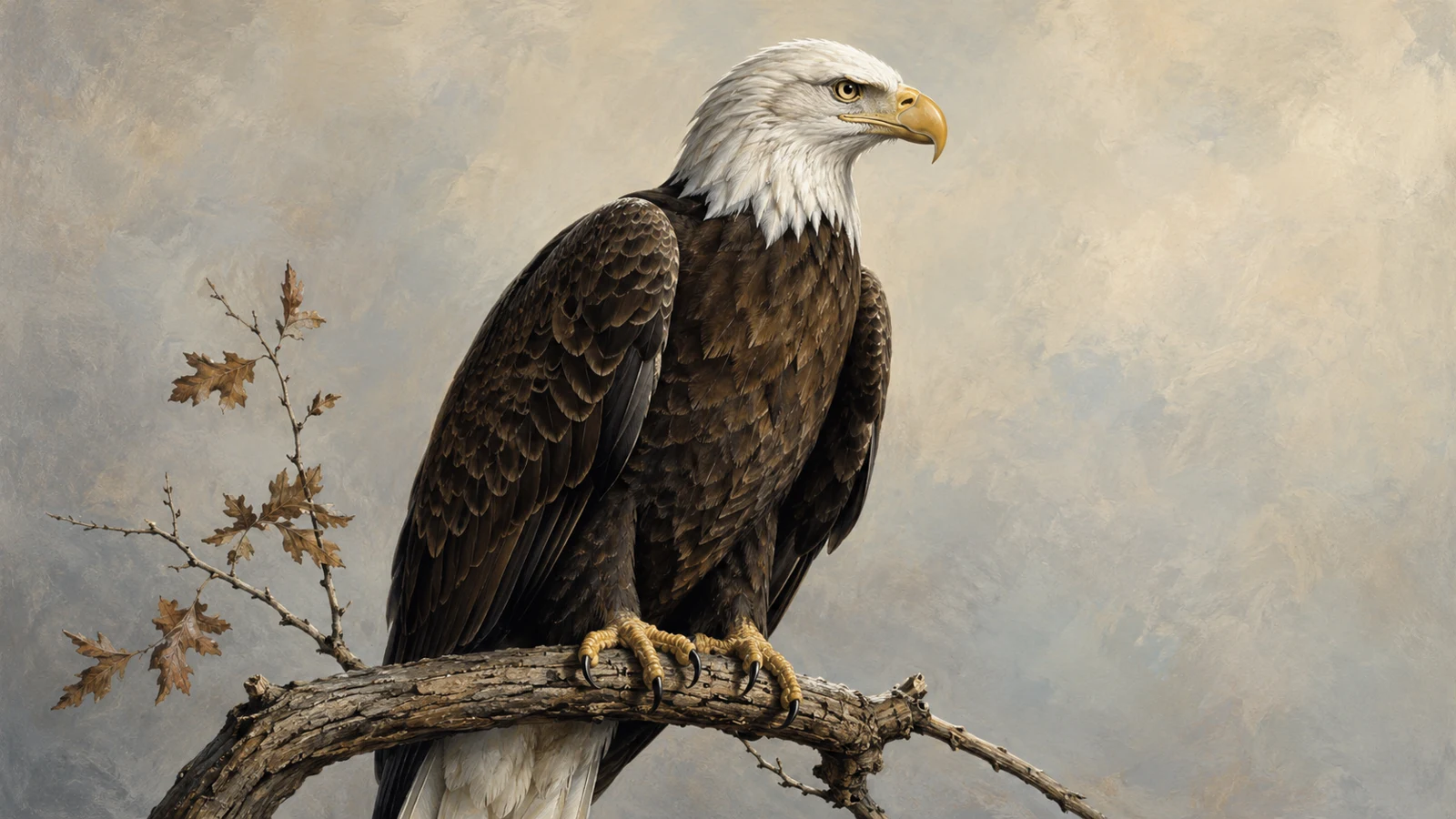
The scientific name confirms it: Haliaeetus leucocephalus - from Greek hali (sea), aietos (eagle), leukos (white), kephalos (head). White-headed sea eagle. The bird has a full, dense crown of white feathers. It is named for a color, not an absence.
The Franklin Letter: What He Actually Said and Why
Benjamin Franklin did not propose the turkey as the national bird during the Great Seal debates. He was not part of the final committee that produced the Seal. His famous letter was written in January 1784 - two years after the Seal was adopted - and was addressed to his daughter Sarah Bache.
His target was not the Seal. It was the Society of the Cincinnati, a hereditary organization for Continental Army officers that Franklin considered an aristocratic institution incompatible with republican values. The eagle on the Society’s badge looked to him like a turkey. That observation became a digression. The digression became legend.
His three stated objections to the bald eagle:
First, moral character. “He is a bird of bad moral character. He does not get his living honestly.”
Second, cowardice. “He is a rank coward. The little king bird, not bigger than a sparrow, attacks him boldly and drives him out of the district.”
Third, generic quality. Eagles appear on the coats of arms of too many other nations to make a distinctive American symbol.
His kleptoparasitism description is accurate field observation: “You may have seen him perched on some dead tree, where, too lazy to fish for himself, he watches the labour of the fishing hawk; and when that diligent bird has at length taken a fish, and is bearing it to his nest for the support of his mate and young ones, the bald eagle pursues him, and takes it from him. With all this injustice he is never in good case but, like those among men who live by sharping and robbing, he is generally poor and often very lousy.”
His turkey endorsement: “The turkey is in comparison a much more respectable bird, and withal a true original native of America. He is besides (though a little vain and silly, it is true, but not the worse emblem for that) a bird of courage.”
Franklin asked a friend not to make the letter public. The friend agreed, then shared it anyway. Excerpts appeared in a 1784 pamphlet. The story spread in truncated form, shedding the Cincinnati context, until it became the founding myth of the almost-turkey. There was never a turkey design. There was never a formal proposal. There was a private letter containing a sarcastic aside, and 240 years of misreading it.
How the Seal Actually Came Together
Congress appointed the first Great Seal committee on July 4, 1776 - hours after signing the Declaration of Independence. Franklin sat on that committee. His proposal was a Biblical scene: Moses parting the Red Sea, with the motto “Rebellion to Tyrants is Obedience to God.” Congress rejected it.
Two more committees tried and failed over the next six years.
The third committee, in May 1782, included John Rutledge, Arthur Middleton, and Elias Boudinot, assisted by William Barton, a Philadelphia lawyer with heraldic training. Barton introduced an eagle design, though the species was not definitively settled.
The decisive contribution came from Charles Thomson, Secretary of the Continental Congress. He synthesized all three committees’ work into a final design. Thomson specifically chose the bald eagle because he wanted a symbol native exclusively to the United States - unavailable to any European rival power. He reoriented the wings for flight, placed the olive branch in the right talon and thirteen arrows in the left.
No record survives of extended debate over the species. The bald eagle appears to have been Thomson’s decision, made on the principle that the symbol must belong to America alone.
The Sound in Every Movie Is a Red-Tailed Hawk
The bald eagle’s actual call is a series of short, high-pitched chirps and chatters. Weak. Thin. Ornithologists describe it as more gull-like than raptor-like. It sounds, bluntly, undignified.
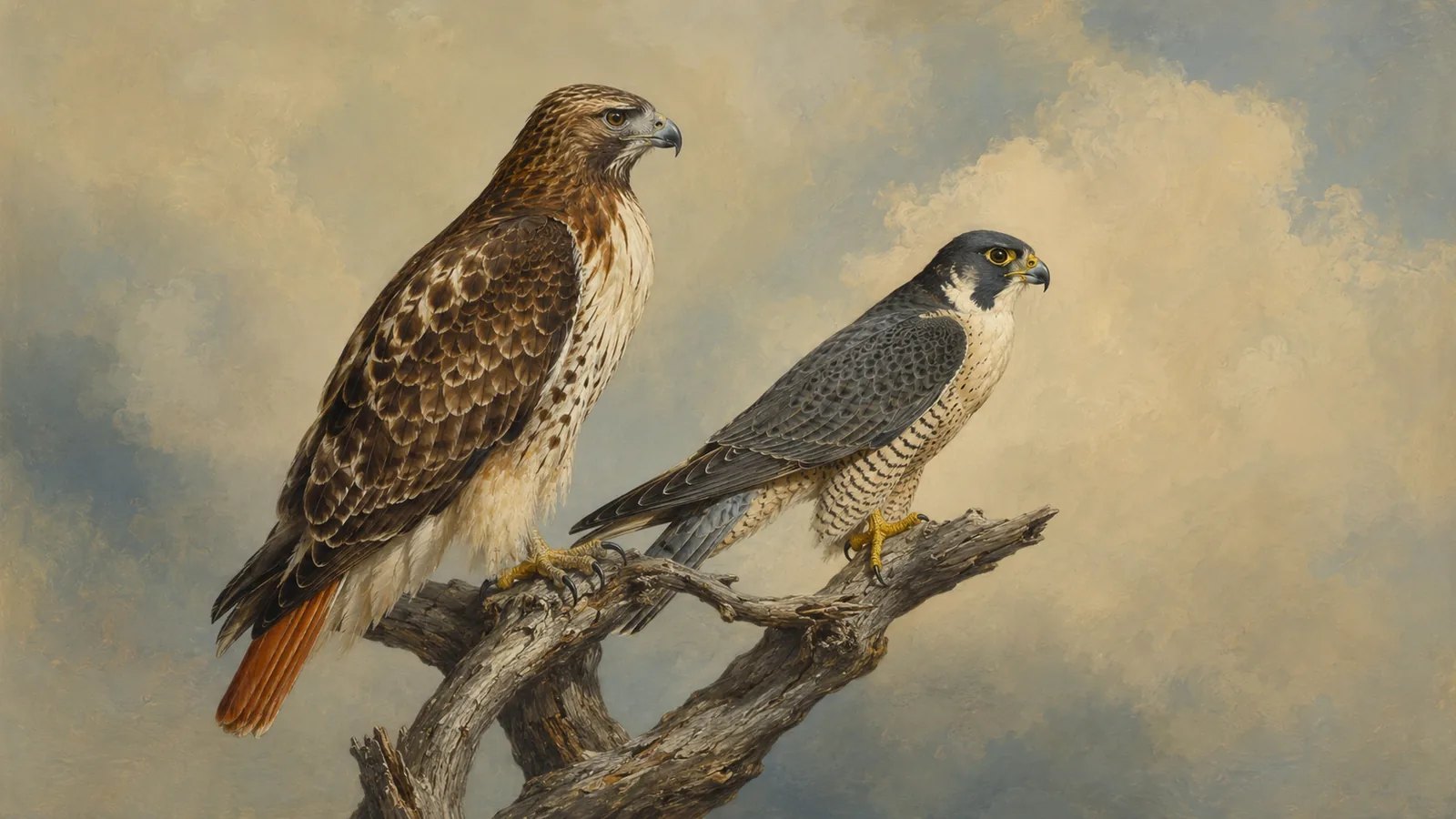
The screaming descending rasp heard in every Hollywood film, every documentary, every news broadcast that cuts to an eagle shot - that is a red-tailed hawk. Sound designers adopted the substitution because the real eagle call does not match the visual weight of the bird. The substitution became industry standard so early and completely that audiences now routinely describe recordings of the actual bald eagle call as “fake” or “wrong.”
The national symbol does not sound like itself. What Americans recognize as the sound of freedom belongs to a different bird entirely. The cultural construction of the bald eagle has been so total that the real animal cannot compete with its own manufactured version.
Lakota, Ojibwe, Comanche: What the Eagle Actually Means
Eagle symbolism across Plains and Great Lakes nations predates European contact by centuries and represents the most sustained, specific, and documented bird-symbolism tradition in North America. This is not internet-era aggregation. It is verifiable oral tradition and recorded practice.
Among the Lakota, the eagle - wanbli in Lakota - is understood as the messenger between humans and Wakan Tanka, the Great Spirit, because it flies closer to the divine than any other creature. When an eagle feather is dropped during ceremony, a specific pickup ceremony must be performed. The person who drops it is expected never to drop it again.
The eagle bone whistle is central to the Sun Dance, the most sacred Lakota ceremony. Dancers blow through these whistles throughout the physical ordeal of the Sun Dance. The whistles are painted with colored dots and lines representing the eagle’s precision of sight. An eagle feather attached to the tip moves with each breath of the dancer - the breath of the human connected to the breath of the eagle connected to the divine.
In Ojibwe cosmology, Eagle placed the four directions in the sky, establishing cosmic order. Eagle feathers mark major life transitions. At some Ojibwe high school graduation ceremonies, a bald eagle feather is tied on the left side - the heart side - of the graduate, with tribal members singing and drumming.
Among the Comanche, the eagle was present at the formation of the world. When an eagle in Comanche care dies, the head is painted with ceremonial ochre. Wing bones are reserved for whistles. Wing feathers become fans used in prayer.
The Cheyenne war bonnet - a full feathered headdress - is a biographical record, not a costume. Each eagle feather represents a specific counted coup, a documented act of battlefield bravery awarded by peers, not self-claimed. A full bonnet could represent a lifetime of specific deeds. This tradition extends across the Lakota, Cheyenne, Arapaho, Crow, and Blackfoot nations.
The Federal Administration of a Sacred Bird
Bald and golden eagle feathers are federally protected under the Bald and Golden Eagle Protection Act and the Migratory Bird Treaty Act. Possession by non-tribal members is a federal crime.
Enrolled members of federally recognized tribes can apply for eagle parts through the National Eagle Repository, operated by the U.S. Fish and Wildlife Service near Denver, Colorado. The Repository collects eagles that die from natural causes, power line strikes, vehicle impacts, and rehabilitation facility deaths. Wait times routinely run to years. The Repository has struggled to meet demand.
The result is a gap in ceremonial life that cannot be filled by substitutes. A turkey feather painted to resemble an eagle feather does not carry the same medicine or honor in ceremony. The communities for whom the eagle has been sacred for centuries access it through a permit system administered by the federal government - the same government that, for much of its history, actively prohibited the ceremonies those feathers are for.
The Kleptoparasite in the National Seal
Kleptoparasitism is the scientific term for stealing food from other animals. The bald eagle does this regularly, and the behavior was documented long before the Seal was designed.
The primary target is the osprey. The bald eagle watches an osprey catch a fish, then pursues it. The osprey drops the fish under pressure. The eagle catches it before it hits the water, or takes it directly from the osprey’s talons. John James Audubon documented the same behavior in his Ornithological Biography, Volume 1, published in 1831. Modern field guides confirm it as standard foraging behavior.
Franklin’s 1784 description was accurate ornithology. The symbol chosen to represent American values of earned freedom and dignified self-sufficiency is an animal that steals from smaller birds, scavenges carrion, and has been documented being driven away by kingbirds - a species roughly one-fiftieth its weight.
The founders knew this, or could have known it. The choice was made anyway. The symbol won over the science, as it usually does.
1963: 417 Pairs
In 1963, 417 nesting pairs of bald eagles remained in the contiguous United States. That was the counted low.
DDT came into widespread use after World War II. It accumulated in fatty tissue and moved up food chains - a process called bioaccumulation. Bald eagles, as apex predators eating fish and waterfowl already contaminated with DDT, received concentrated doses. DDT disrupted calcium metabolism in egg production. Eggshells became so thin that incubating parents crushed their own eggs.
Rachel Carson’s Silent Spring, published September 27, 1962, documented this mechanism. The bald eagle became the most visible casualty of her argument, and the most politically useful one. The national symbol, nearly erased by American industry.
The legal sequence: the Bald Eagle Protection Act of 1940 had already banned commercial killing. The 1967 Endangered Species Preservation Act listed eagles south of 40 degrees north latitude as endangered. The 1972 DDT ban removed the primary threat. The 1973 Endangered Species Act extended formal protection. By 1985 the eagle was reclassified from endangered to threatened. By 1997 more than 5,000 breeding pairs were confirmed.
In 2019, a U.S. Fish and Wildlife aerial survey counted 316,700 individual bald eagles in the lower 48 states, including 71,467 breeding pairs.
The eagle was delisted from the Endangered Species Act in 2007. It remains protected under the Eagle Protection Act and Migratory Bird Treaty Act.
The recovery is the flagship argument for the Endangered Species Act’s effectiveness. Politicians of both parties claimed it. The narrative is: federal law saved the national symbol. The irony built into that narrative is structural. The symbol of earned freedom and rugged self-sufficiency was nearly destroyed by unregulated industrial agriculture. It was saved by federal government regulation that overrode those industries’ interests. The symbol of American liberty required American government to survive.
The Roman Eagle, and Why the Founders Already Knew What Eagles Meant
The bald eagle exists only in North America - from Alaska through Canada and the contiguous United States to northern Mexico. It has never lived in Europe, Asia, Africa, or Australasia.
But the eagle as a symbol of sovereign power had been operating in Europe for 1,800 years before Charles Thomson picked up his pen.
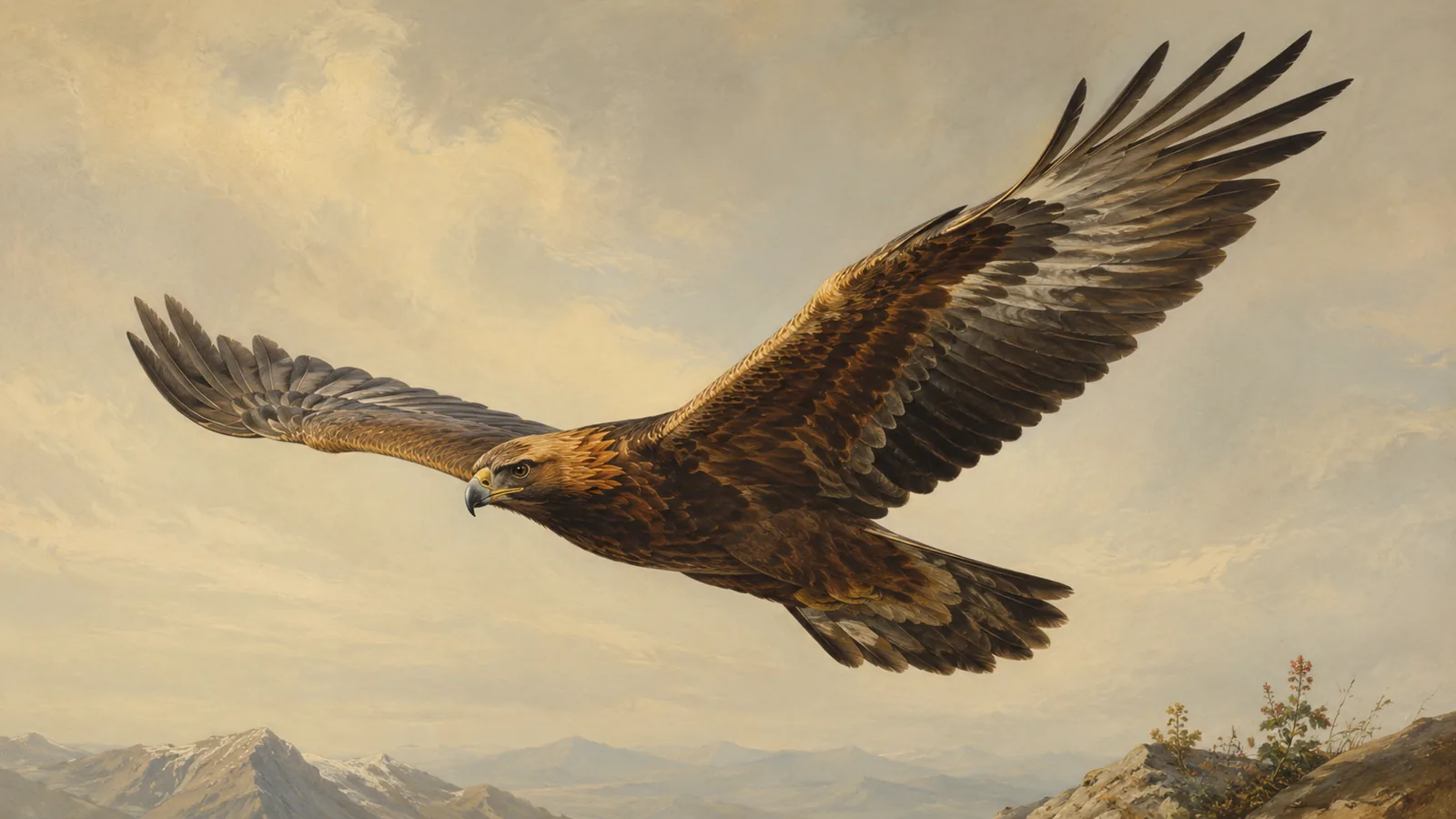
The Roman eagle standard, the aquila, was introduced as the legionary symbol by consul Gaius Marius in 102 BC. It represented Jupiter, father of the Roman pantheon. Losing an aquila to an enemy was the gravest military disgrace possible. The Roman eagle was almost certainly the golden eagle - the genus name Aquila preserves the Latin directly.
The Roman tradition passed into European heraldry. The double-headed eagle of the Byzantine and Holy Roman empires, the Reichsadler of Germany, the imperial eagles of Napoleon and Austria - all descend from the aquila. By 1782, eagle as sovereign power was a 1,800-year-old visual argument.
Thomson’s choice of the bald eagle grafted that existing weight onto an exclusively American species. The visual language was inherited. The animal was native. The combination said: this nation carries the authority of empires, but it belongs to no old world.
What the Eagle Is
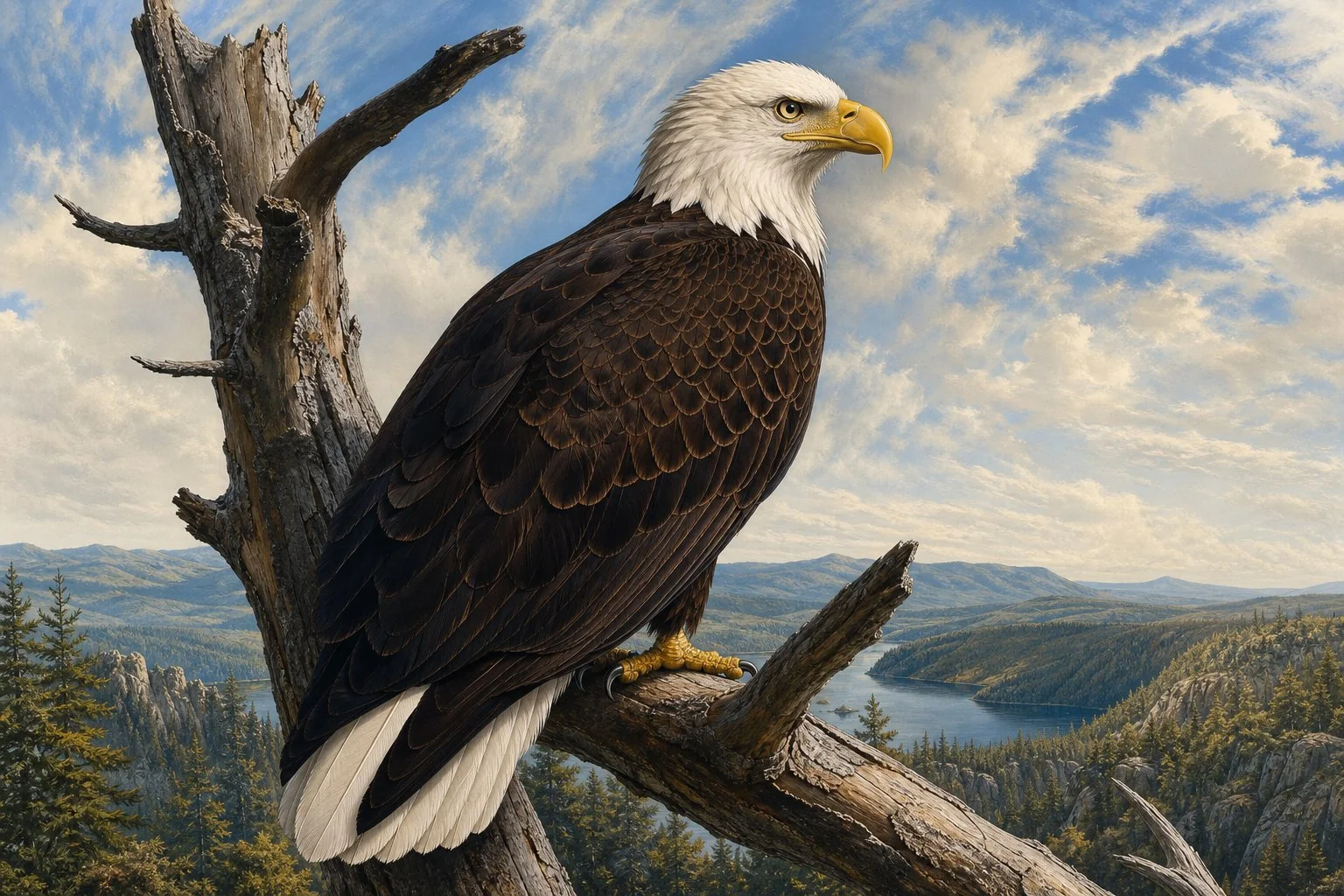
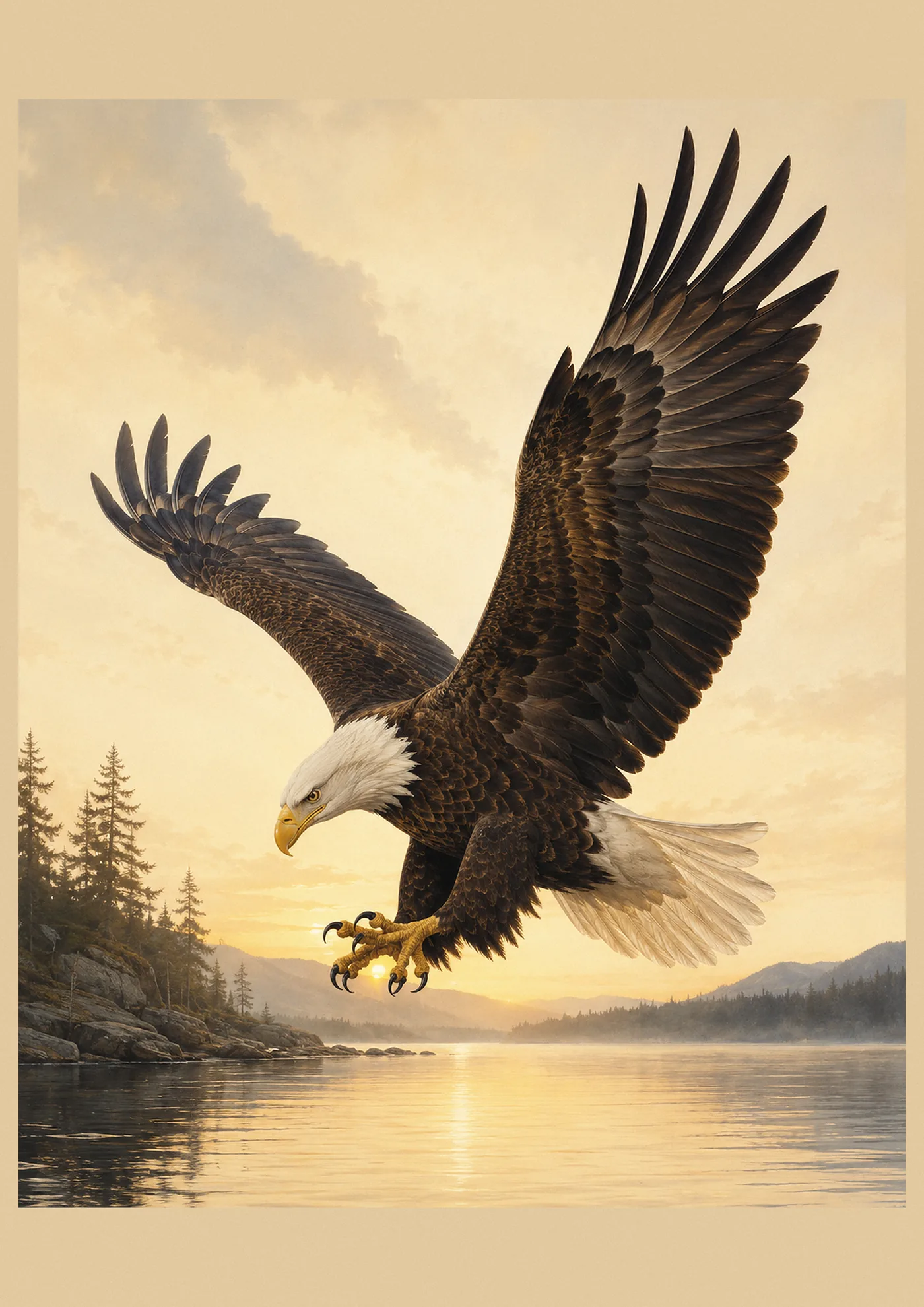
A large fish hawk and opportunist. Wingspan of six to eight feet. Lifespan of twenty to thirty years in the wild. It does not reach its white head until age four or five - juvenile birds are mottled brown and could be mistaken for other large raptors.
It nests near large bodies of open water. It eats primarily fish, caught by swooping low over the surface. It also eats waterfowl, small mammals, and carrion. It steals from ospreys. It is driven from territories by birds a fraction of its size.
Its actual call sounds like a herring gull at low volume.
It was not legally the national bird until a Christmas Eve bill signing in 2024.
The cultural production around this animal - the screaming sound, the noble hunter, the emblem of honest strength - is almost entirely manufactured. Franklin said so in 1784. The ornithological record has confirmed it since. The bird itself continues to mug ospreys along rivers from Maine to Oregon, indifferent to what it represents.
The symbolism is a human decision. The animal is not consulted.