Free shipping to the US, Canada & Europe
State Guide
South Carolina's coastal lowcountry holds the densest Painted Bunting breeding population on the Atlantic coast. Here is what orange birds to expect and when.
January 24, 2024 5 min read
In late April, a male Passerina ciris arrives in the maritime thickets of the ACE Basin after crossing the Atlantic from south Florida or the Bahamas in the dark. He weighs around 16 grams. He carries a blue head, a grass-green back, and a red-orange rump and breast that have nothing to do with camouflage and everything to do with the plain yellow-green female who is already in the scrub, watching.
This is the Painted Bunting, and South Carolina is one of the most important places it has left.
The eastern population of Painted Buntings - the birds that breed here on the coastal plain rather than in Texas and Oklahoma - is biologically distinct from the western population. Eastern birds moult before migrating, not at stopover sites. They winter in south Florida, the Bahamas, and Cuba, a comparatively short journey. Their breeding range is narrow: the Audubon field guide and the Wikipedia species account both cite the “southern coast and inland waterways such as the Santee River of South Carolina” as core territory. The Audubon Society’s South Carolina birding guide confirms the species “commonly nests” at Huntington Beach State Park and is regular at the ACE Basin and Santee Coastal Reserve, which eBird ranks as the single most productive birding site in the state - 275 species recorded across 24,000 acres of tidal wetland, old rice impoundments, and barrier island forest.
South Carolina holds one of the densest Atlantic coast breeding populations of the Painted Bunting - and that population is declining 1% per year, squeezed between sea level rise and coastal development eating the maritime forest from both sides.
The numbers behind that blockquote come from field work, not modelling. Dr. Jamie Rotenberg of UNC Wilmington and Lex Glover of the South Carolina Department of Natural Resources launched the Painted Bunting Observer Team in 2006, placing colour-coded leg bands on birds and enlisting backyard feeder-watchers across the Carolinas to report sightings. By the time the banding work ended in 2012, roughly 5,000 birds had been tracked. Their data, reported by WUSF Public Media in 2024, shows the Atlantic population dropping 0.6% annually overall, South Carolina down 1% per year, and Florida down 1.5%. The cause is what researchers now call the coastal squeeze: development pressing in from inland while sea level rise erodes the low maritime forest edge where the birds nest - typically 0.9 to 2.7 metres off the ground, in dense scrub, close to open ground for foraging. The oldest Painted Bunting on record was banded in South Carolina in 2010 and found alive there again in July 2023, over 14 years old. It is an outlier - and a sign of what the habitat can sustain when it survives.
The state’s other orange-tinted species arrive with less ceremony. The Summer Tanager (Piranga rubra) - whose type specimen was originally described from South Carolina, making the state the species’ namesake locality - breeds in the pine-oak forests of the piedmont and coastal plain from late April through August. Cornell’s All About Birds describes its southeastern habitat as pine-oak and mixed forest, mid-canopy and above. The male is rose-red rather than orange, but the female carries warm orange-buff underparts over olive-brown wings that read as distinctly orange in the field. She builds her nest on a horizontal tree branch anywhere between 1.2 and nearly 14 metres up. He spends much of the summer catching bees and wasps in flight, rubbing the stinger off on a branch before swallowing.
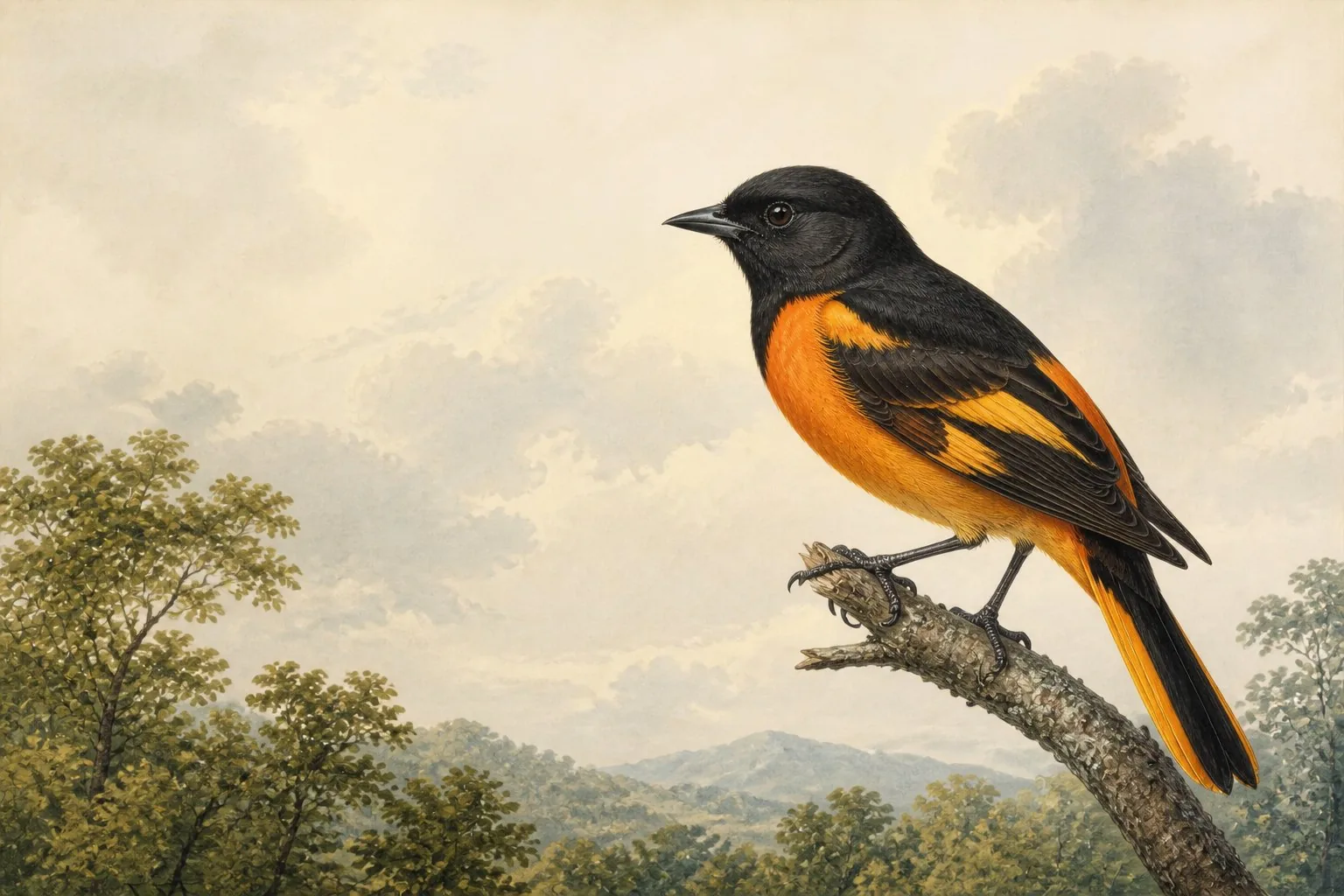
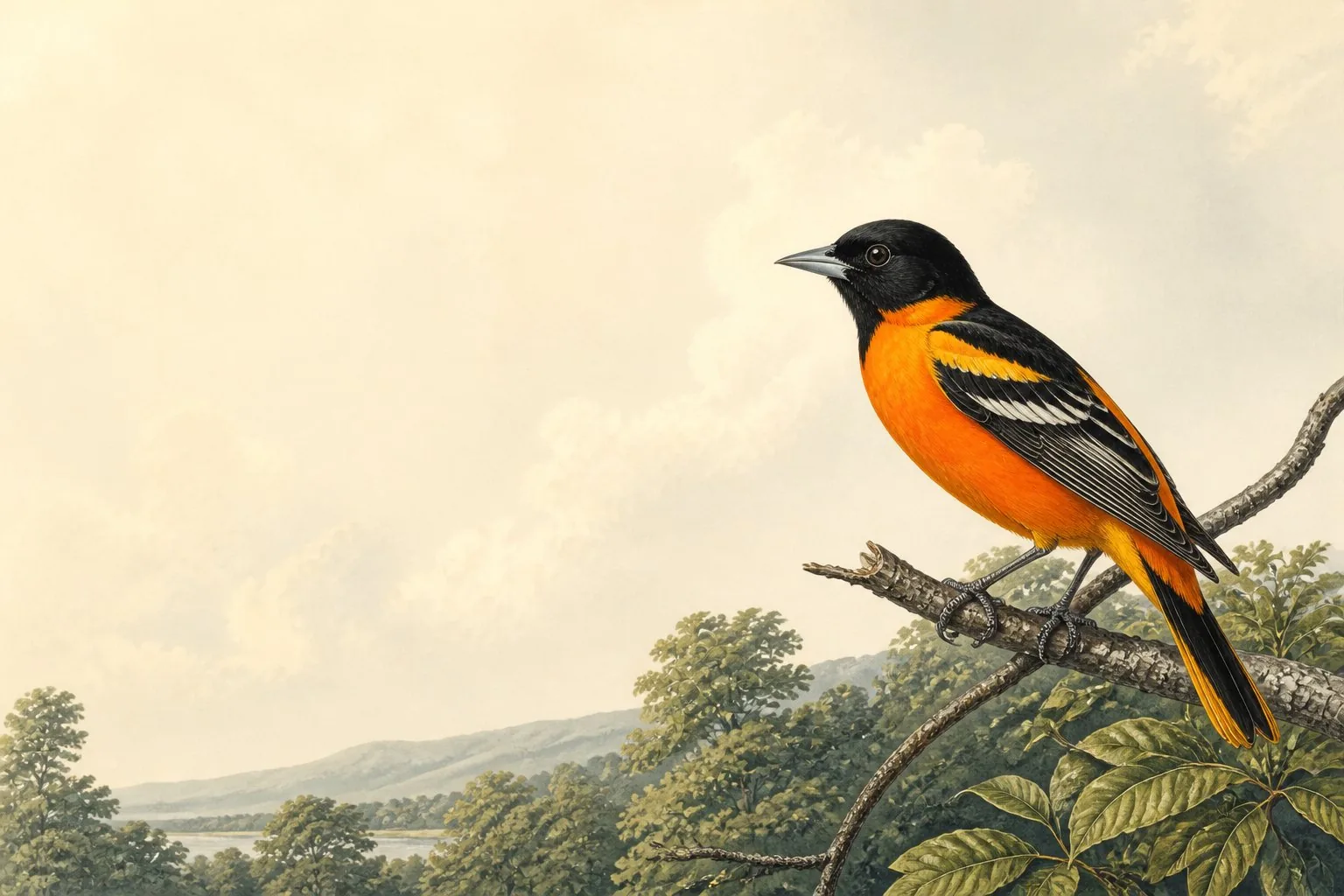
The two orioles require separating. The Baltimore Oriole (Icterus galbula), whose Audubon field guide entry traces the male’s “flaming orange and black” colouring directly to the historical coat of arms of Lord Baltimore, passes through South Carolina as a migrant in mid-April to mid-May on its way to breeding grounds further north. It does not breed in the state in any numbers. Fall migration begins early - many birds depart by July and August. The Orchard Oriole (Icterus spurius) is a different matter: it genuinely nests here. The male is chestnut-and-black, noticeably darker than a Baltimore and regularly missed by observers expecting the brighter orange. Young birds and females are olive-green with yellowish underparts. The Audubon South Carolina guide confirms Orchard Orioles breed in the longleaf pine habitat of Carolina Sandhills National Wildlife Refuge; two were documented on the Cape Trail at the Santee Coastal Reserve in recent eBird surveys. Their season is short. Some adults begin moving south as early as mid-July, making them among the earliest autumn departures of any North American migrant.
| Species | Male colour | Season in SC | Primary habitat |
|---|---|---|---|
| Painted Bunting | Blue head, green back, red-orange breast | Late April - September | Maritime thickets, coastal scrub |
| Summer Tanager | Rose-red overall (female orange-buff) | Late April - August | Pine-oak woodland, piedmont |
| Baltimore Oriole | Flaming orange and black | Mid-April - May (migrant) | Open woodland edges |
| Orchard Oriole | Chestnut and black | Late April - mid-July | Longleaf pine, river edges |
| American Robin | Orange-red breast | Year-round | Lawns, parks, mixed woodland |
| Eastern Towhee | Rufous-orange flanks | Year-round | Dense undergrowth, thickets |
The practical case for South Carolina is this: the coastal lowcountry and the piedmont are within a three-hour drive of each other, and they hold different sets of birds. The Painted Bunting does not breed in Ohio, Michigan, or Illinois at meaningful densities - it is a southeastern coastal specialist. The Summer Tanager thins out north of Virginia. South Carolina catches both. A focused late-April trip - ACE Basin in the morning, Congaree National Park in the afternoon - can produce a coastal bunting and a piedmont tanager on the same day, which is not an itinerary most states can offer. The desert-edge orange species of the southwest are a separate roster entirely, covered in our guide to orange birds in Arizona.
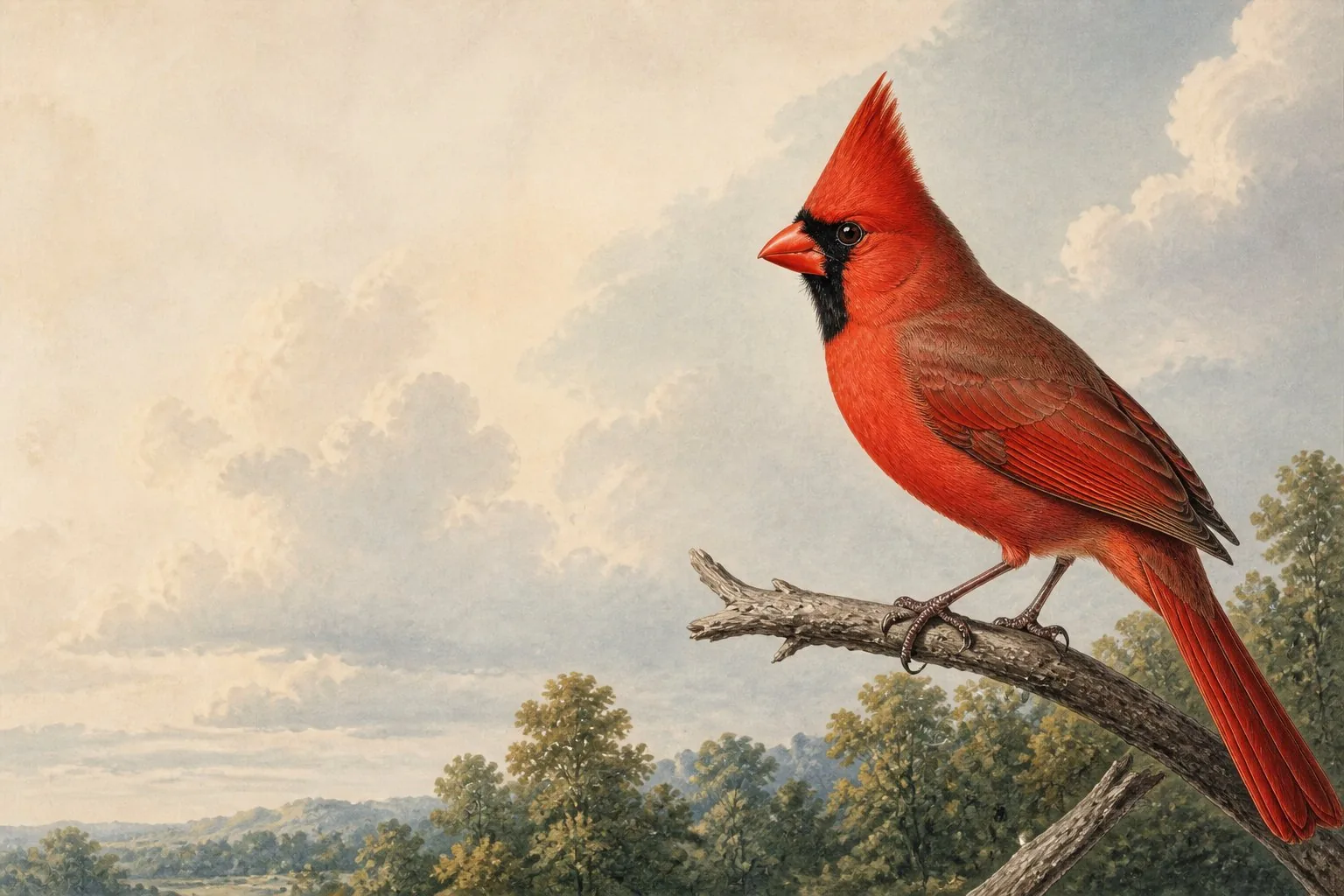
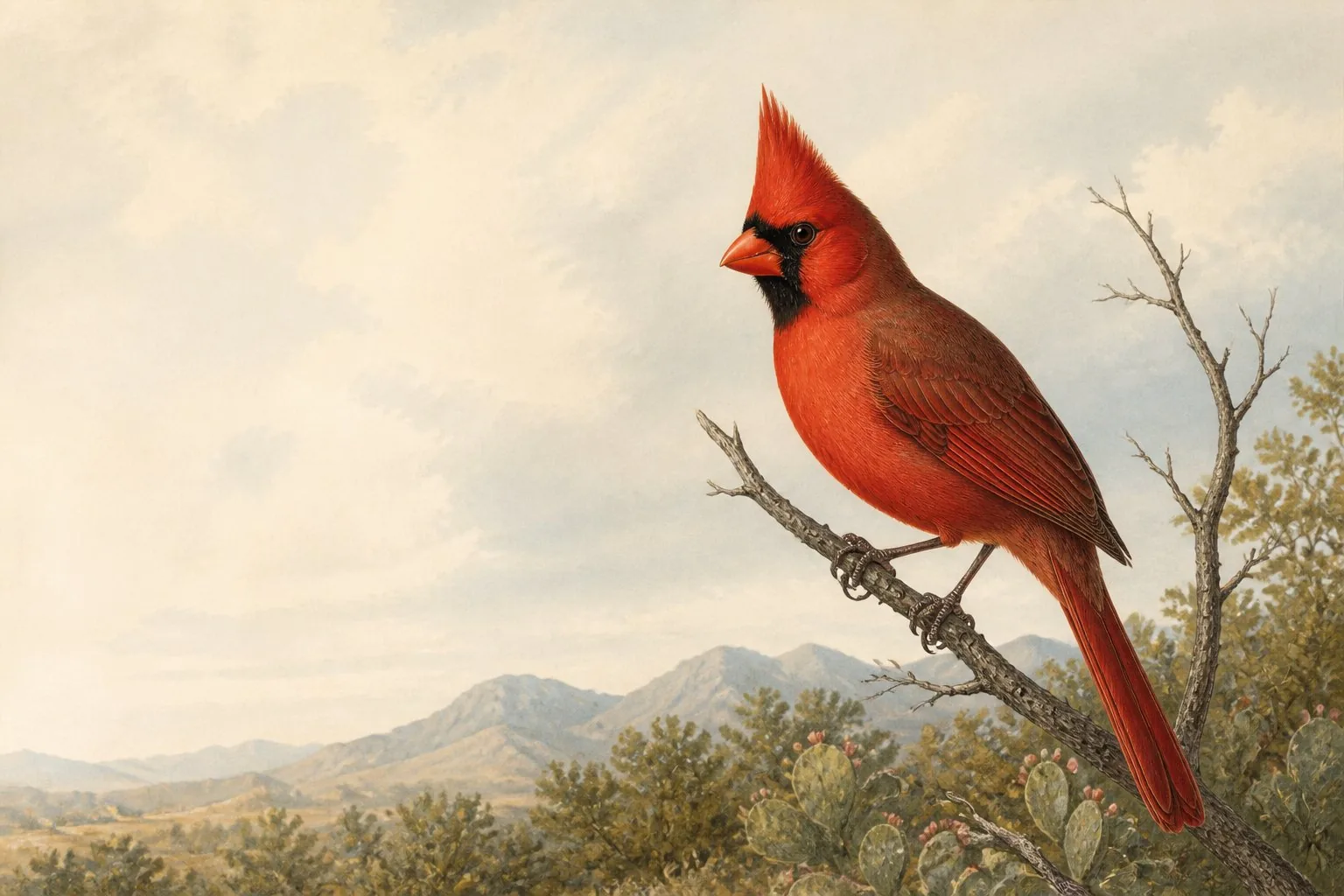
For the species that anchors most South Carolina backyard lists, the Northern Cardinal field guide covers plumage, range, and behaviour in full. Cardinals and Painted Buntings share the same thicket habitat on the coast, and they share the same summer moult cycle - the cardinal molting post explains why both birds look rough in August and reach peak colour by March.
The Painted Bunting is declining. The coastal habitat it requires - low, dense maritime scrub, within reach of open foraging ground, intact enough to buffer sea level rise on one side - is finite in a way that piedmont forest is not. That fact makes every May sighting along the South Carolina coast something slightly different from an ordinary field note.
As an Amazon Associate we earn from qualifying purchases. Linked products are ones we genuinely recommend.

 January 24, 2024
 5 min read