Free shipping to the US, Canada & Europe
State Guide
Pennsylvania hosts six species with genuine orange plumage, from the Baltimore Oriole's flame-orange breast to the Blackburnian Warbler's fire-orange throat in hemlock forest.
January 18, 2024 6 min read
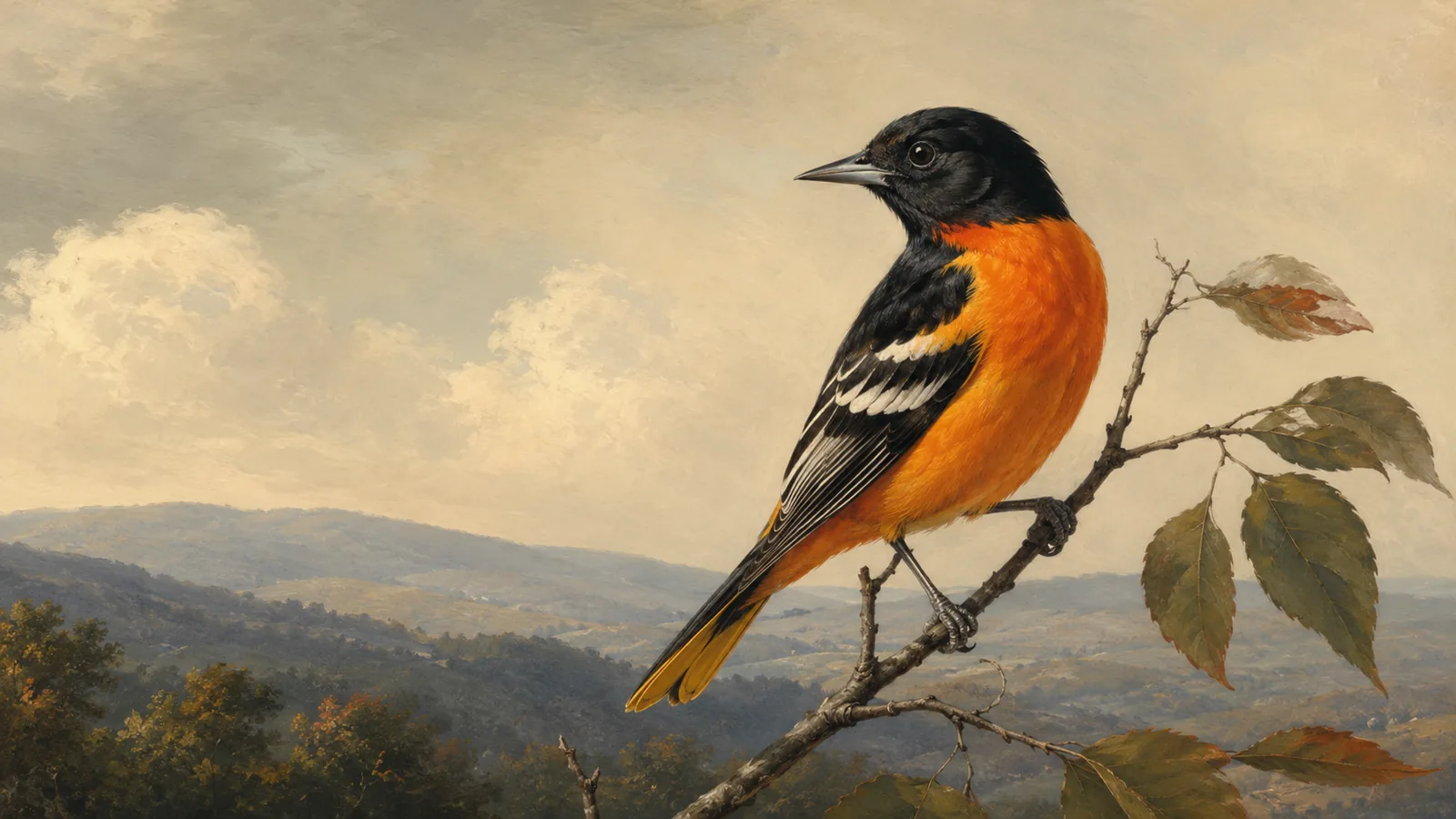
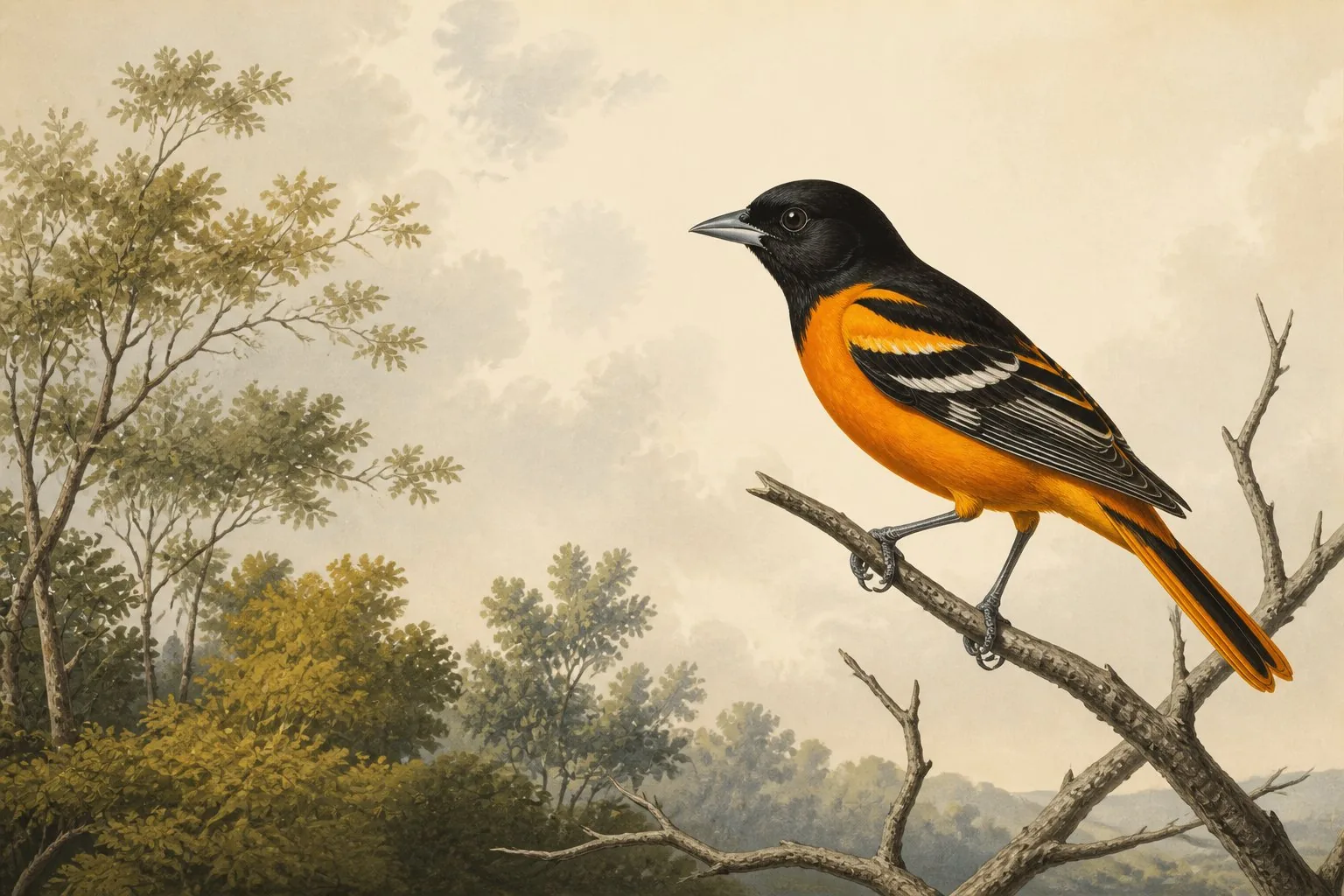
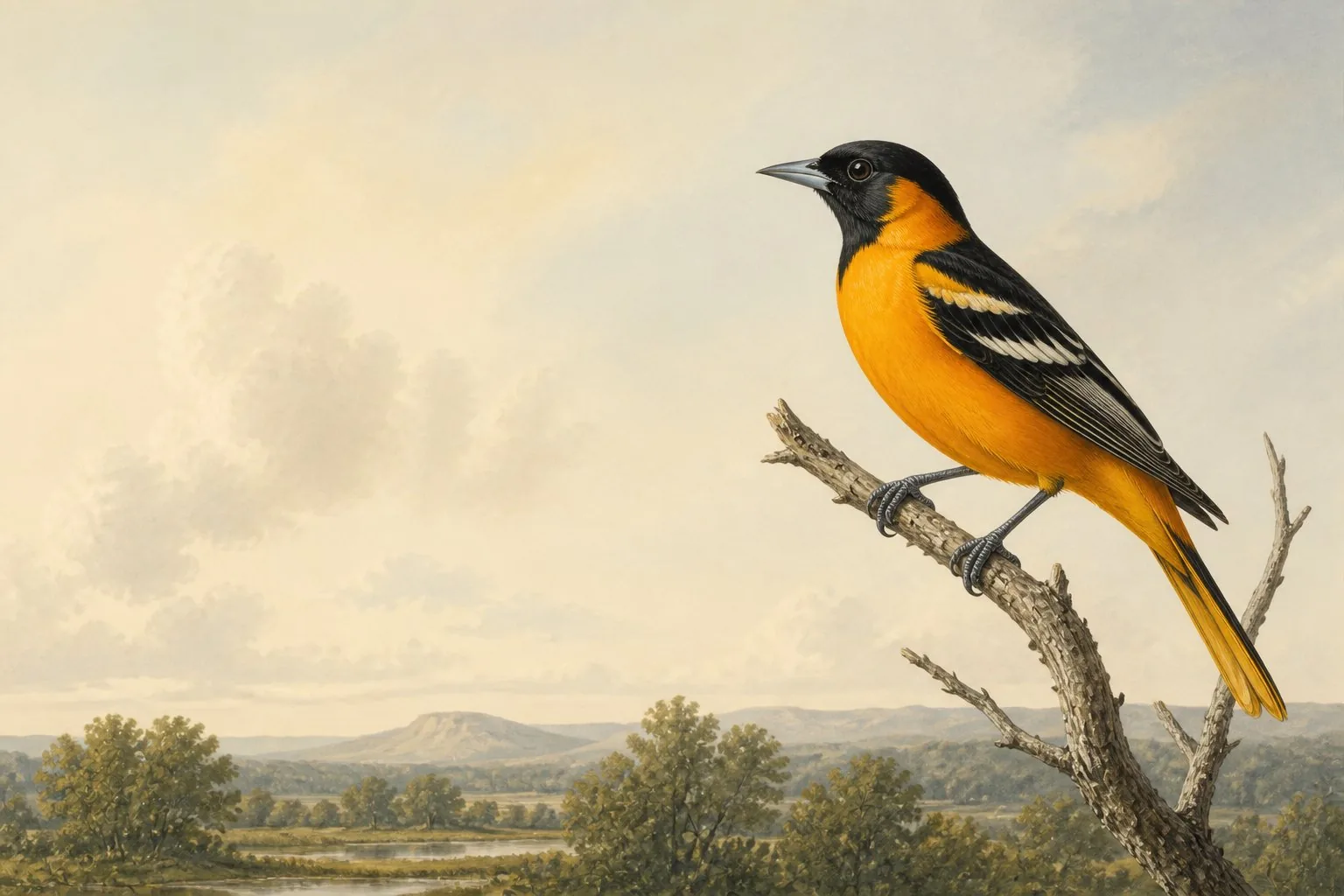
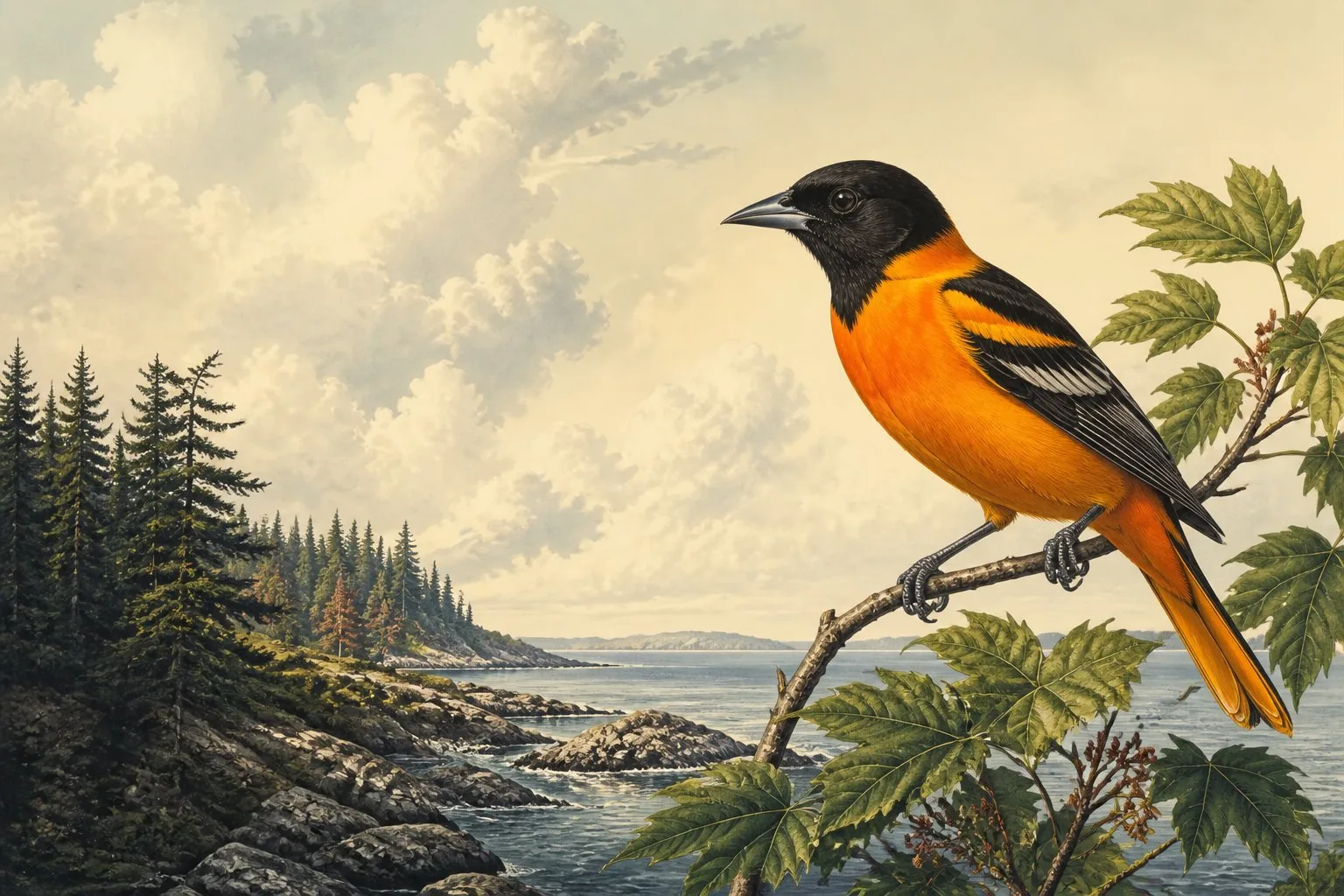
Some morning in early May, a male Icterus galbula drops into a Pennsylvania elm and the neighbourhood notices. The Baltimore Oriole is flame-orange and black, and the colour is loud enough that people who have never owned a field guide stop at the kitchen window.
Pennsylvania hosts six genuinely orange species - a few reachable from your yard and one that requires a hike into hemlock forest. Most of the orange arrives in late April and May, and most of it departs well before the leaves turn.
The Baltimore Oriole is the one most likely to come to you. Cornell’s All About Birds describes adult males as “flame-orange and black,” with a solid black head and a single white wing bar. Females are yellow-orange on the breast, greyer above, with two bold white wing bars - and, according to Cornell, females deepen in colour with each successive moult, so an older female can approach the intensity of a male.
They arrive in Pennsylvania in late April to early May, the male typically a week ahead of the female, just as the trees leaf out. Audubon’s field guide places the species as “widespread east of the Great Plains,” preferring open deciduous woods, riverside groves, shade trees in towns, and forest edges. The female weaves a hanging pouch nest, roughly 3 to 4 inches deep, suspended near the tip of an elm or maple branch, 20 to 30 feet up. Audubon notes the species has declined in recent decades, partly because Dutch elm disease stripped away its preferred nesting trees.
Fall migration begins early - Audubon records many birds heading south in July and August. Put out orange halves and grape jelly from the first of May. For a closer look at a related red yard species, see the Northern Cardinal field guide.
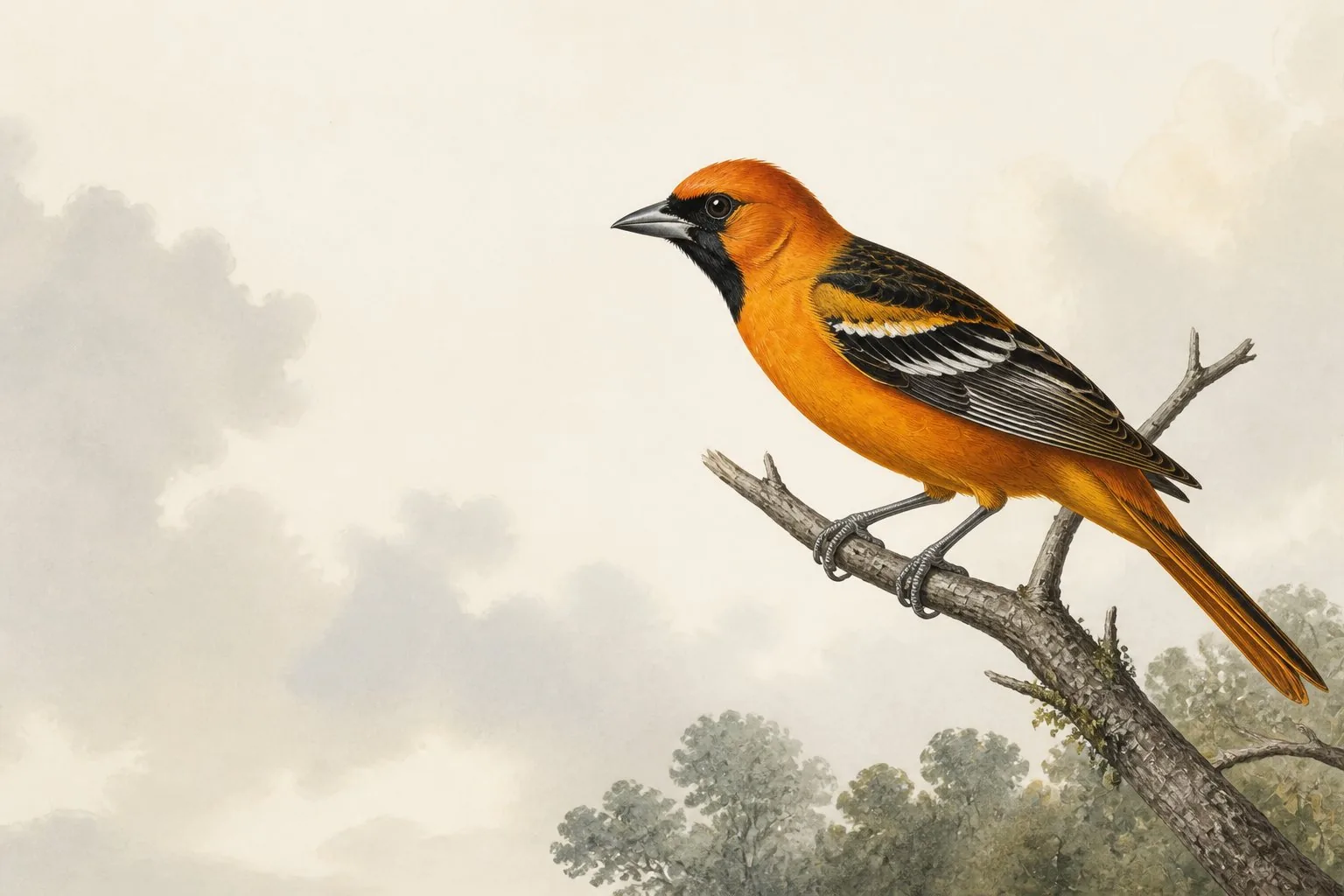
The Orchard Oriole (Icterus spurius) is smaller, and the orange reads differently: adult males carry chestnut-red on the underparts, shoulder, and rump, against a black hood and back. Cornell identifies it as the smallest breeding oriole in North America.
In Pennsylvania, the Pennsylvania Society for Ornithology has documented nest building from as early as 7 May, with peak activity around 1 June. The Orchard Oriole prefers semi-open habitat - river edges, orchards, wet meadows with woody borders. Cornell’s All About Birds records arrivals by late May, with many birds departing as early as mid-July. That is a briefer stay than any other species on this list.
First-year males are yellow-green with a black throat patch, frequently logged as warblers. If you are watching orange birds in Ohio or orange birds in Michigan, the same identification challenge applies at similar latitudes.
The American Robin (Turdus migratorius) is the most familiar orange-breasted bird in Pennsylvania, and the one most birders take for granted. Audubon’s field guide describes the breast colour precisely as “brick-red” - not the hard orange of an oriole, but the contrast with the dark grey-brown back makes the bird readable at 20 paces, year-round.
Robins are present in Pennsylvania through most or all of the year. They concentrate in fruiting trees and shrubs in winter, then spread back across lawns and parks in early spring, raising two or three broods per season. Audubon records a total North American population of approximately 370 million birds. That familiarity should not obscure the colour: on a grey February morning in a Pennsylvania yard, the robin’s breast is the first warm thing in the landscape.
The Eastern Towhee (Pipilo erythrophthalmus) is the orange-sided bird you hear before you see. The male is sooty black above and on the breast, with warm rufous flanks and a white belly. Cornell places the rufous specifically on the sides; it never reaches the face or back. The species was once lumped with the western Spotted Towhee as the “Rufous-sided Towhee” - a name that described both birds more honestly than either current one does.
Towhees breed in scrubby edge habitat across the state: overgrown fields, thicket margins, second growth with leaf litter. They nest on or close to the ground, raising two broods a year. Walk a weedy fencerow in June and the drink-your-teeeea song comes long before the bird does.
The American Redstart (Setophaga ruticilla) carries its orange differently from every other species here. Adult males are coal-black with vivid orange-red patches at the base of the tail, along the sides of the breast, and on the wings. The patches flash in flight. Audubon describes the male as “mostly black with red-orange patches on wings, tail, and sides.”
Of Pennsylvania’s orange birds, the redstart is the one most likely to be identified first by its movement rather than its colour.
Redstarts breed in moist deciduous and mixed woodlands, favouring second-growth with dense understorey - stream edges, alder thickets, shrubby gaps in older woods. The female builds a compact cup 4 to 70 feet up in a tree fork, decorated with lichen and birch bark. The male fans his tail and droops his wings constantly, even while stationary, apparently to startle insects from cover.
The Blackburnian Warbler (Setophaga fusca) is the hardest to reach. Males have a brilliant orange throat and face with a black triangular ear patch, a black crown, and white wing patches. Cornell’s All About Birds notes that no other North American warbler has an orange throat.
Blackburnians breed in Pennsylvania’s northern coniferous and mixed forests - the Pocono plateau, the Endless Mountains, the higher Appalachian ridges - favouring eastern hemlock and spruce. Nests are placed up to 80 feet high, a placement that offers natural protection against brood parasitism. Smithsonian’s National Zoo records continental populations as relatively stable over the last 30 years, though New England populations declined roughly 9% annually since 1980, and Andean deforestation on the wintering grounds is a growing concern.
Drive into the Poconos in May or June, listen for a thin ascending tseet-tseet-tseet, and look higher than you think possible.
| Species | Orange character | Peak presence in PA |
|---|---|---|
| Baltimore Oriole | Flame-orange breast and belly | Late April - early August |
| Orchard Oriole | Chestnut-red underparts, male only | Late May - mid-July |
| American Robin | Brick-red breast | Year-round |
| Eastern Towhee | Rufous flanks | Year-round (resident) |
| American Redstart | Orange patches on black | May - early September |
| Blackburnian Warbler | Fire-orange throat and face | May - August (elevation required) |
Pennsylvania’s orange-bird season peaks from the first week of May, when the orioles arrive and the Blackburnian males are singing from hemlock spires, through the end of June. The Baltimore Oriole is the introduction. The Blackburnian is the payoff for going higher.
Compare with orange birds in Illinois - similar orioles on near-identical schedules, but without the Appalachian warbler component. For a different mix see orange birds in Arizona. And if the Northern Cardinal Print is already on your wall, note the company it keeps: the crimson cardinal and the flame oriole share the same Pennsylvania May.
As an Amazon Associate we earn from qualifying purchases. Linked products are ones we genuinely recommend.
 January 18, 2024
 6 min read