Free shipping to the US, Canada & Europe
State Guide
North America's orange birds span orioles, tanagers, hummingbirds, and more.
January 1, 2024 4 min read
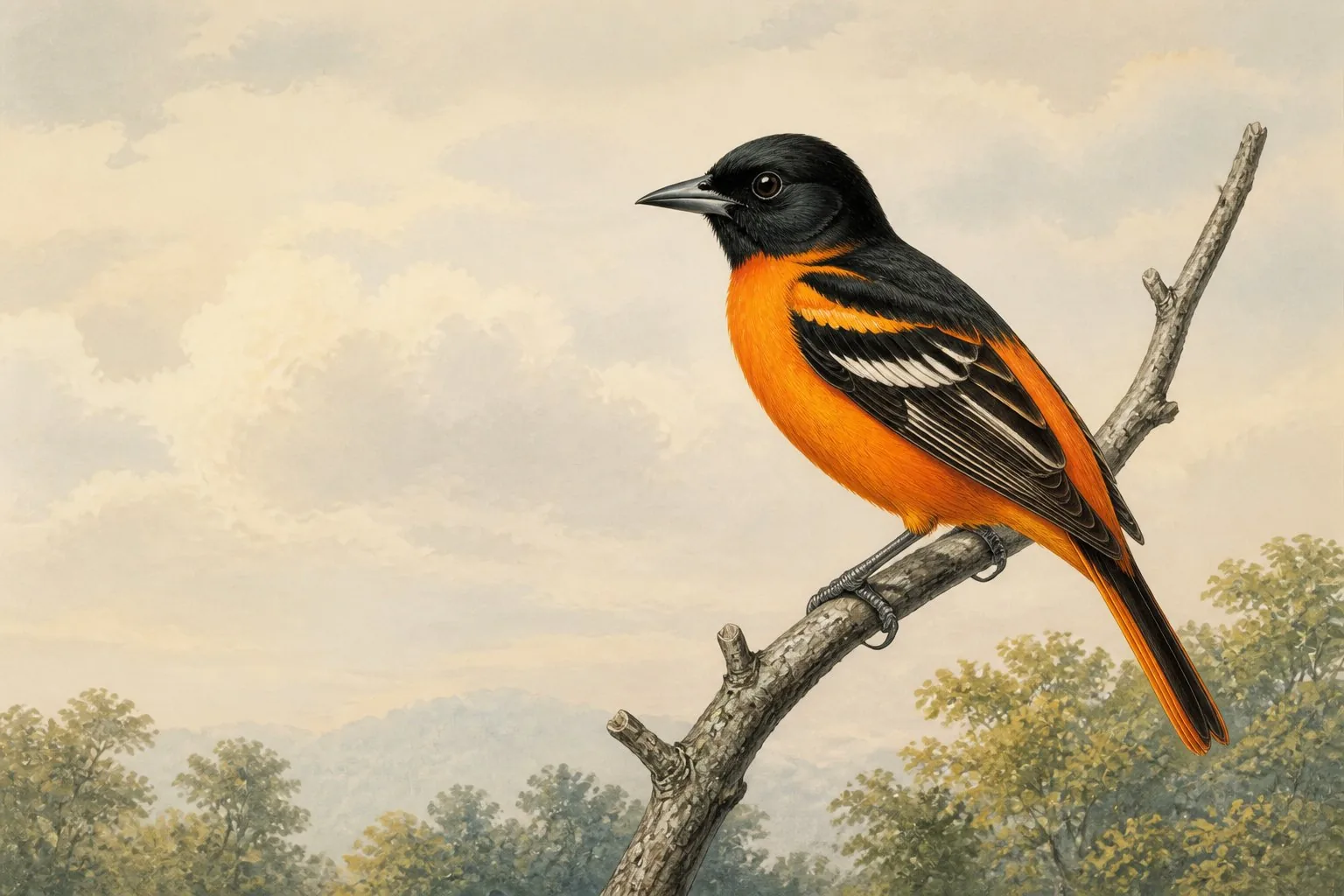
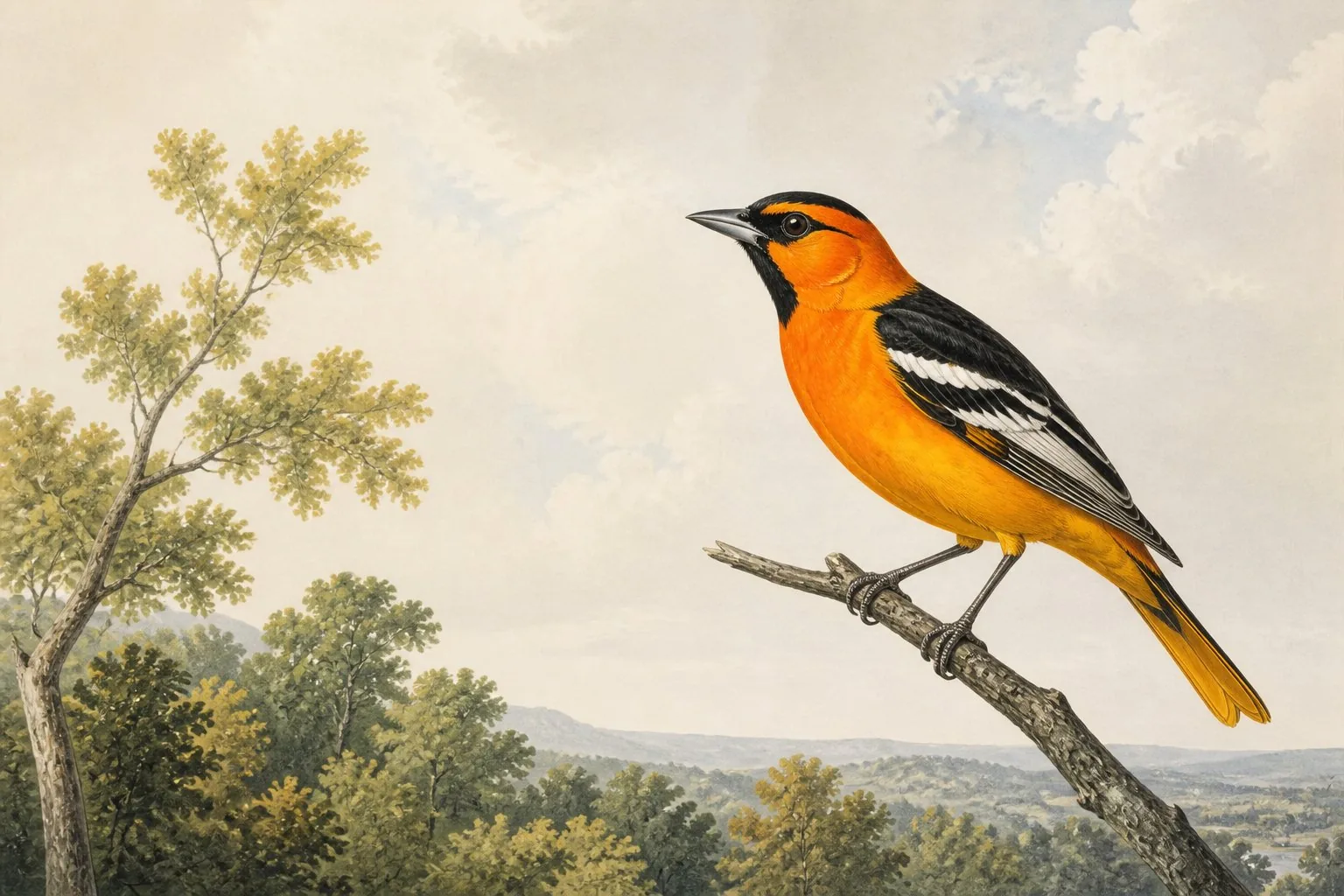
On a May morning in Ohio, two orange birds can appear at the same tree and share almost nothing except colour. One is a Baltimore Oriole, hanging upside-down to inspect a flower cluster. The other is a Scarlet Tanager with his red-orange body and coal-black wings, sitting upright and still in the canopy. Same tree, same hour, different continents of evolutionary history. Orange in birds is not one thing. It is a coincidence of chemistry repeated across unrelated lineages, each for its own reason.
That chemistry matters here. The orange and red pigments in bird feathers are carotenoids, which birds cannot synthesise themselves. They absorb them through what they eat - insects, fruit, flower nectar - and route them into growing feather barbs. A bird’s orange plumage is, in a direct sense, a report on the quality of its recent diet. The brightest Baltimore Oriole male at your feeder in June has eaten better than his drab neighbour. The female he courts appears to know this.
The orioles are North America’s most recognisable orange birds. Eight species breed on the continent, ranging from the familiar to the genuinely hard to find.
| Species | Range | Signature mark |
|---|---|---|
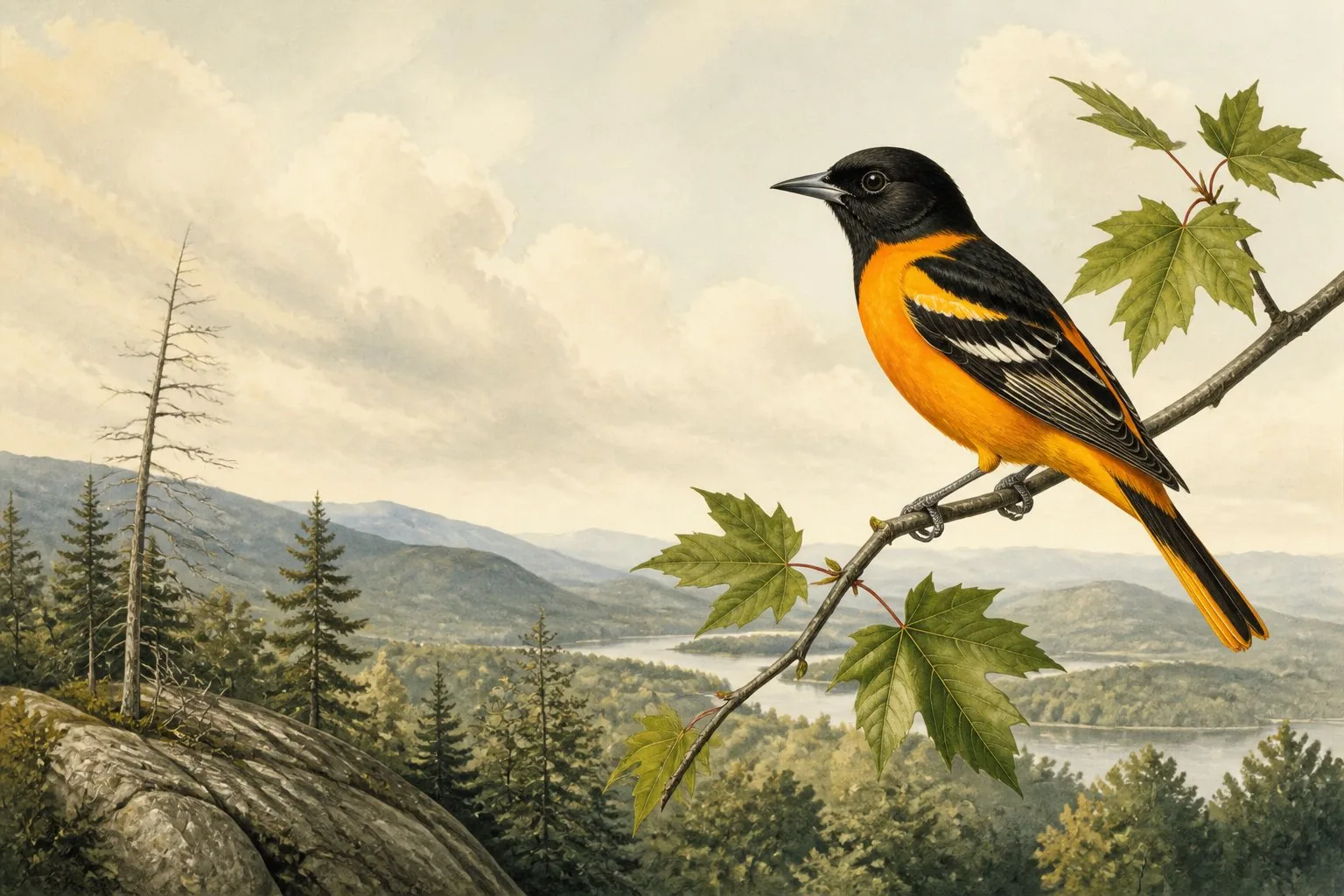
| Baltimore Oriole | Eastern North America | Flame orange, black hood, white wing bars |
| Bullock’s Oriole | Western North America | Orange face, white wing panel |
| Orchard Oriole | East and Midwest | Deep chestnut-orange, not yellow |
| Hooded Oriole | Southwest US | Orange body, black face mask |
| Scott’s Oriole | Arid Southwest | Yellow-orange underparts, black back |
| Altamira Oriole | South Texas | Brightest orange, largest body |
Baltimore and Bullock’s Orioles were reclassified as a single species - “Northern Oriole” - in 1973, then split again in 1995 when genetic work caught up with what field observers already suspected: the two birds behave, sound, and breed differently, despite producing fertile hybrids where their ranges touch in the Great Plains. The split is a useful reminder that the species concept is something biologists argue about, not a fixed fact.
For state-level detail, the orange birds in Ohio guide covers the Baltimore Oriole’s mid-May arrival in detail, and the orange birds in Michigan guide addresses the same species at the northern edge of its breeding range.
The carotenoid pigments that make an oriole orange are the same class of compound that turns a carrot orange, a tomato red, and a flamingo pink. The bird did not invent the colour. It borrowed it from the food chain.
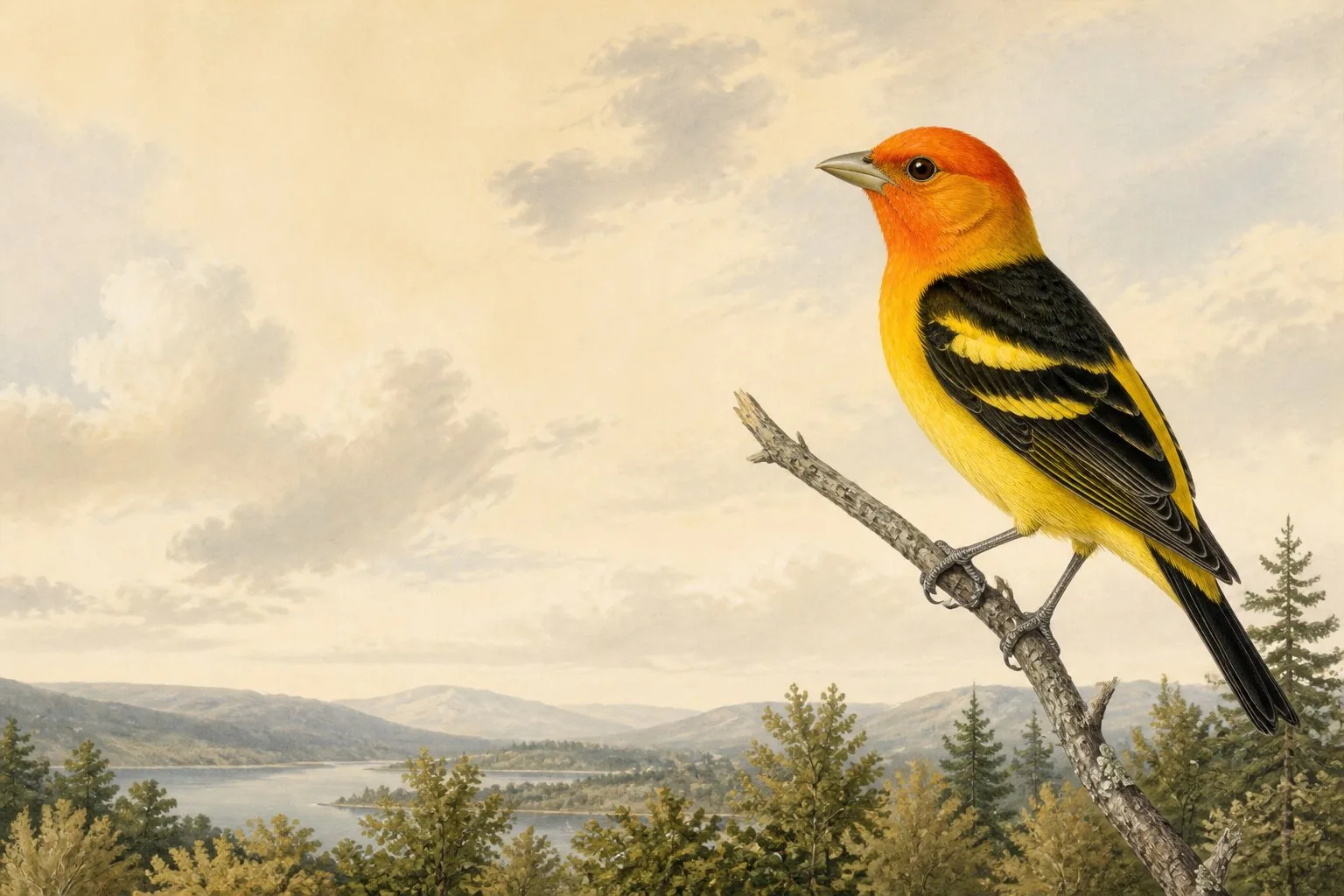
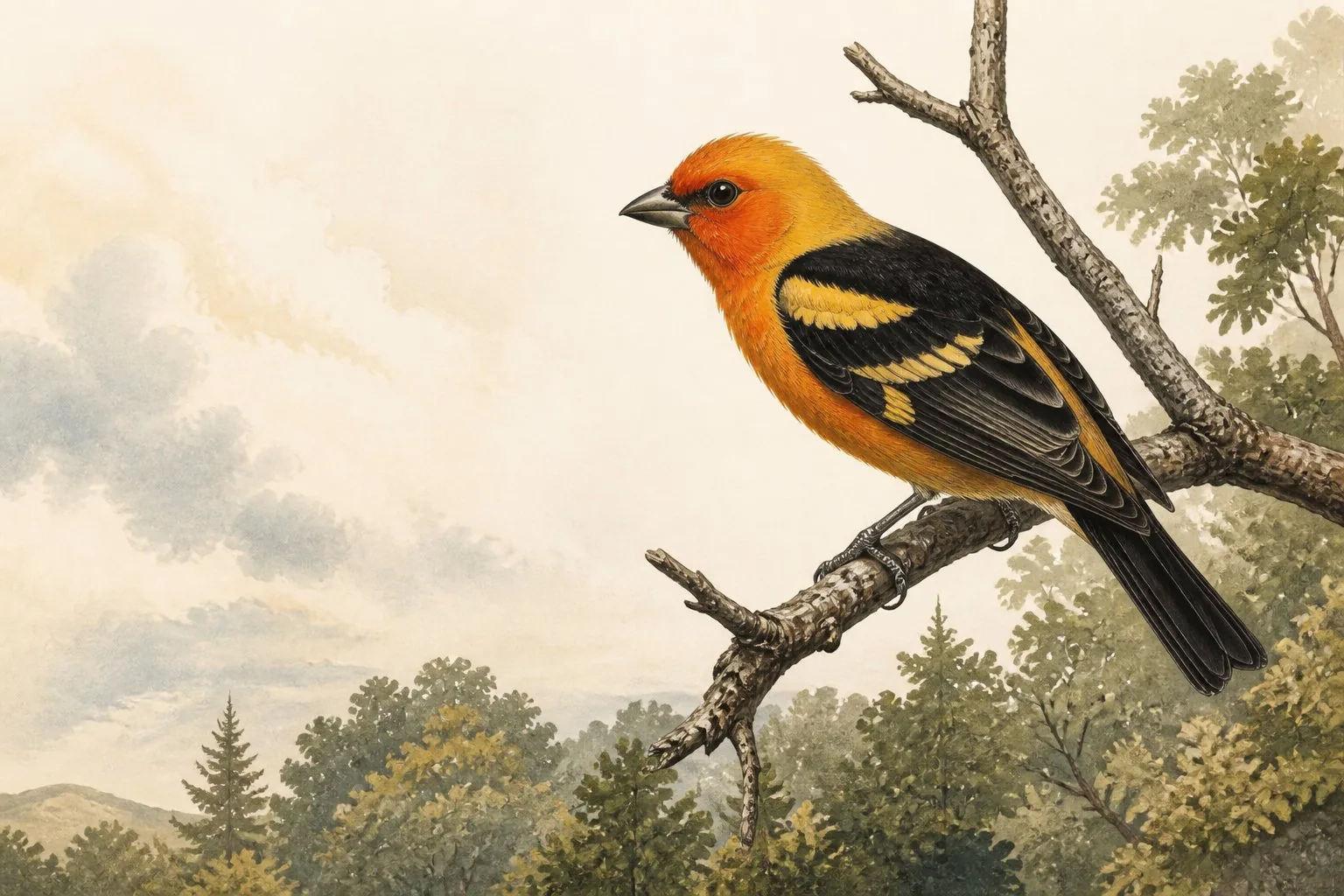
The Western Tanager (Piranga ludoviciana) breeds in western conifer forests and is among the more improbable-looking birds on the continent - yellow body, red-orange face, black wings. The male’s red face comes not from carotenoids but from a pigment called rhodoxanthin, rare among birds and apparently acquired through diet. Exactly how is still studied.
The Rufous Hummingbird (Selasphorus rufus) is smaller than a thumb, copper-rust from crown to tail, and runs a feeder territory with an aggression disproportionate to his size. It breeds as far north as Alaska and winters in Mexico - one of the longest migrations relative to body size of any bird on the continent.
The American Robin (Turdus migratorius) is the orange bird most people identify first, and the one that earns the most confusion. The breast is brick red, not orange. The bird is a thrush. It shares only a colour patch and a common name with the European Robin, which belongs to a different family entirely.
The Midwest is the oriole heartland. Baltimore Orioles arrive in Illinois in late April and breed through July; the orange birds in Illinois guide has the timing. Arkansas sits in the overlap zone where Baltimore and Orchard Orioles both breed - the orange birds in Arkansas guide covers that mix.
The Southwest trades orioles for tanagers. Hepatic Tanagers (Piranga flava), a darker brick-red species easy to confuse with Summer Tanagers, hold territories in pine-oak canyons at elevation. Scott’s Orioles build nests in yucca plants. The arid specialisation of these species is as different from a Baltimore Oriole at a suburban grape-jelly feeder as it is possible to get while still using the word “oriole.”
Grape jelly and orange halves are the standard oriole draws, and they work because orioles arrive in spring wanting quick carbohydrates after migration. Nectar feeders with wider ports (orioles cannot use hummingbird feeder ports) extend the visits through summer. The birds stop coming to feeders once the season’s insects are reliable, usually by late June - not because the feeder failed, but because live prey at that point offers better protein for raising young.
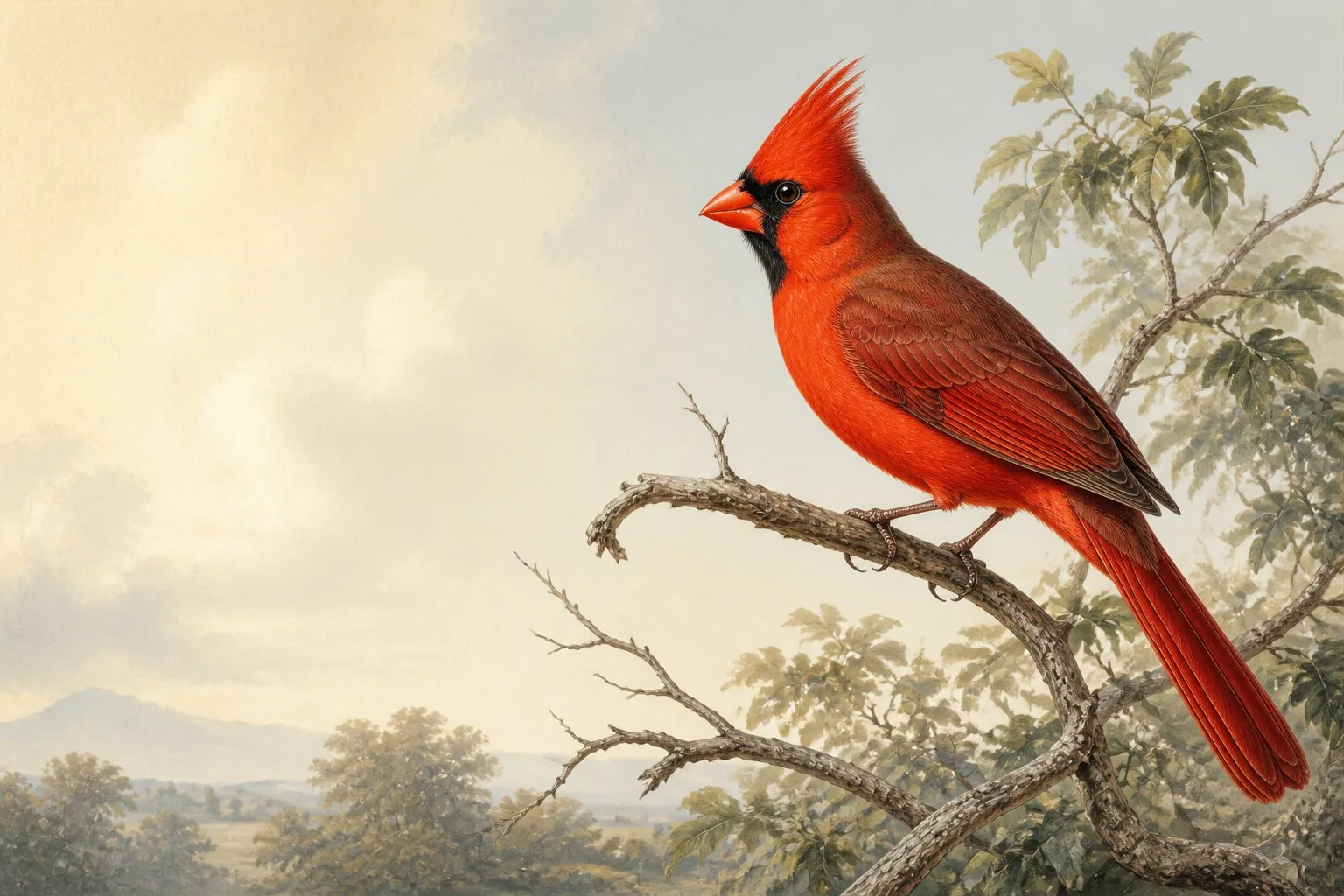
The Northern Cardinal, while red rather than orange, is the species most commonly misidentified as “orange” when seen in low light or photographed in certain conditions. For that identification problem and for everything the cardinal’s red plumage is doing, the cardinal-molting guide is the right read - it covers the carotenoid investment in feather colour from the inside.
For readers in states where orange birds are seasonal, the key is timing. An empty feeder in July proves nothing. The bird’s calendar runs on its own terms, and the best posture is to have the orange halves ready in April and let the oriole decide when to appear.
As an Amazon Associate we earn from qualifying purchases. Linked products are ones we genuinely recommend.
 January 1, 2024
 4 min read