Free shipping to the US, Canada & Europe
State Guide
Ten orange-plumaged birds visit Delaware's marshes and forests, but the Baltimore Oriole is the one worth timing your calendar around.
October 16, 2023 4 min read
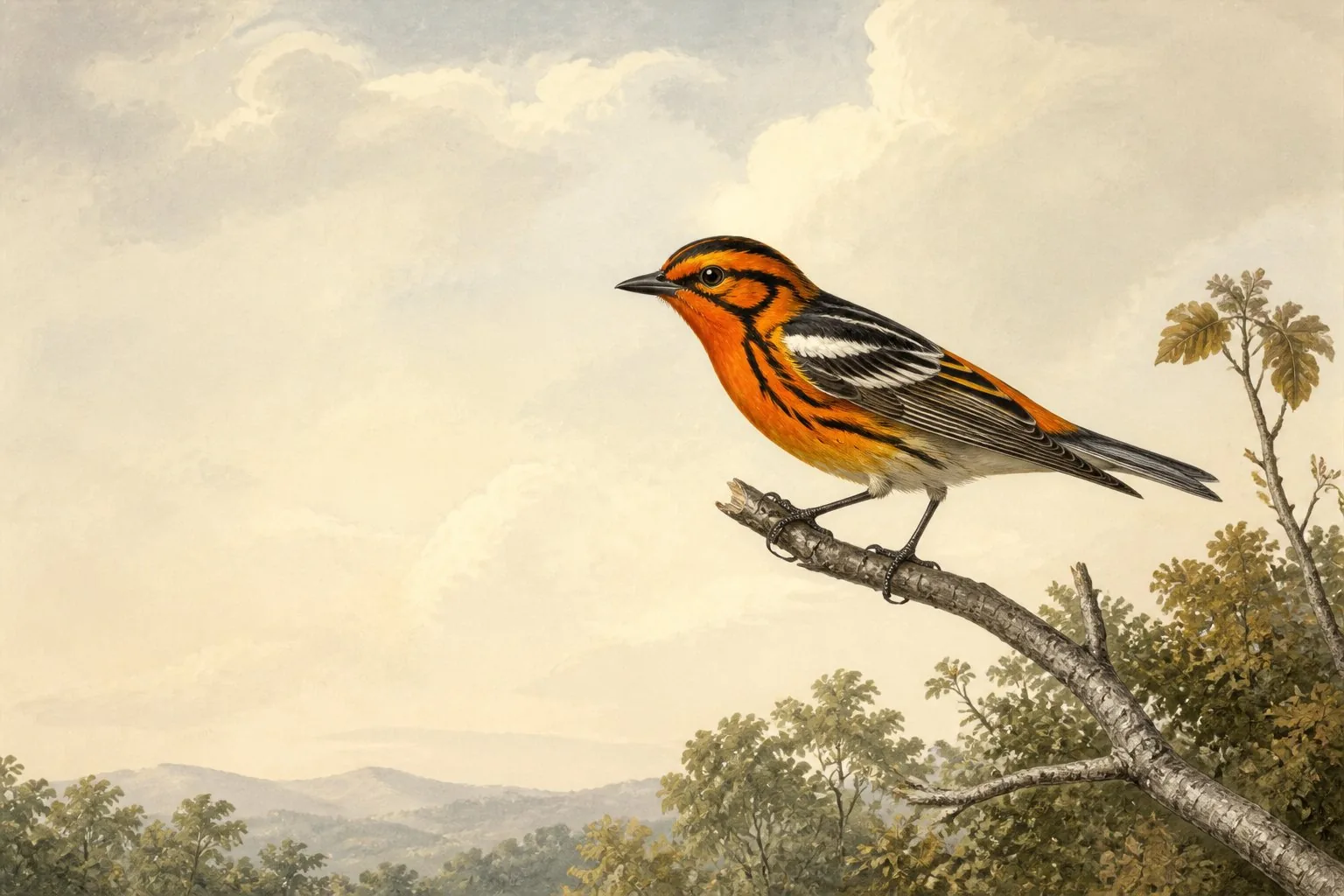
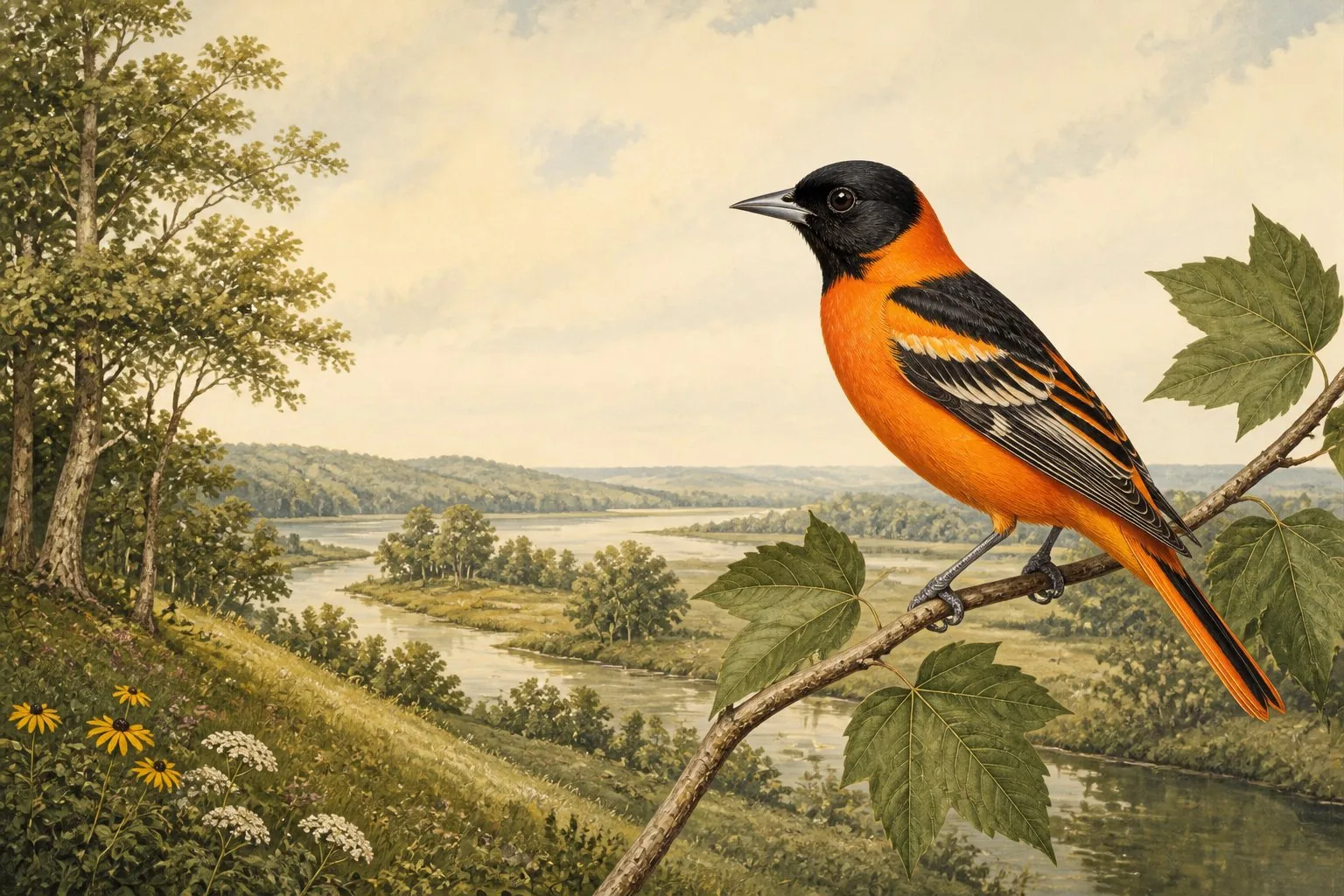
Pull into Bombay Hook National Wildlife Refuge on a morning in early May and you will hear the Baltimore Oriole before you see it: a loud, liquid whistle that drops through the canopy like something falling down stairs. Then a flash of black and orange in the canopy, and the bird lands in full view.
Delaware is small, but its tidal marshes, hardwood ridges, and three major wildlife refuges concentrate migrants in predictable places. That geography means a genuine slate of orange birds - not just orioles - spread across all four seasons.
| Species | Orange feature | When | Habitat |
|---|---|---|---|
| Baltimore Oriole | Bright orange breast and belly | May to August | Forest edges, suburbs |
| Orchard Oriole | Deep rusty-orange underparts (male) | May to August | Open woodlands, orchards |
| American Robin | Orange-red breast | Year-round | Lawns, parks, woodlands |
| Eastern Towhee | Rufous-orange flanks | Year-round | Dense undergrowth |
| Barn Swallow | Orange-buff underparts | April to September | Open fields, near water |
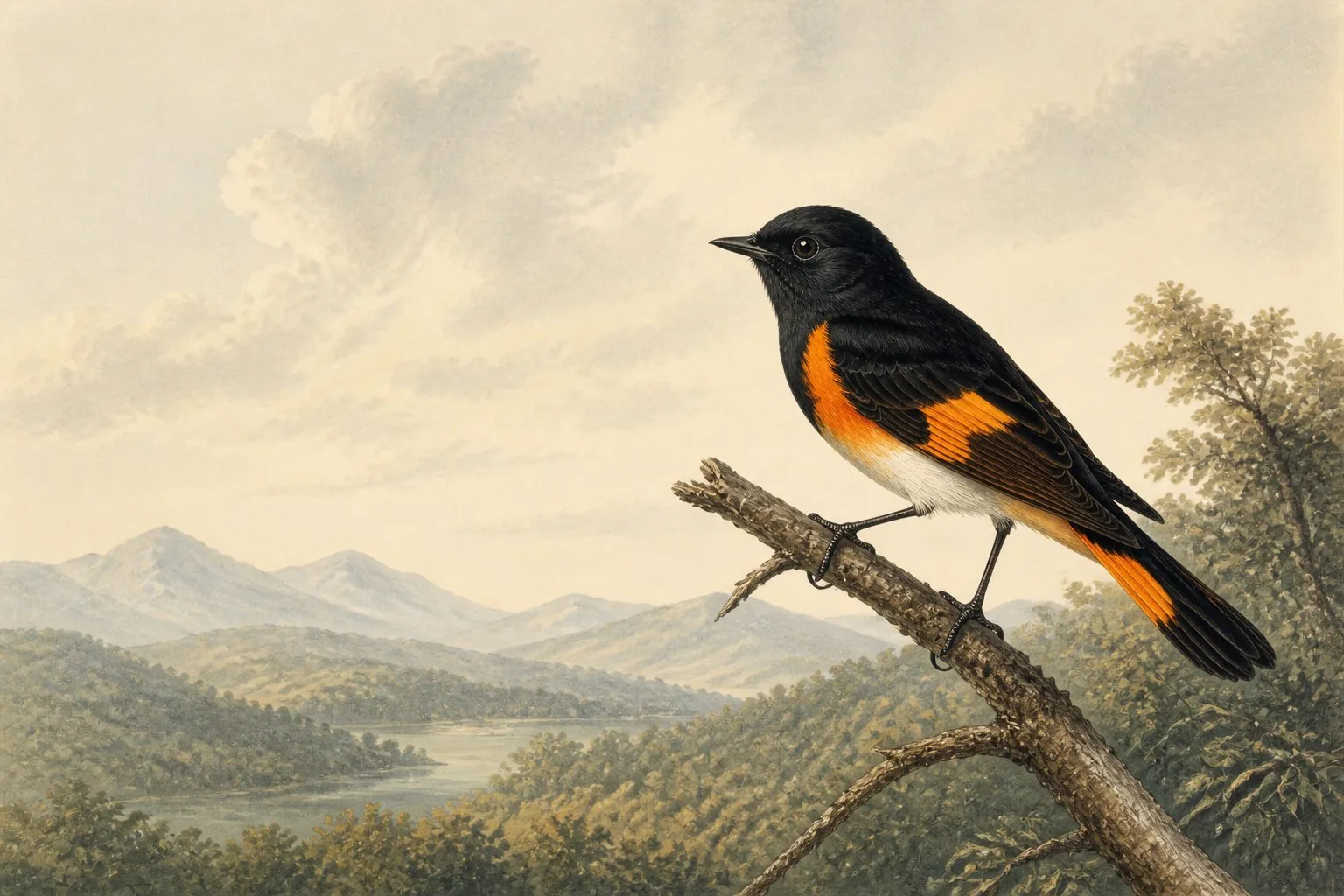
| American Redstart | Orange patches on wings and tail | May, September | Moist deciduous woods |
| Northern Flicker | Orange underwing flash | Year-round | Open woodlands, suburbs |
| Red-breasted Nuthatch | Rusty-orange underparts | Autumn and winter | Coniferous and mixed forest |
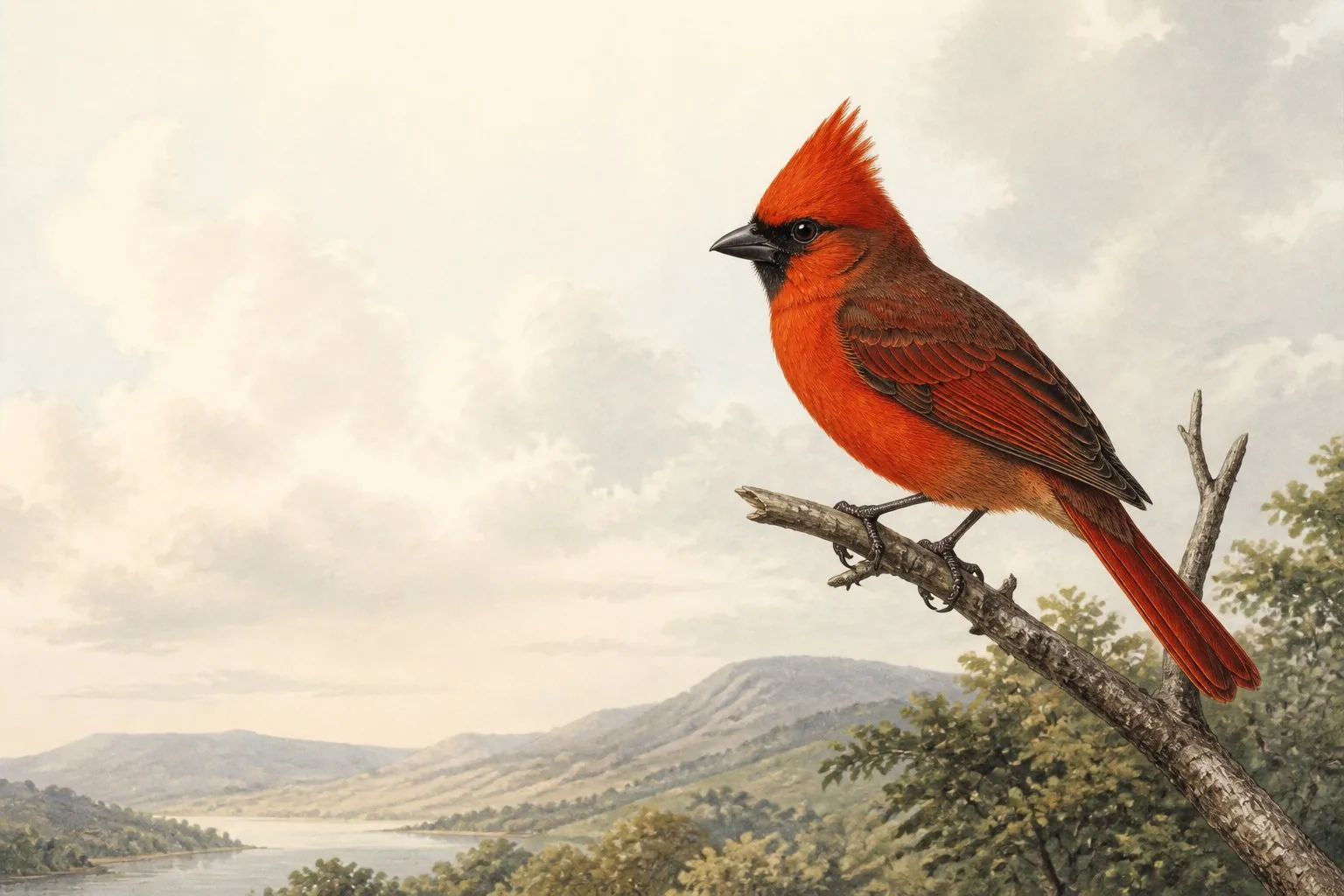
| Scarlet Tanager | Red-orange body (male) | May, September | Mature deciduous forest |
| American Woodcock | Orange-brown cryptic plumage | Year-round | Damp thickets |
Icterus galbula arrives in the last week of April and peaks through May. The male is the one most people photograph: jet black hood, white wingbar, and orange from throat to undertail. She is olive-yellow where he is black, with two white wingbars and a wash of orange on her breast - duller, but easier to spot moving through leaves.
Orioles build one of the most engineered nests of any North American bird: a pendant pouch woven from plant fibres, suspended from a branch tip, often over open water. The nest hangs through winter long after the birds have left for Central America.
To draw them to a yard, put out orange halves and grape jelly from late April. The grape jelly matters more - orioles will work a jelly dish for weeks.
Delaware sits on the Atlantic Flyway, and that geography concentrates migrants. Bombay Hook NWR alone has recorded more than 300 bird species. For orange birds in spring, it is one of the most productive single sites on the East Coast.
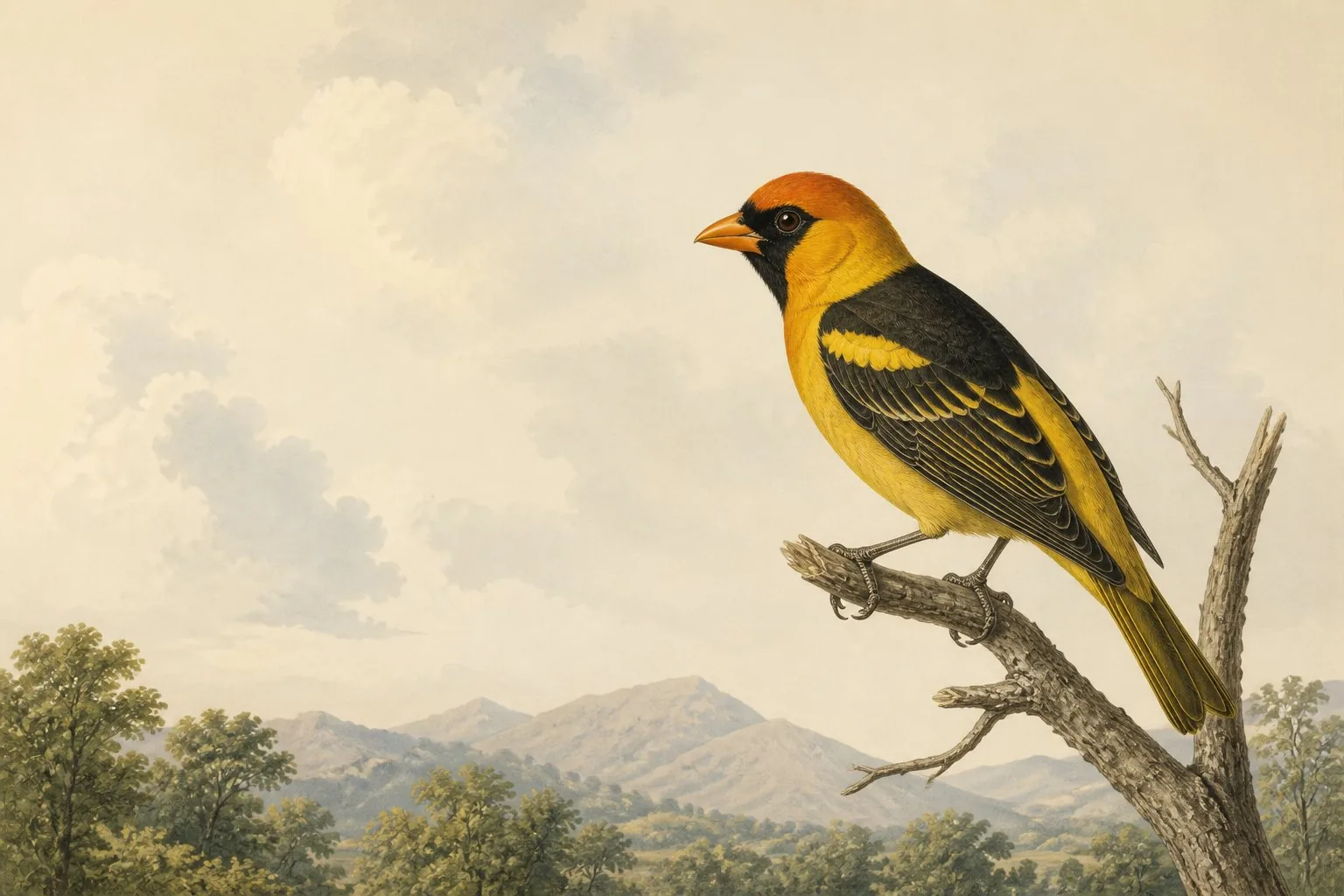
The Orchard Oriole gets overlooked because its orange is wrong. First-year males are greenish-yellow with a black throat - close enough to a warbler that many beginners log them wrong. Adult males carry deep chestnut-orange underparts: burnt terracotta against a black hood, not the bright amber of the Baltimore Oriole.
Icterus spurius departs early. Most have left by mid-August, a full month ahead of the last Baltimore Orioles.
Spring (April to May) is the primary window. Baltimore and Orchard Orioles arrive, Redstarts pass through in numbers, and Scarlet Tanagers cross Delaware on their way north.
Summer (June to August) is breeding season. Orioles hold territories in forest edges and suburbs. Barn Swallows work the open fields around both coastal refuges.
Autumn (September to October) brings a second wave of Redstarts. Shorebird migration at Bombay Hook peaks in August and September - orange birds are secondary to that spectacle, but present.
Winter (November to March) belongs to robins, Northern Flickers, and - in irruption years when boreal cone crops fail - Red-breasted Nuthatches at suet feeders across northern Delaware.
Bombay Hook NWR is the anchor. The auto-tour route in May puts you under orioles in the canopy and Barn Swallows over the impoundments. Early mornings are better than midday.
Prime Hook NWR offers similar marshland habitat with more woodland buffer and smaller crowds.
Brandywine Creek State Park in the north holds the highest-quality mature deciduous forest in Delaware. Scarlet Tanagers and American Redstarts concentrate there in May.
Cape Henlopen State Park is the place during coastal migration in September, when birds pile up at the point before crossing Delaware Bay.
Delaware’s orange birds are mostly flyway birds. The state is narrow enough that most migrants cross it in hours. What concentrates them is the coast - a funnelling line that pushes birds toward the Delaware Bay crossing - and the refuges, which offer food and cover at exactly the moment migrants need it.
That is the argument for Bombay Hook over a suburban yard. Both will have orioles in May. But the refuge puts you in the path of birds still deciding where to go next. The ones at your garden feeder are home. The ones at Bombay Hook are mid-journey, and that difference shows in how they move.
The species list overlaps with neighbouring states: orange birds in Ohio, orange birds in Michigan, orange birds in Illinois, and orange birds in Arkansas.
As an Amazon Associate we earn from qualifying purchases. Linked products are ones we genuinely recommend.
 October 16, 2023
 4 min read