State Guide
Orange Birds in Wyoming
Stand in a lodgepole pine stand anywhere in Yellowstone in June and you will hear the Western Tanager before you see him: a hoarse, two-note phrase that sounds like a robin with a head cold. Then he drops into a shaft of light and the orange-red of his face stops you mid-step.
Wyoming is not a state most birders think of as orange territory. It is more commonly associated with raptors and sagebrush. But the state’s geography - the high Rockies to the west, cottonwood-lined rivers cutting through the plains, open grassland stitched with ranch buildings - supports a wider palette than it looks. The four orange species that matter most each occupy a different niche, and knowing them means knowing something about the landscape itself.
The four species worth understanding
Piranga ludoviciana, the Western Tanager, is Wyoming’s signature orange bird. He is a bird of the high-elevation conifer forests, arriving from his Mexican wintering grounds in May and working his way up into the lodgepole and spruce stands by June. The male carries a combination that looks almost tropical: orange-red head, yellow body, black wings with two white wing bars. The red comes not from carotenoids - as it does in most orange birds - but from a pigment called rhodoxanthin that tanagers cannot synthesise themselves. They get it from insects. A male whose summer includes poor insect foraging will have a duller head by autumn. His plumage is, in a real sense, a ledger of the season.
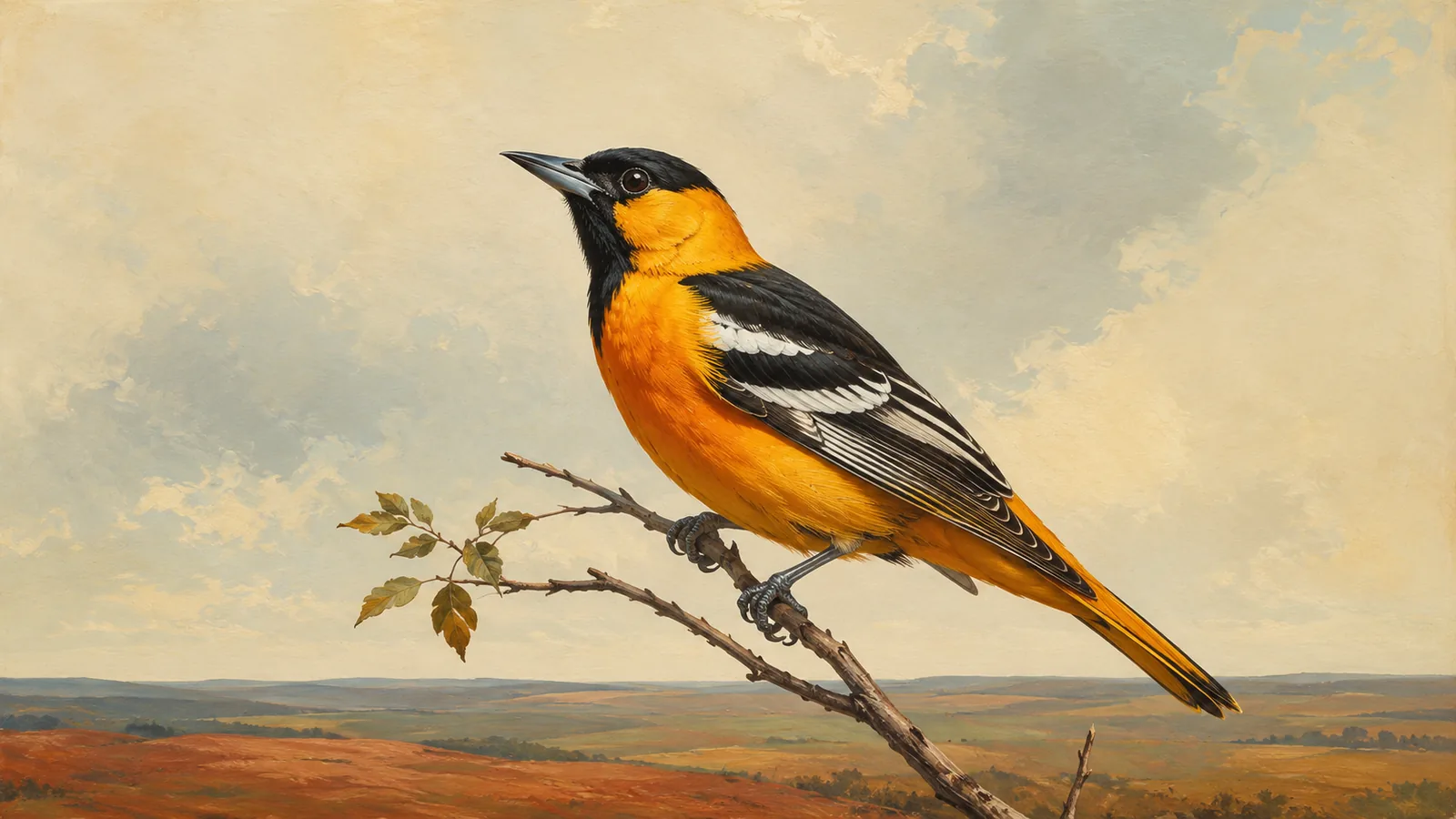
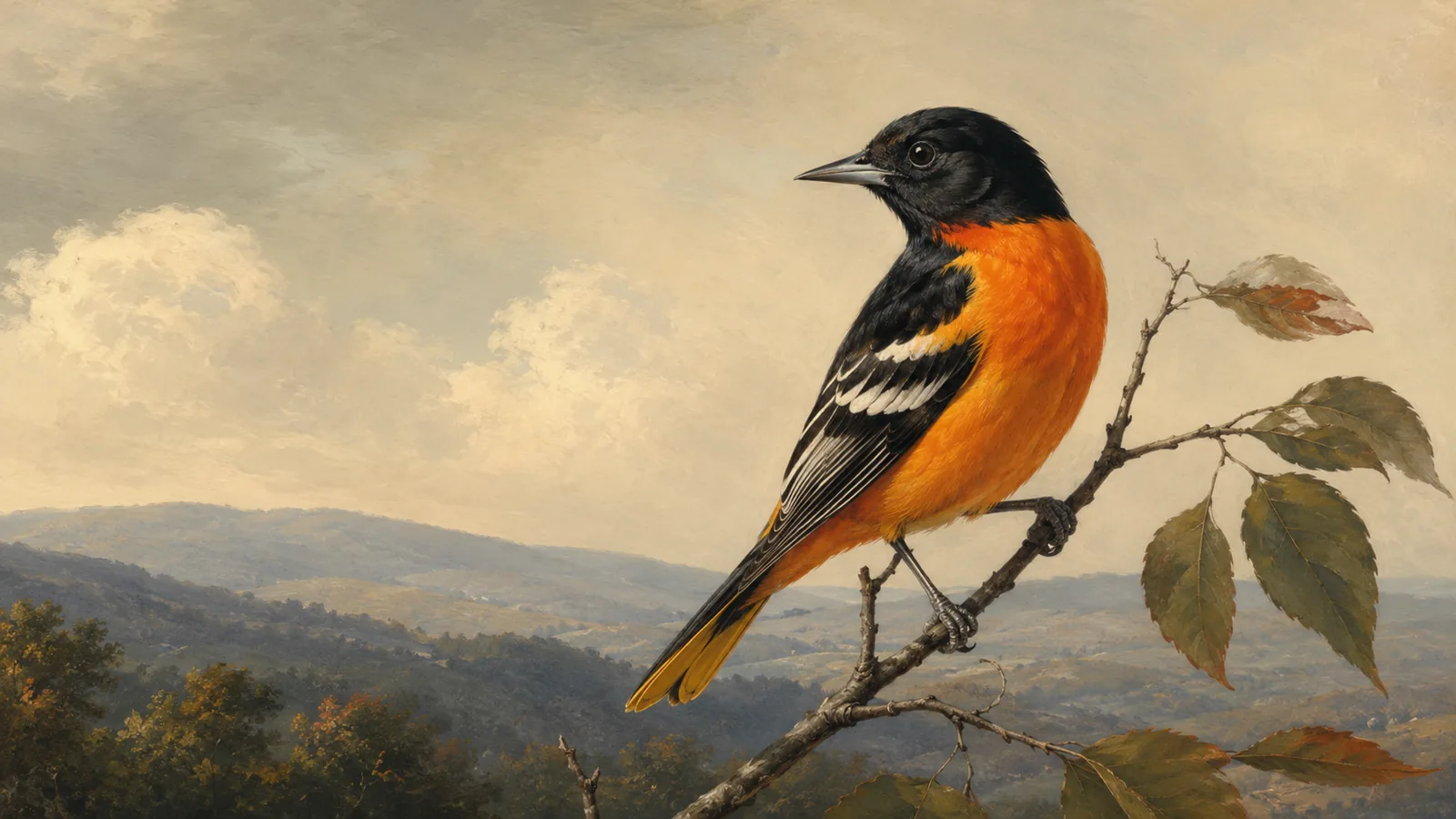
Icterus bullockii, Bullock’s Oriole, owns the cottonwood corridors. Where the Western Tanager climbs into the conifers, Bullock’s Oriole stays low, in the riparian strips along the Green River, the Snake, the Bighorn. He is bold orange on the face and breast, with a sharp black cap and a white wing patch. His pendulous woven nest hangs from cottonwood branches over moving water. This is a bird that requires specific real estate, and development along Wyoming’s rivers has reduced that real estate steadily.
Selasphorus rufus, the Rufous Hummingbird, is the most intense orange bird most Wyomingites ever see. The male is copper-red from head to tail, with a throat that fires from black to iridescent orange-red when the light hits it. He passes through Wyoming twice - northbound in spring, southbound from July onward - and he is not gentle about it. He attacks other hummingbirds and larger birds with a ferocity that seems out of scale with his body. Ornithologists put this down to energy economics: a rufous hummingbird in transit runs on a margin so thin that any nectar source not defended is a loss he cannot absorb.
Sayornis saya, Say’s Phoebe, is the quiet one. He has a washed rusty-orange belly, a plain grey-brown back, and a habit of perching on fence posts at eye height across Wyoming’s open country. He is one of the earliest migrants back in spring - often by late March when the plains are still frost-brown - and that early return is a gamble. He depends on flying insects, and a cold snap after arrival can kill a brood.
Where to look
| Habitat | Key species |
|---|---|
| Lodgepole and spruce forest | Western Tanager, Northern Flicker |
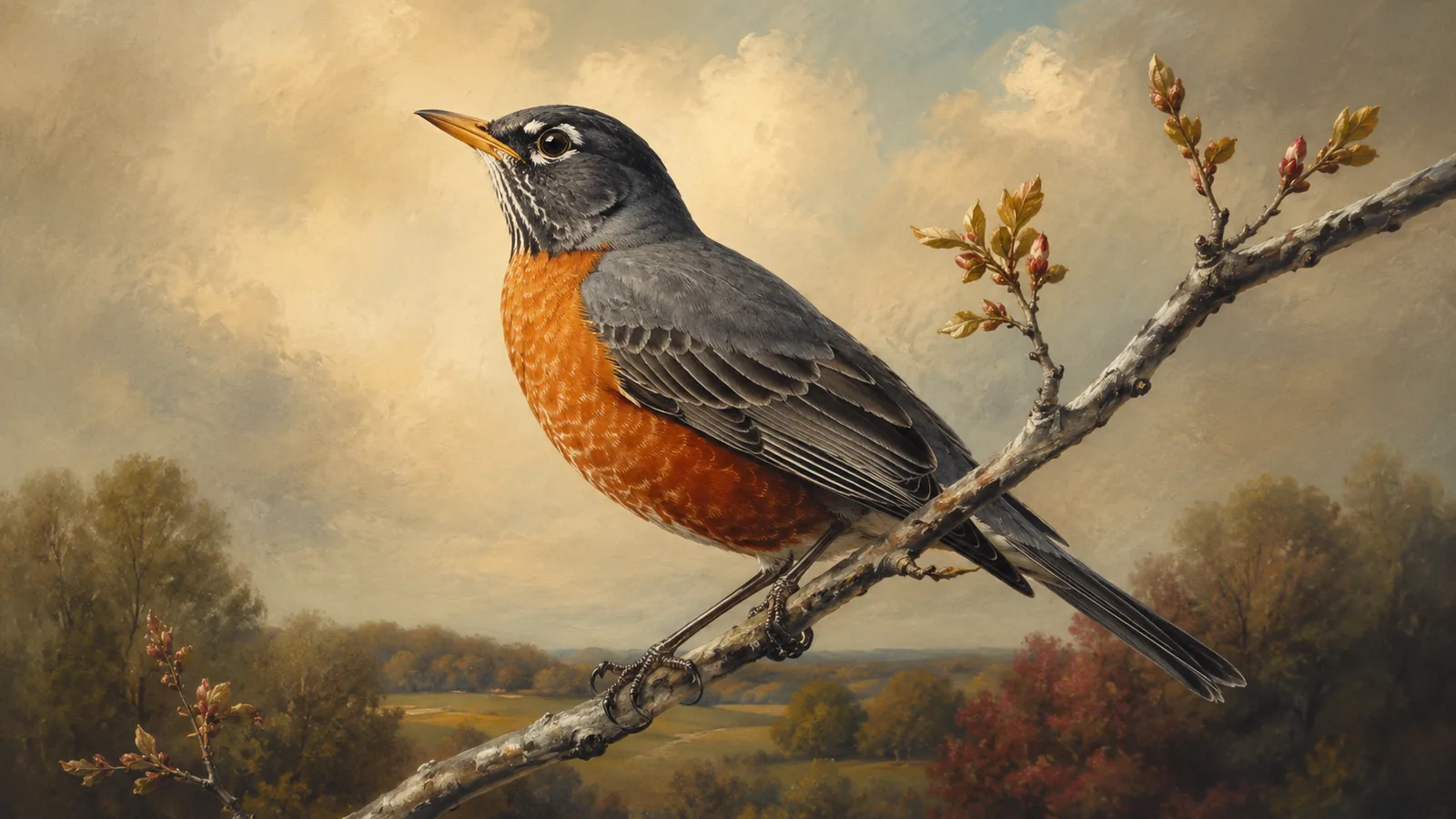
| Cottonwood riparian corridors | Bullock’s Oriole, American Robin |
| Mountain meadows (migration) | Rufous Hummingbird |
| Open grassland and ranchland | Say’s Phoebe, American Kestrel |
Yellowstone and Grand Teton national parks concentrate these birds in accessible terrain. Seedskadee National Wildlife Refuge on the Green River, in southwestern Wyoming, is worth the detour: old cottonwoods along the banks hold Bullock’s Orioles, and the canyon walls above carry kestrels and Say’s Phoebes within a few hundred metres of each other.
The colour question
The orange in a Wyoming bird is never decorative. It is metabolic information: what the bird ate, where it has been, and what it can afford to be in front of a potential mate.
The Western Tanager’s rhodoxanthin, sourced from insects. The Bullock’s Oriole’s carotenoids, sourced from fruit and invertebrates. The Rufous Hummingbird’s copper iridescence, structural rather than pigment-based, achieved by the physical arrangement of feather barbs at the nano-scale. These are different chemical solutions to the same evolutionary problem: producing a signal that cannot be faked cheaply.
Orange birds are underrepresented in the eastern state guides that dominate most bookshelves - see the orange birds in Arkansas, Illinois, Michigan, and Ohio guides for the oriole-and-robin dominated palette of the East. In Wyoming, the tanager and the rufous hummingbird belong to a western pattern that the Appalachians and the humidity of the eastern forests simply do not support. This is a continent with a colour divide, and Wyoming sits decisively on the drier, sharper-hued side of it.
If you spend a week birding in Wyoming in June, the orange bird you will carry home in your memory is almost certainly the Western Tanager. Not because he is the loudest or the most aggressive, but because his colour against a lodgepole pine is the kind of thing that makes you question, for a moment, whether you are still in the same state you drove into.