13 Birds That Look Like Cranes (+Photo Guide)
Welcome to another exciting exploration into the fascinating world of birds. In this post, we’re embarking on a comparative study, focusing on the striking Cranes and their avian look-alikes. We’ll delve into the unique traits of 13 different bird species, including herons, egrets, spoonbills, ibises, storks, flamingos, and the distinct Limpkin. Let’s dive in and discover!
List of Birds That look like cranes
Herons and Egrets - Great Blue Heron, Great Egret, Snowy Egret, Reddish Egret, Black-Crowned Night-Heron, Tricolored Heron
Ibises and Spoonbills - Roseate Spoonbill, White-faced Ibis, Eurasian Spoonbill
Storks - Wood Stork, White Stork
Flamingos - Greater Flamingo
Others - Limpkin Bird
There are approximately 15 species of cranes spread across the globe, each one with its distinct characteristics. The iconic Sandhill Crane is well-known in North America for its large size and red forehead, while Whooping Crane, is native to North America. Whooping cranes is famous for its white body and red crown. Europe and Asia host several species, including the elegant Eurasian Crane, known for its grey body and white facial streak.
The stately Red-crowned Crane, considered a symbol of luck, longevity, and fidelity in many Asian cultures, boasts striking black and white plumage with a patch of red atop its head. Down in Africa, the regal Grey Crowned Crane is celebrated for its golden headdress of stiff golden feathers. And let’s not forget the Blue Crane, the national bird of South Africa, known for its light blue-grey plumage and long, dark grey wing plumes. These are just a few examples of the magnificent crane species that inhabit our world, each contributing its unique beauty to the global bird mosaic.
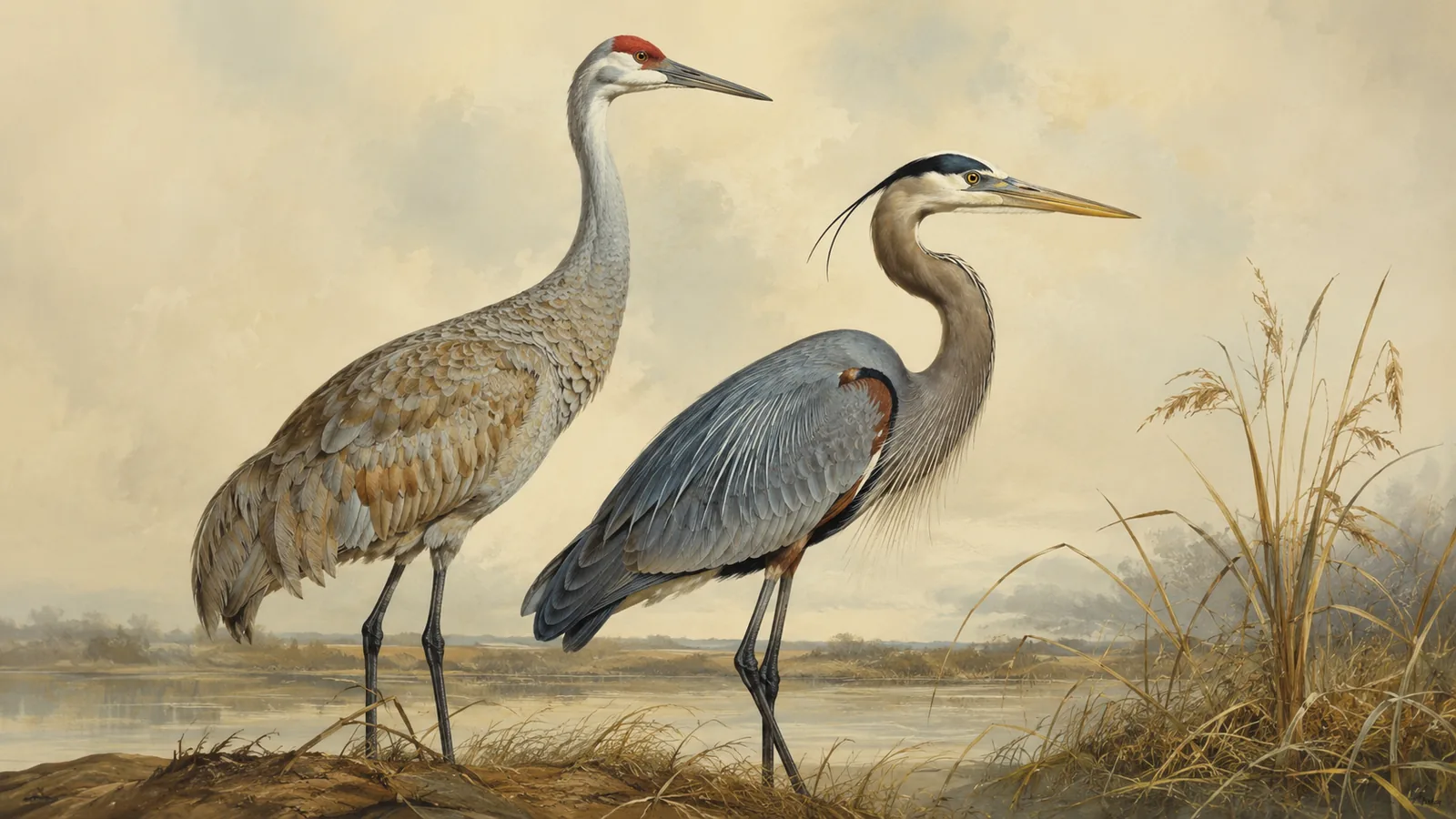
Great Blue Heron vs. Crane
Similarities
-
Size and Body Shape: Both Great Blue Herons and Cranes are large birds with long legs and necks, suited for their wading and foraging habits in shallow waters.
-
Diet: Both species are opportunistic feeders, with a diet consisting primarily of fish, but also including other small aquatic creatures, insects, and even small mammals.
-
Habitat: Both species tend to inhabit similar environments, including wetlands, marshes, and the edges of bodies of water.
Differences
-
Neck Shape: When flying, a Great Blue Heron folds its neck into an “S” shape, while Cranes fly with their necks straight out.
-
Color: Great Blue Herons, as their name suggests, are predominantly blue-gray with a broad black stripe over the eye, while most Crane species are usually gray, white, or a mix of the two.
-
Feathers: Great Blue Herons have a distinctive plume of feathers on their chest and back, a feature typically not seen in Cranes.
Roseate Spoonbill vs. Crane
Similarities
-
Size and Body Shape: Both Roseate Spoonbills and Cranes are tall birds with long legs and long necks, reflecting their habits of foraging in water and wetlands.
-
Diet: Both species are opportunistic feeders, eating a range of aquatic invertebrates, small fish, and insects.
-
Habitat: Both species often inhabit wetland environments and are commonly found near bodies of water.
Differences
-
Bill Shape: The Roseate Spoonbill gets its name from its distinctive spoon-shaped bill, a feature quite different from the straight, pointed bills of Cranes.
-
Color: Roseate Spoonbills have a unique pink coloration, earned from their diet rich in carotenoids. Cranes, on the other hand, usually exhibit grey, white, or a combination of both.
-
Flight Pattern: While flying, Roseate Spoonbills extend their neck, similar to Cranes. However, Spoonbills alternate between flapping and soaring, whereas Cranes typically maintain steady, rowing wingbeats.
White-faced Ibis vs. Crane
Similarities
-
Size and Body Shape: Both White-faced Ibis and Cranes are tall birds with long legs and necks, allowing them to wade in shallow waters and wetlands.
-
Diet: Both species are opportunistic feeders, eating a variety of aquatic invertebrates, small fish, and amphibians.
-
Habitat: Both species are usually found in similar wetland habitats, including marshes, mudflats, and the edges of bodies of water.
Differences
-
Bill Shape: The White-faced Ibis has a long, curved bill used for probing in mud and shallow water, which is quite different from the straight, pointed bills of Cranes.
-
Color: White-faced Ibises have a dark reddish-brown body with a metallic sheen, quite different from the more subdued hues of gray, white, or a mix of the two found in Cranes.
-
Face: True to its name, the White-faced Ibis has white feathers around its bare, red face, which is not a feature typically seen in Cranes.
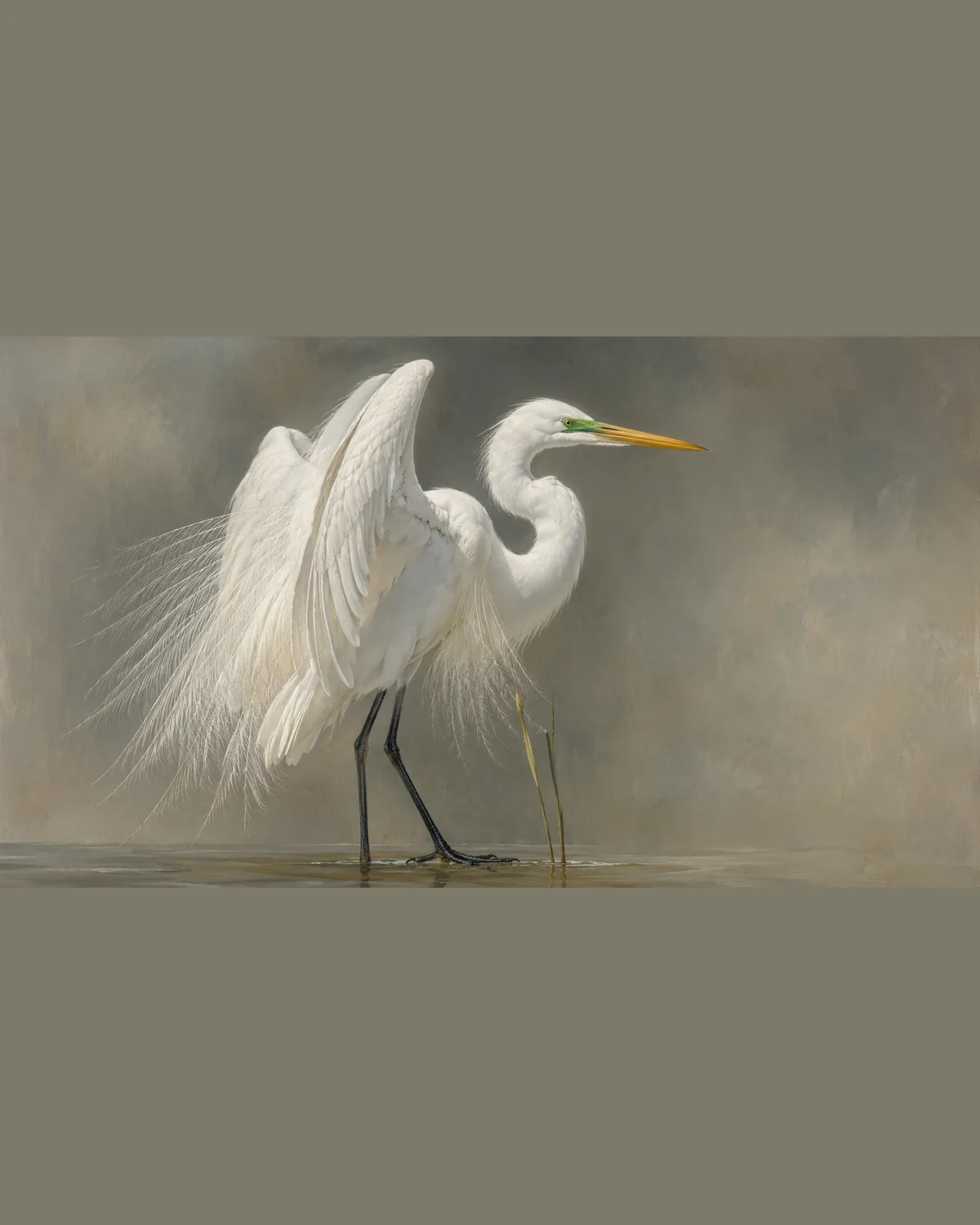
Great Egret vs. Crane
Similarities
-
Size and Body Shape: Both Great Egrets and Cranes are tall birds with long legs and necks, which enable them to forage in shallow water and wetlands.
-
Diet: Both species are opportunistic feeders, with a diet composed of fish, frogs, small mammals, and aquatic invertebrates.
-
Habitat: Both species prefer similar habitats that include wetlands, marshes, ponds, and riverbanks.
Differences
-
Color: Great Egrets are almost entirely white, while Cranes are typically gray or white, and often have additional colors on their heads or necks.
-
Neck Shape: While flying, a Great Egret retracts its neck, forming an “S” shape, while Cranes fly with their necks straight out.
-
Bill Shape and Color: Great Egrets have a long, pointed yellow bill, quite different from the pointed, often gray or greenish bills of Cranes.
Snowy Egret vs. Crane
Similarities
-
Size and Body Shape: Both Snowy Egrets and Cranes are tall birds with long legs and necks, perfect for their wading and foraging habits in shallow waters.
-
Diet: Both species feed on a variety of aquatic creatures, including fish, frogs, and invertebrates.
-
Habitat: Both species tend to inhabit similar environments, such as wetlands, marshes, and the edges of bodies of water.
Differences
-
Size: Snowy Egrets are smaller than most Cranes. Snowy Egrets typically reach a height of about 24 inches, whereas Cranes can stand 35 inches tall or more.
-
Color: Snowy Egrets are entirely white with black legs and bright yellow feet, while Cranes are typically gray or white, and often have additional colors on their heads or necks.
-
Neck Shape: When flying, a Snowy Egret retracts its neck, forming an “S” shape, whereas Cranes fly with their necks straight out.
Black-Crowned Night-Heron vs. Crane
Similarities
-
Diet: Both Black-Crowned Night-Herons and Cranes feed on a variety of aquatic animals, including fish, amphibians, and invertebrates, but also eat small mammals and birds.
-
Habitat: Both species can be found in similar wetland habitats, including marshes, swamps, and the edges of lakes or rivers.
-
Nesting: Both species build nests in marshy or reedy areas, sometimes in trees or shrubs.
Differences
-
Size and Body Shape: Black-Crowned Night-Herons are significantly smaller and stockier than Cranes, with a height of about 23-28 inches compared to the average Crane, which can stand 35 inches tall or more.
-
Color and Markings: Black-Crowned Night-Herons have a distinctive black crown and back, with a white or grey underside, whereas Cranes are typically gray or white, and often have additional colors on their heads or necks.
-
Neck Shape: Black-Crowned Night-Herons have a shorter neck compared to Cranes, and they typically pull their neck in close to their body, particularly when in flight, whereas Cranes fly with their necks straight out.
Tricolored Heron vs. Crane
Similarities
-
Size and Body Shape: Both Tricolored Herons and Cranes are tall birds with long legs and necks, built for wading and foraging in shallow water and wetlands.
-
Diet: Both species are opportunistic feeders, with a diet that includes a variety of fish, amphibians, and invertebrates.
-
Habitat: Both species prefer similar wetland habitats, including marshes, swamps, and riverbanks.
Differences
-
Size: Tricolored Herons are generally smaller than Cranes. Tricolored Herons typically reach a height of about 22-30 inches, while Cranes can stand over 35 inches tall.
-
Color: Tricolored Herons have a unique combination of blue-gray, lavender, and white, with a white belly and rufous neck – quite different from the typical gray or white of Cranes.
-
Neck Shape: When flying, a Tricolored Heron pulls its neck into an “S” shape, while Cranes fly with their necks straight out.
Wood Stork vs. Crane
Similarities
-
Size and Body Shape: Both Wood Storks and Cranes are large birds with long legs and necks, reflecting their habits of foraging in water and wetlands.
-
Diet: Both species are opportunistic feeders, consuming a diet consisting primarily of fish, but also including other small aquatic creatures, insects, and even small mammals.
-
Habitat: Both species often inhabit wetland environments and are commonly found near bodies of water.
Differences
-
Head and Neck: Wood Storks have a distinctive bald, scaly head and a long, thick, curved bill, which is quite different from the feathered heads and straight, pointed bills of Cranes.
-
Color: Wood Storks are primarily white with black flight feathers, unlike Cranes which are usually grey, white, or a mix of both, and often have additional colors on their heads or necks.
-
Feeding Method: Wood Storks are tactile feeders, using their bill to feel for prey in murky water, while Cranes are visual feeders.
Reddish Egret vs. Crane
Similarities
-
Size and Body Shape: Both Reddish Egrets and Cranes are tall birds with long legs and necks, which enable them to forage in shallow water and wetlands.
-
Diet: Both species are opportunistic feeders, with a diet composed primarily of fish, but also including other small aquatic creatures and invertebrates.
-
Habitat: Both species prefer similar habitats, which typically include wetlands, marshes, and the edges of bodies of water.
Differences
-
Color: Reddish Egrets are unique for their bluish-gray body and reddish neck, which is starkly different from the typical gray or white coloration of Cranes.
-
Feeding Behavior: Reddish Egrets are known for their active hunting style, often running, jumping, and spinning in the pursuit of prey, a behavior not commonly seen in Cranes.
-
Neck Shape: When flying, a Reddish Egret pulls its neck into an “S” shape, whereas Cranes fly with their necks straight out.
Eurasian Spoonbill vs. Crane
Similarities
-
Size and Body Shape: Both Eurasian Spoonbills and Cranes are tall birds with long legs and necks, designed for wading in shallow waters and wetlands.
-
Diet: Both species primarily feed on aquatic animals, such as fish and small invertebrates.
-
Habitat: Both species inhabit similar wetland environments, including marshes, swamps, and the edges of bodies of water.
Differences
-
Bill Shape: The Eurasian Spoonbill has a long, flat, spoon-shaped bill, which is unique and significantly different from the pointed, often straight bills of Cranes.
-
Color: The Eurasian Spoonbill is primarily white with a yellowish crest during the breeding season, in contrast to Cranes which are usually gray, white, or a combination of the two, often with additional colors on their heads or necks.
-
Feeding Method: Eurasian Spoonbills sweep their bills from side to side in the water to catch food, a distinctive method not seen in Cranes.
White Stork vs. Crane
Similarities
-
Size and Body Shape: Both White Storks and Cranes are large birds with long legs and long necks, well-suited for their wading and foraging habits.
-
Diet: Both species feed on a variety of animals such as fish, amphibians, insects, and small mammals.
-
Habitat: Both species can be found in similar environments, including open farmland, wetlands, and grasslands.
Differences
-
Coloration: White Storks, as their name implies, are predominantly white with black flight feathers, while Cranes are typically grey or white, often with additional colors on their heads or necks.
-
Bill Shape: White Storks have long, straight, pointed bills, whereas many Cranes have a more elongated and curved bill.
-
Migration: White Storks are well-known for their long-distance annual migrations between Europe and Africa, while many Crane species, such as the Sandhill Crane, migrate between North and South America or within Asia.
Greater Flamingo vs. Crane
Similarities
-
Size and Body Shape: Both Greater Flamingos and Cranes are large, tall birds with long necks and legs, suitable for foraging in shallow waters.
-
Diet: Both species feed mainly on aquatic invertebrates and small fish, which they forage from the water with their bills.
-
Habitat: Both species are commonly found in wetland environments and are often seen near bodies of water.
Differences
-
Color: Greater Flamingos are known for their vibrant pink coloration, a result of their diet rich in carotenoid pigments. In contrast, Cranes are typically gray or white, with additional colors on their heads or necks.
-
Bill Shape: Greater Flamingos have a unique, down-curved bill adapted for filter feeding, while Cranes have straight, pointed bills.
-
Feeding Method: Flamingos feed by stirring up mud with their feet, then sucking water through their bills and filtering out food. Cranes, on the other hand, forage for food by sight, picking up food with their bills.
Limpkin Bird vs. Crane
Similarities
-
Size and Body Shape: Both Limpkins and Cranes are large birds with long legs and necks, allowing them to wade in shallow waters and forage.
-
Diet: Both species are primarily carnivorous, feeding on a range of small animals, including mollusks, amphibians, and insects.
-
Habitat: Both species can often be found in wetland environments, such as marshes and riverbanks.
Differences
-
Color: Limpkins are usually a rich brown color with white spots and streaks, in contrast to Cranes which are usually gray or white, often with additional colors on their heads or necks.
-
Bill Shape: Limpkins have a slightly down-curved bill, unlike Cranes that have a straight, pointed bill.
-
Voice: Limpkins are known for their loud, wailing calls, which is distinctive and quite different from the calls of Cranes.
FAQS on Birds that look like cranes
What’s a large bird that resembles a crane?
Grey Herons are large wading bird that bears resemblance to cranes, known for its tall stature, long neck, and striking grey plumage.
What other bird looks like a heron?
Egrets, specifically the Great Egret, often get mistaken for herons due to their similar stature and wading habits, though they are usually more white in color.
What birds are mistaken for cranes?
Sandhill Cranes and Great Blue Herons are often confused due to their large size, long legs, and similar habitats.
What bird looks like a crane but a smaller?
The Little Blue Heron may look like a small crane to the untrained eye. It has similar wading habits and shape but is smaller and possesses a bluish hue.