Symbolism
The Dove Was Aphrodite's Bird 3,000 Years Before Picasso Made It Mean Peace
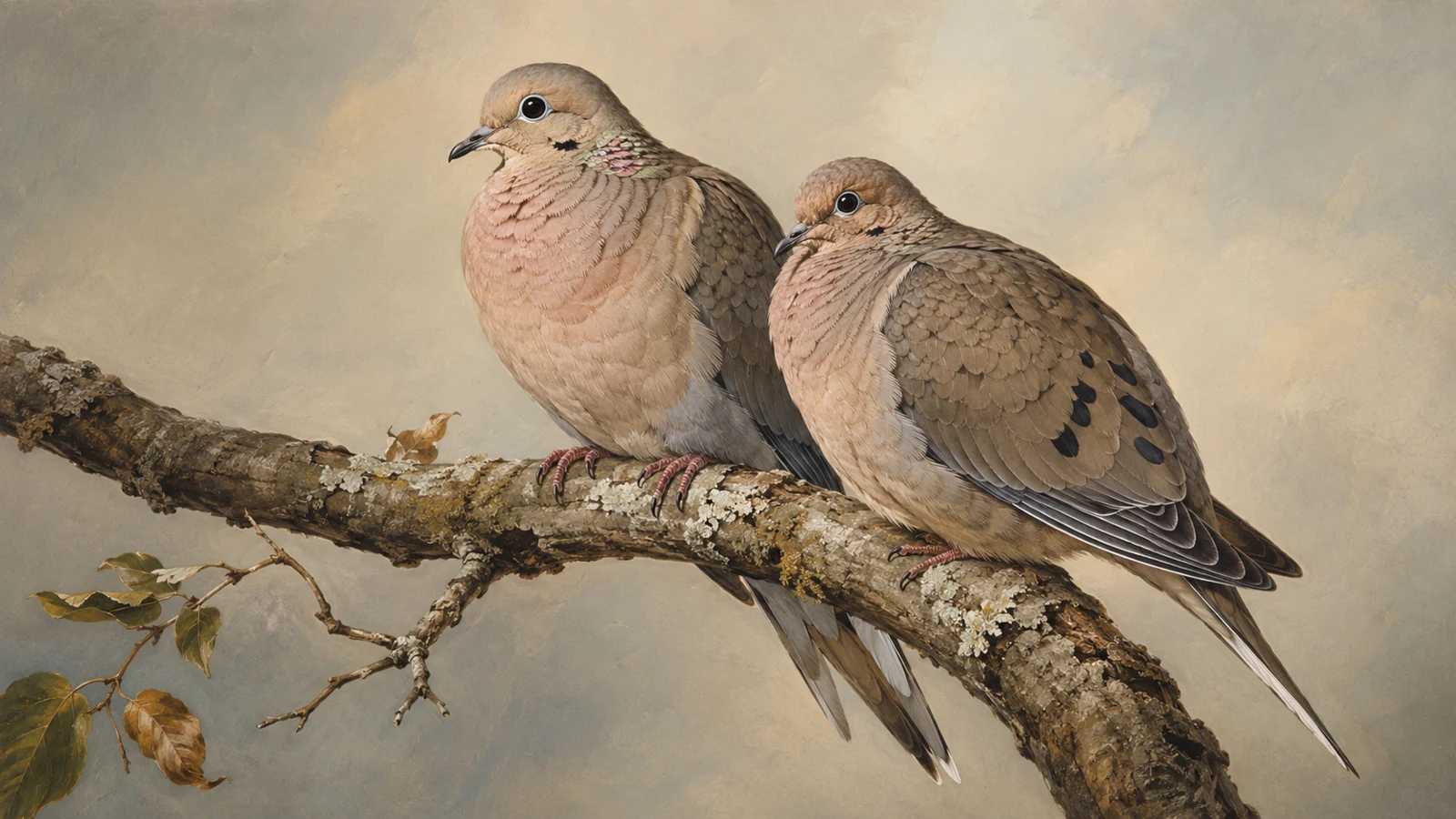
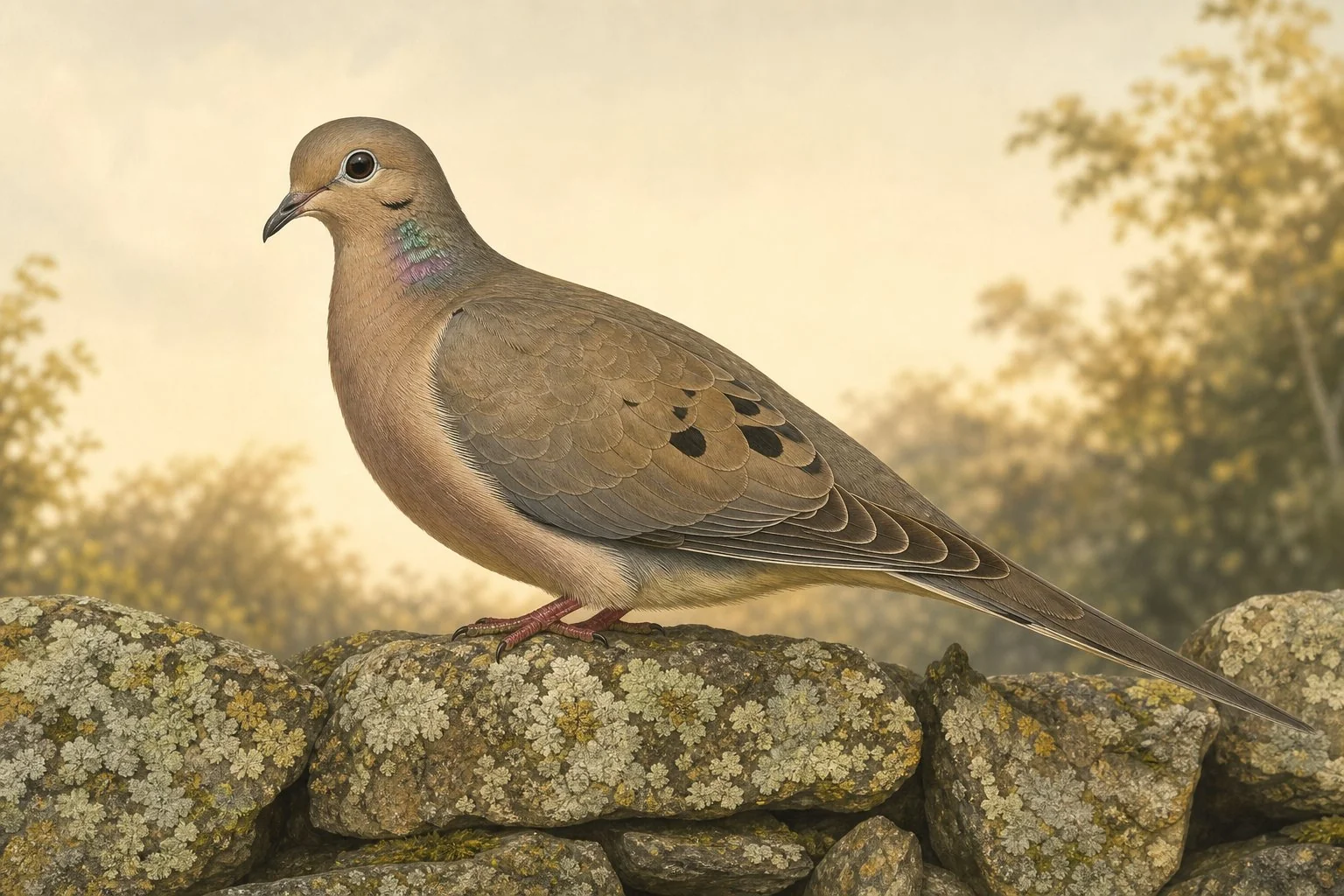
The mourning dove is named for its call, not its character. The long, descending coo that sounds like lamentation is the male announcing sexual availability. He sings loudest in spring, when he is most urgently trying to attract a mate. The bird that humans built an entire symbolic vocabulary of grief around is doing the opposite of grieving.
That inversion - the sound of desire mistaken for the sound of sorrow - runs through the entire history of dove symbolism. The same bird carries erotic love and divine peace, Ishtar and the Holy Spirit, authentic scripture and fabricated hadith. It carries them all because it acquired new meanings at every cultural handoff across four thousand years, and most people writing about dove symbolism have not traced those handoffs.
Here is the actual sequence, oldest to most recent.
The Goddess Came First
The dove’s association with divine feminine power predates every Biblical passage by millennia. Dove figurines appear on cultic objects linked to Inanna, the Sumerian goddess of love and fertility, from the beginning of the third millennium BC. This is the oldest documented association - not peace, not the Holy Spirit, not Noah. Erotic love, in ancient Mesopotamia, more than five thousand years ago.
The material evidence is specific. Lead dove figurines have been recovered from the Temple of Ishtar at Aššur (modern northern Iraq), dated to the 13th century BC. A painted fresco at the Royal Palace at Mari, Syria, an 18th century BC site, shows a giant dove emerging from a palm tree in the context of Ishtar’s temple - suggesting the goddess could manifest as a dove. A terracotta figurine from Cyprus, 600-480 BC, now at the Metropolitan Museum of Art (object 74.51.1559), shows a woman holding a dove in the Astarte cult tradition.
The theological chain is continuous: Inanna (Sumer) to Ishtar (Akkad and Babylon) to Astarte (Phoenicia) to Aphrodite (Greece) to Venus (Rome). The dove travels every link. By the time it reaches Aphrodite, it already carries three thousand years of goddess-association.
The Temple of Aphrodite at Erice, Sicily, makes this concrete. Attested from at least the 5th century BC, the temple maintained large flocks of sacred doves. Athenaeus and Aelian, both writing in the Roman imperial period but citing earlier sources, describe two annual festivals - the Anagogia (“departure”) and the Katagogia (“return”) - centred on the belief that Aphrodite left Sicily for Libya each year accompanied by her doves, with the birds disappearing for nine days before returning to public celebration. This is not vague symbolism. This is a documented ritual calendar with animal participants.
What Noah’s Dove Actually Signals
Genesis 8 records three flights. First flight: the dove finds no place to land and returns. Second flight, seven days later: the dove returns with a freshly plucked olive leaf. Third flight, seven more days: the dove does not come back. Land is habitable.
Note that a raven went first (Genesis 8:7) and did not return - because ravens are carrion feeders and found food on exposed mountain peaks. The biblical account is biologically coherent. The Gilgamesh Epic reverses the sequence: Utnapishtim sends a dove first, then a swallow, then a raven, and none return with anything. The Hebrew text is distinctive in having the dove bring back vegetation as evidence.
The olive leaf means something more specific than “land exists.” The olive tree (Olea europaea) is a Mediterranean agricultural species. It requires human management to produce economically useful fruit. An olive leaf signals not just exposed ground but the resumption of cultivated, civilised landscape - agriculture is back, the world is returning to human order.
Who decided the dove-plus-olive-branch means peace? Augustine of Hippo (354-430 AD) is the theologian most responsible. He wrote that “perpetual peace is indicated by the olive branch which the dove brought.” That reading is Augustine’s interpretive move, not the Genesis text’s own statement. Genesis says the dove brought evidence the earth was recovering. Augustine’s exegesis transformed recovery into peace. The symbol was made in a North African bishop’s commentary, not in the flood story itself.
The Baptism Dove Is About New Creation
All four Gospels record the Spirit descending “like a dove” at Jesus’s baptism in the Jordan. The species present in first-century Palestine would have been Columba livia palaestinae, the Palestinian subspecies of the rock dove - the wild ancestor of the domestic pigeon, not the mourning dove, which is exclusively North American and does not appear in any biblical text.
What “like a dove” meant in first-century Jewish ears is not what most people assume. The key parallel text is Babylonian Talmud Hagigah 15a, where Ben Zoma describes the Spirit of God hovering over the primordial waters in Genesis 1:2 “like a dove which hovers over her young without touching them.” A 2018 peer-reviewed paper by Alexey Somov in the journal Pneuma argues the baptism imagery drew specifically on this Genesis 1:2 tradition. The Mekilta, an early rabbinic Exodus commentary, also describes the Holy Spirit resting on Israel at the Red Sea crossing and compares Israel in that moment to a dove.
The baptism dove is a creation-renewal signal. It announces that something as significant as the first creation is beginning again. The gentleness reading is a later, softer interpretation that arrived once the bird’s erotic and martial genealogy had been forgotten.
The Song of Songs: Dove as Desire
The dove appears five times in the Song of Solomon and every instance is erotic:
- “Your eyes are doves” (1:15, 4:1)
- “O my dove, in the clefts of the rock, let me see your face, let me hear your voice, for your voice is sweet” (2:14)
- “Open to me, my sister, my love, my dove, my perfect one” (5:2)
- “His eyes are like doves beside streams of water” (5:12)
“My dove” is a term of intimate address between lovers. The comparison of eyes to doves in ancient Near Eastern love poetry context signifies a quality of gaze - soft-eyed, attentive, tender. Egyptian love poems from Deir el-Medina and Papyrus Chester Beatty, dated to the second millennium BC, use parallel animal comparisons. The Song of Songs is drawing from the same ancient Near Eastern register that Ishtar’s poets used. The dove of the Song is the same dove as Aphrodite’s dove. The Old Testament love poetry did not sanitise the symbol; it inherited it whole.
The turtledove (Hebrew tor) appears separately in Song of Songs 2:12 - “the voice of the turtledove is heard in our land” - as a marker of spring and returning warmth, in the same erotic seasonal context.
The Poverty Sacrifice
Leviticus sets the sacrificial scale: a bull for the wealthy, a goat or lamb for the middle, two turtledoves or two young pigeons for the poor (Leviticus 1:14, 5:7, 12:8). This provision recurs in Numbers 6:10.
Leviticus 12:8 is cited directly in Luke 2:24. When Mary and Joseph bring the infant Jesus to the Temple for purification after childbirth, they offer two turtledoves. Luke is indicating the family’s economic position. The dove here is specifically the offering of people who cannot afford a sheep. This links the bird to the accessible, non-elite end of the sacrificial system - the same bird that was Aphrodite’s sacred animal in a Sicilian temple precinct is also the sacrifice available to the rural poor.
Jewish Tradition: The Dove Is Israel
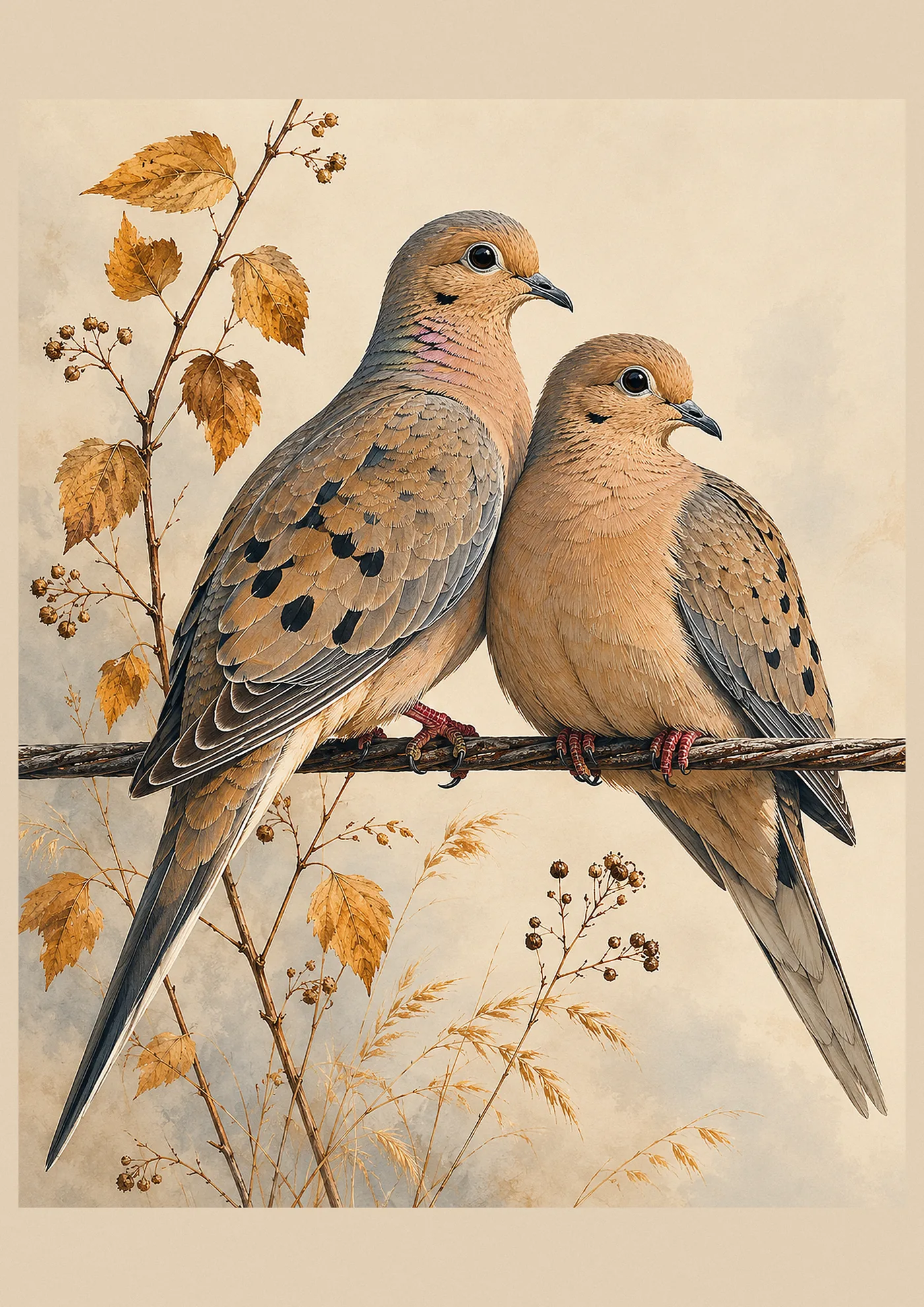
The dove as a figure for the Jewish people develops across Talmudic and midrashic literature. Song of Songs Rabbah 2:14 reads “my dove in the clefts of the rock” as an allegory for Israel hiding in the clefts of the sea during the Exodus - God calls his people “my dove” as they cross on dry land. The Babylonian Talmud uses the dove as an exemplar of faithfulness: a dove does not abandon her nest even when her offspring are taken from her.
In Kabbalistic tradition, the Shekhinah - the divine presence, the feminine aspect of God, the tenth sefirah in Kabbalistic cosmology - is sometimes represented as a dove. The association exists in mystical literature, though the sources are diffuse rather than concentrated in a single definitive passage.
Islamic Tradition: The Famous Story That Scholars Rejected
During the Hijra in 622 AD, the Prophet and Abu Bakr hid in the Cave of Thawr for three days while Meccan search parties hunted for them. The popular narrative adds that God caused a spider to weave a web and doves to nest at the cave entrance, convincing pursuers the cave had not been entered.
The scholarly verdict is clear. Al-Albani, in Silsilat al-Ahadith al-Da’ifa (his catalogue of weak hadiths), states explicitly there is no sahih (authenticated) hadith on the spider and doves. Ibn al-Uthaymeen called the dove story “a lie which has no authenticity.” Ibn Taymiyyah also rejected it. This is one of the best-documented examples in Islamic popular culture of a mawdu (fabricated) or da’if (weak) hadith that has circulated so widely it functions as received fact.
Islam does have a genuine tradition of venerating doves. Doves in and around the Masjid al-Haram in Mecca are considered sacred and are never harmed. That tradition is real. The cave story is not authenticated.
Picasso’s Pigeon
The complete chain of events:
Henri Matisse, working in Vence on his chapel project in the late 1940s, kept exotic Milanese pigeons. He gave one to Picasso as a gift. On 9 January 1949, Picasso drew the bird in lithograph form at the studio of printer Fernand Mourlot in Paris. The lithograph was not intended as a peace symbol. It was a drawing of a bird.
Louis Aragon, French Communist writer and central organiser of the 1949 World Congress of the Partisans of Peace in Paris, came to Picasso’s studio looking for poster material. He saw the lithograph and adopted it. The Congress opened 20 April 1949. Picasso’s image, titled simply “Dove,” was the poster, accompanied by the text “Congres Mondial des Partisans de la Paix.”
The day before the Congress opened, Picasso’s partner Francoise Gilot gave birth to their daughter. He named her Paloma. Spanish for dove. The personal and the political collapsed into a single act of naming.
Between 1949 and his death in 1973, Picasso produced multiple dove variations used for peace congresses in Warsaw, Stockholm, Sheffield, Vienna, Rome, and Moscow. The image’s reach was amplified by the Cold War: the peace movement used it to claim moral high ground across the Iron Curtain. By the early 1950s the dove had crossed its Communist-movement origins and become genuinely pan-cultural. By 1960 it was on postage stamps, campaign badges, and murals in countries with no connection to either Christianity or Communism.
The bird in Picasso’s lithograph is technically a pigeon - Columba livia domestica, the domestic rock pigeon, descended from the same species as every Mediterranean dove in every ancient symbol system. The distinction is taxonomically minimal. Culturally, it is the difference between vermin and the sacred. Picasso’s lithograph collapsed it.
Biology Underneath the Symbol
The mourning dove (Zenaida macroura) is exclusively North American, ranging from Canada to Panama. Every biblical, Greek, Roman, Islamic, and Jewish dove reference involves other species - principally the rock dove (Columba livia) and the turtledove (Streptopelia turtur). When Christians read Genesis and picture a mourning dove, they are importing a North American bird into a Levantine landscape where it has never existed.
All Columbidae - doves and pigeons both - produce crop milk. Both male and female produce it, which is unusual in birds. For the first three to four days of a chick’s life, crop milk is the sole food source. Composition is approximately 60% water, 30% fat, 15% protein, plus immunoglobulins that confer immunity. The bird universally symbolising peace and gentleness feeds its young through a process analogous to mammalian lactation, shared equally between both parents.
Mourning dove pairs are documented as monogamous for at least a breeding season, with some pairs maintaining bonds across winters. Both sexes build the nest, incubate, and feed chicks. The bird whose sound was named for grief is an involved, symmetrical parent.
One documented tribal association worth noting precisely: the Cherokee found the mourning dove’s coo sounds like gule, the Cherokee word for acorn. The Cherokee association is with acorns, not grief. The grief reading is entirely an English-language projection.
The Actual Accounting
What is documented: Ishtar’s dove, from the third millennium BC, in terracotta and lead and fresco. Aphrodite’s dove, from the 5th century BC, in a ritual calendar with named festivals and attending birds. The biblical dove texts, all primary sources. The Talmud’s dove-hovering passage. Augustine’s peace interpretation. Picasso’s lithograph, dated 9 January 1949, Mourlot studio, Paris.
What is contested: the Cave of Thawr dove story, rejected by three of the most influential hadith scholars of the 20th century.
What is largely internet aggregation: most “ancient civilisations and doves” material that doesn’t name the specific culture, source, and century. Ancient Egypt is frequently cited and specifically documented evidence is sparse compared to the Mesopotamian record. When a symbolism website writes “many ancient cultures believed” with no date and no nation, that is the internet speaking, not history.
The dove carried erotic love for three thousand years before it carried peace. It spent those three thousand years as a goddess’s bird - in temples with ritual calendars, in love poetry with specific parallels to Egyptian erotic verse, in a sacrificial system where it was the offering of people who had nothing else to bring.
The peace symbol came from a pigeon Matisse gave Picasso. That pigeon’s name was not recorded.