State Guide
Red Birds in Mississippi
Stand at the edge of a hedgerow in southern Hinds County in late May and you might see a male Painted Bunting land six feet from a male Northern Cardinal on the same fence post. One bird is considered the most intensely colored songbird in North America. The other is the one most Americans already think of as red. Together they make the case that Mississippi, quietly, is one of the best states in the eastern half of the country for red-plumaged birds.
The state’s geography does the work. The Mississippi Delta’s bottomland hardwoods and dense brushy margins suit buntings. The pine-oak woodlands of the northeast and central counties hold Summer Tanagers through the breeding season. The Gulf Coast’s barrier islands catch Scarlet Tanagers by the hundreds during spring migration, birds that have just completed an overnight crossing of the Gulf of Mexico. Year-round, the Northern Cardinal fills every suburban yard and forest edge in all 82 counties. No other state in the region stacks these four species quite as neatly.
The species to know
| Species | Red feature | Months present | Where to look |
|---|---|---|---|
| Northern Cardinal | Male all-over red | Year-round | Gardens, woodlands, suburbs statewide |
| Painted Bunting | Red breast and rump, blue head | April to September | Dense brush, hedgerows, southern counties |
| Summer Tanager | Male rose-red all over | April to September | Pine-oak woodlands |
| Scarlet Tanager | Male bright red, black wings | April to May (migration) | Coastal scrub, mature forest |
| Ruby-throated Hummingbird | Red throat patch, male | April to September | Gardens, forest edges |
| Red-headed Woodpecker | Fully red head | Year-round | Open woodlands, dead snags |
| House Finch | Red head and breast, male | Year-round | Feeders, suburbs |
The Painted Bunting question
Most people who come to Mississippi for red birds are chasing the Northern Cardinal. The Painted Bunting is the better argument. Passerina ciris is the species ornithologists reliably cite when asked which North American bird has the most saturated plumage - the male’s combination of red, blue, and green is closer to a tropical species than a temperate one. Mississippi sits near the northern edge of its eastern breeding range. The birds favor the kind of habitat that is common here: shrubby field edges, blackberry margins, hedgerows between cultivated ground and woodland. They are not easy to locate by ear alone. The call is thin. The song carries but is easy to dismiss as a House Finch at a distance. The way to find them is to work the overgrown edges of soybean fields in the southern Delta counties in June, slowly.
Mississippi is one of perhaps a dozen states where a patient birder in June can find all four of North America’s red-bodied breeding songbirds - Cardinal, Painted Bunting, Summer Tanager, and House Finch - in a single morning.
Where to go
Noxubee National Wildlife Refuge, in the east-central part of the state, is the most reliable all-round stop. Red-headed Woodpeckers work the open snag-woodland here in numbers that are hard to match elsewhere in Mississippi.
Gulf Islands National Seashore is the right call in the last two weeks of April. The barrier island scrub concentrates exhausted Gulf-crossing migrants and Scarlet Tanagers are predictable in good years - birds that have been flying all night, fully flushed red, sitting low and still in the oaks.
Delta National Forest and the brushy margins of Humphreys and Holmes counties are the most consistent ground for breeding Painted Buntings north of the state’s core range.
In winter, the list collapses to its core - Cardinals, House Finches, Red-bellied and Red-headed Woodpeckers, Purple Finches in irruption years. A male cardinal in January, with the canopy down and the hedgerows bare, is the most visible red in the landscape. He is also in the best plumage of his year: the brown feather tips that grew in last August have worn away to reveal the pigment beneath. The cardinal molting piece explains that cycle in full.
The red bird the state is known for - and the one it should be
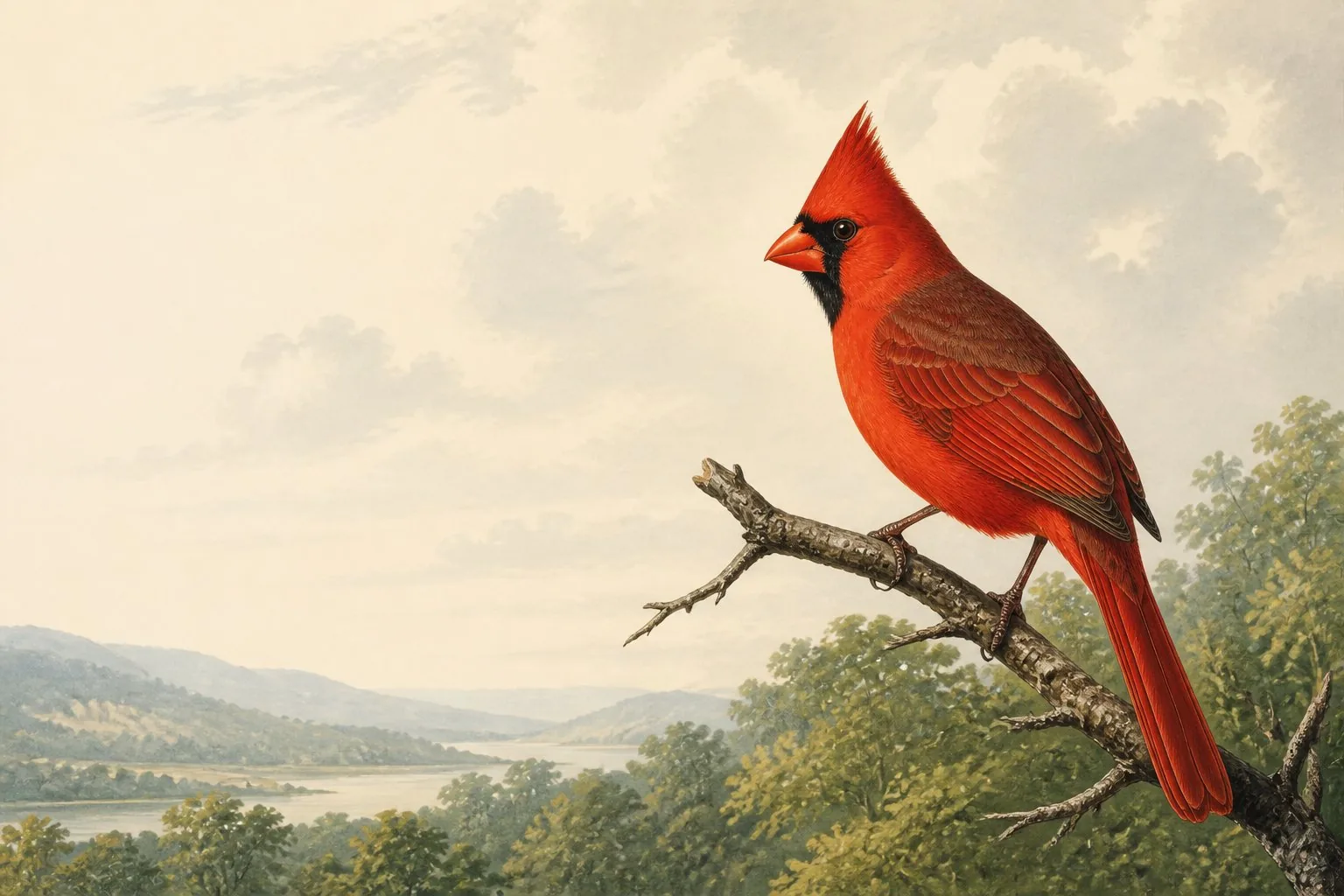
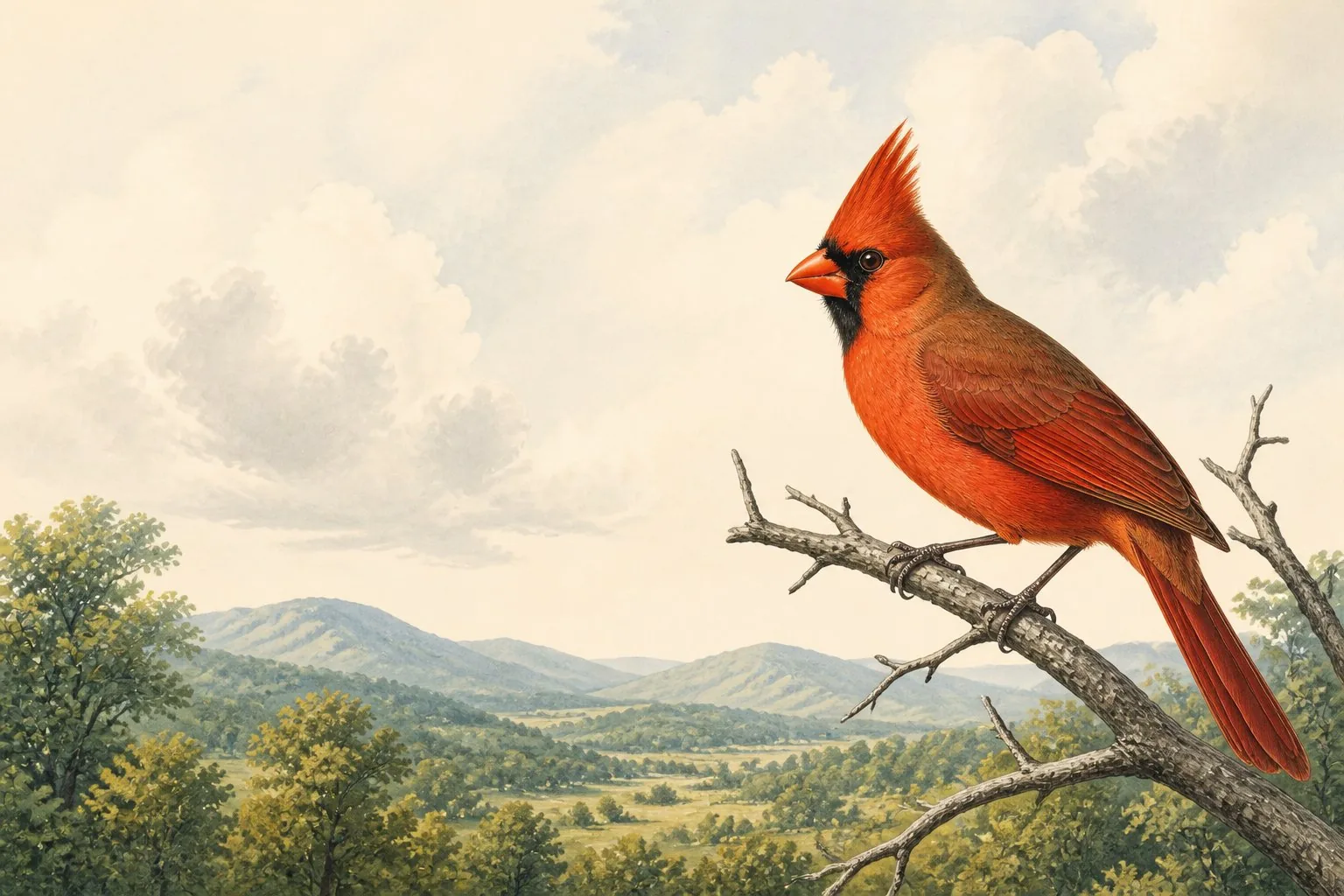
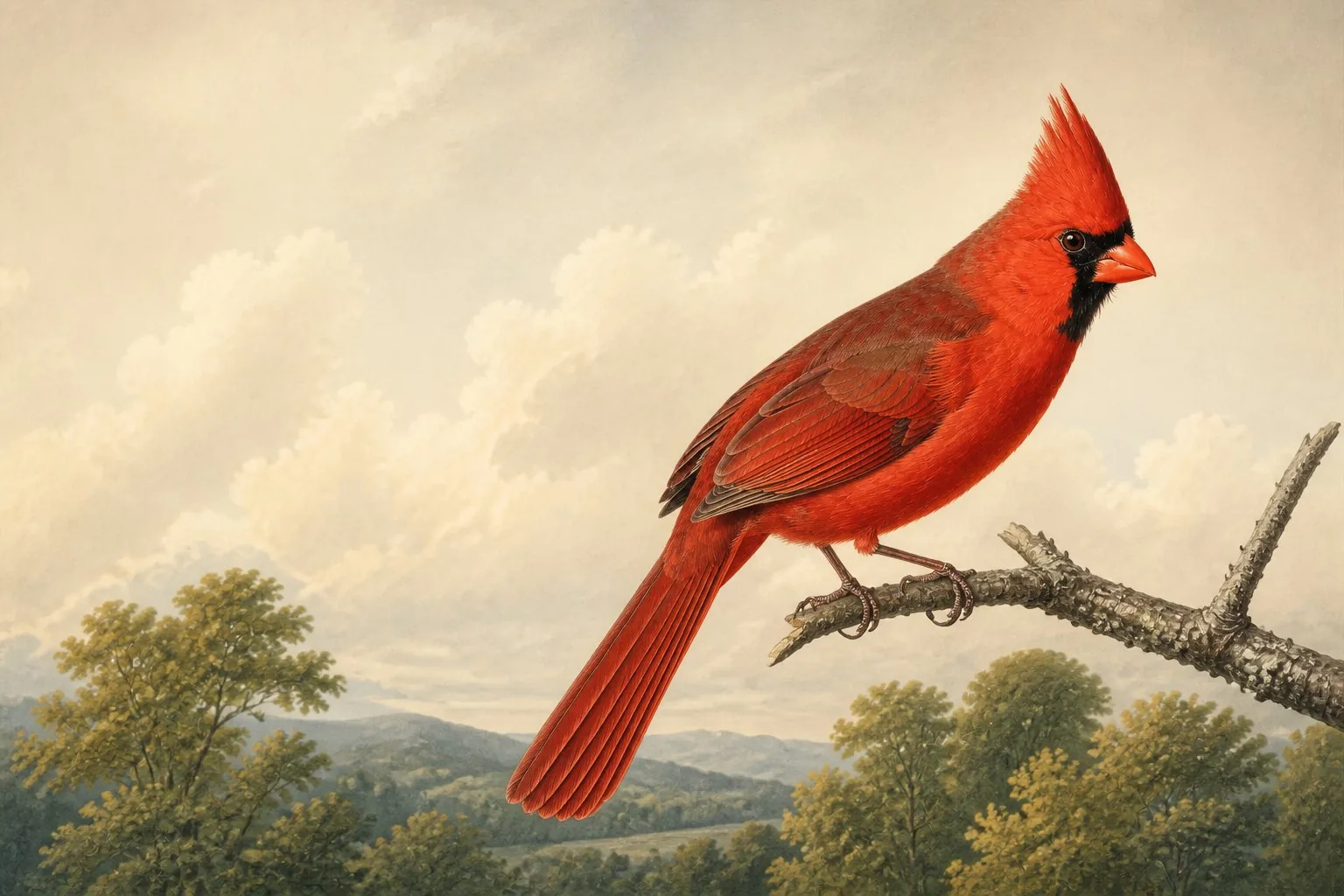
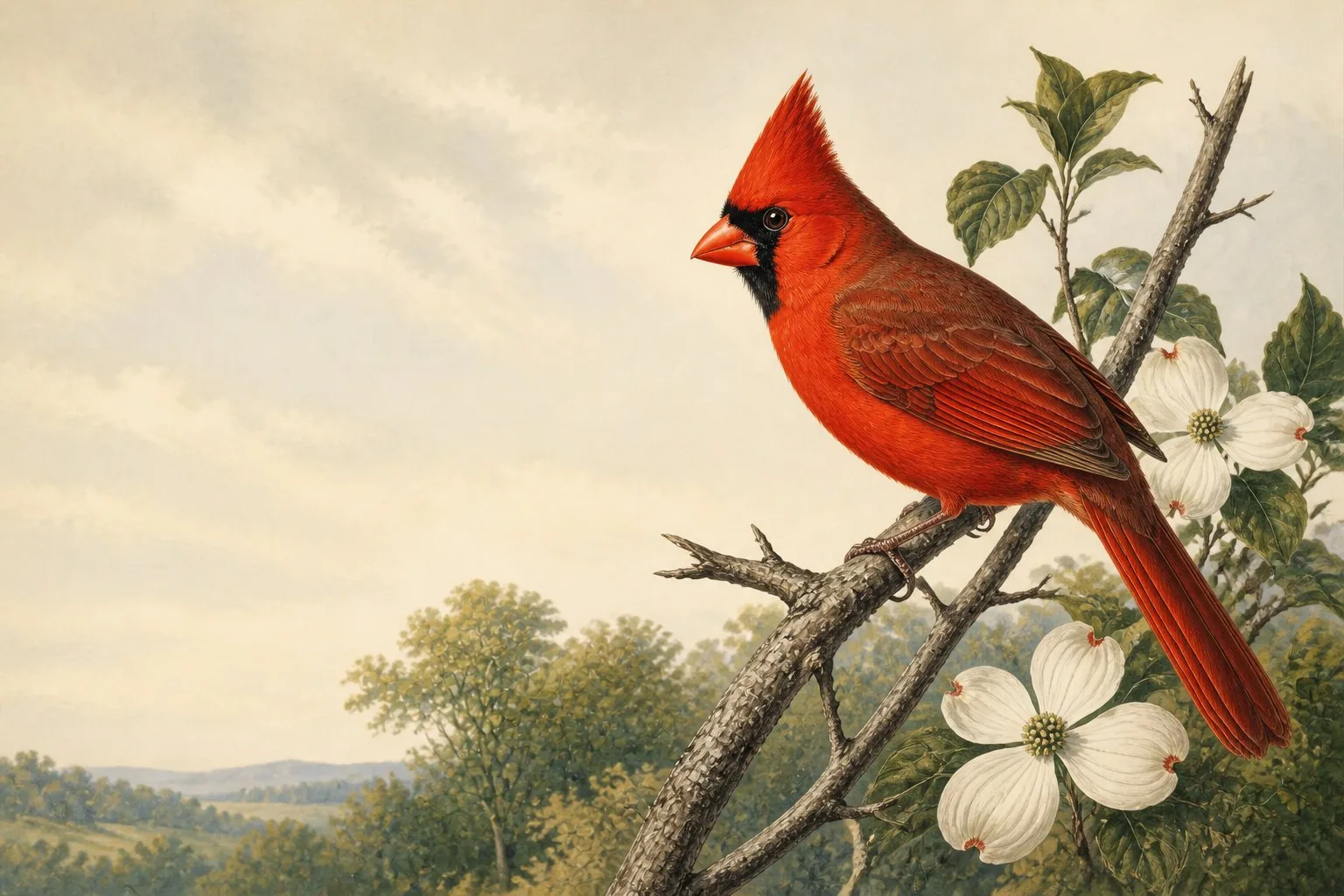
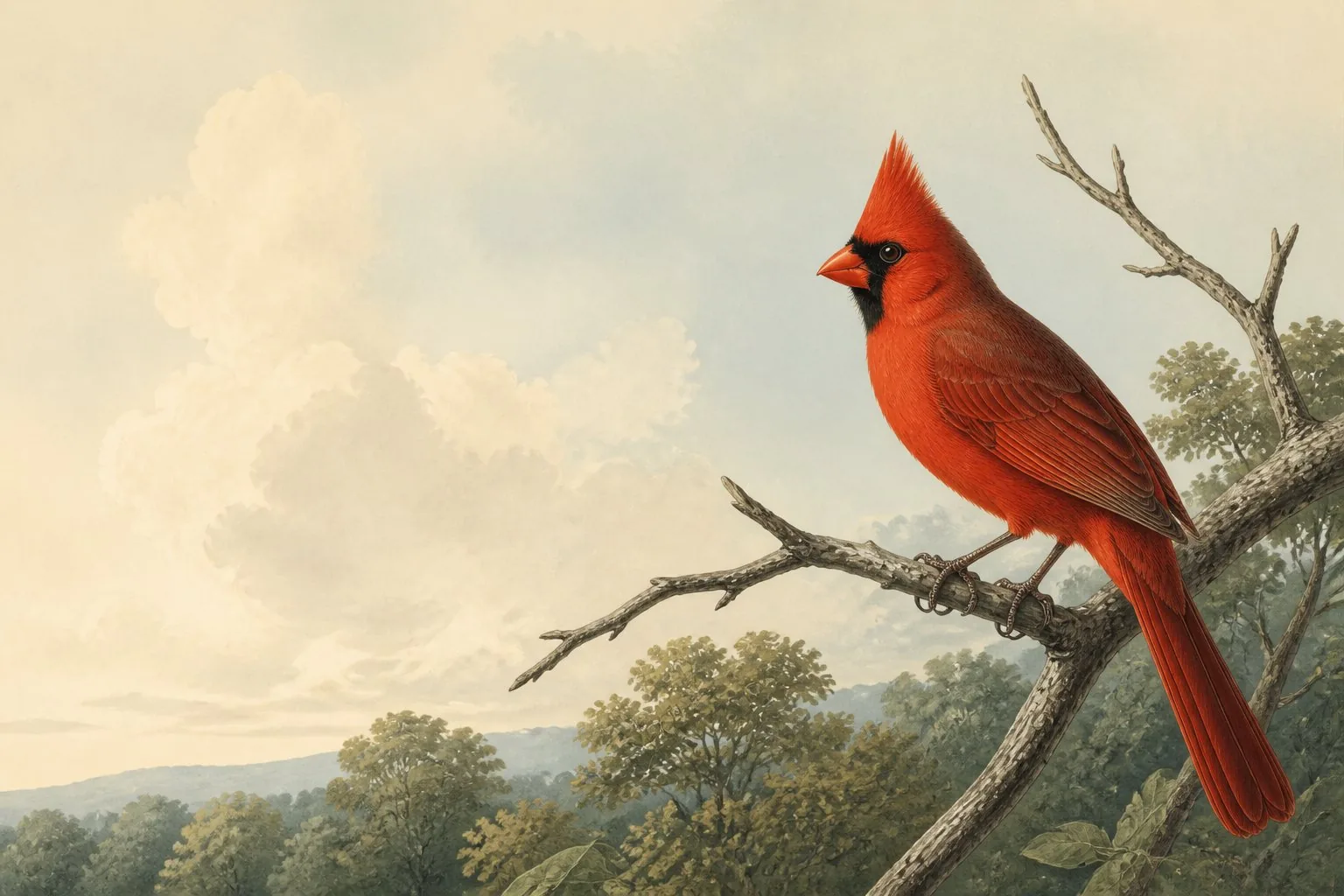
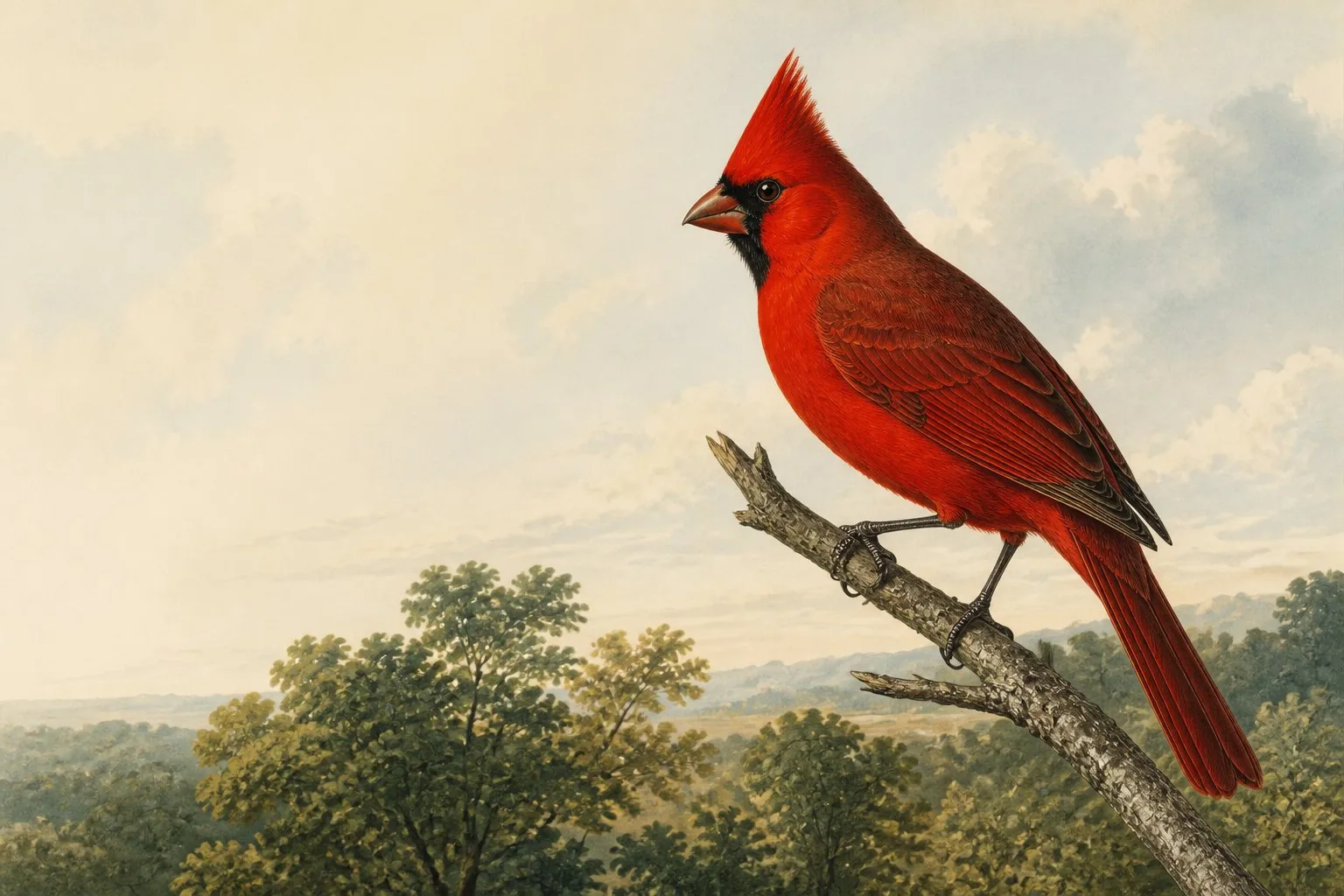
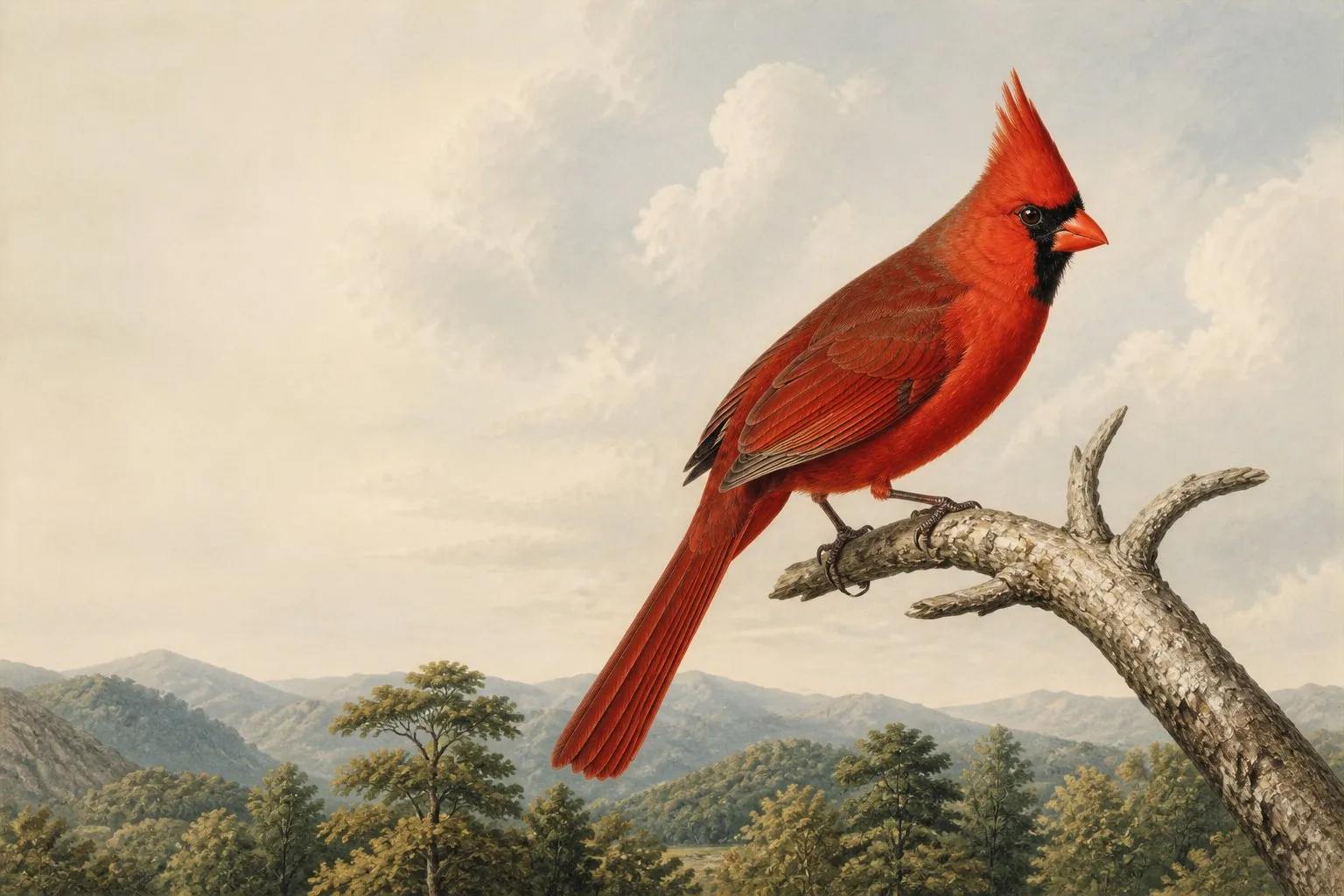
Mississippi made the Northern Cardinal its state bird in 1944, joining a long list of states that chose the same species. It is an accurate choice in the sense that the cardinal is present in every corner of the state, year-round, unmistakable, and dependable at any feeder. For a state-bird designation, there is logic in choosing the bird every resident can see from their kitchen window.
The case for the Painted Bunting is different. It requires a specific county, a specific habitat, a specific month. You earn it. And when the male lands in good light on a bare branch in June - red below, blue above, green on the back - the Northern Cardinal, for a moment, seems understated.
Both birds are worth the state. One just takes more finding.
For the same red-bird mix across the state line, orange birds in Arkansas covers the tanager and cardinal picture to the northwest, and orange birds in Ohio shows how the Summer Tanager’s range thins at its northern edge.