Symbolism
What the Sparrow Actually Means (And Why It Is Not What You Think)
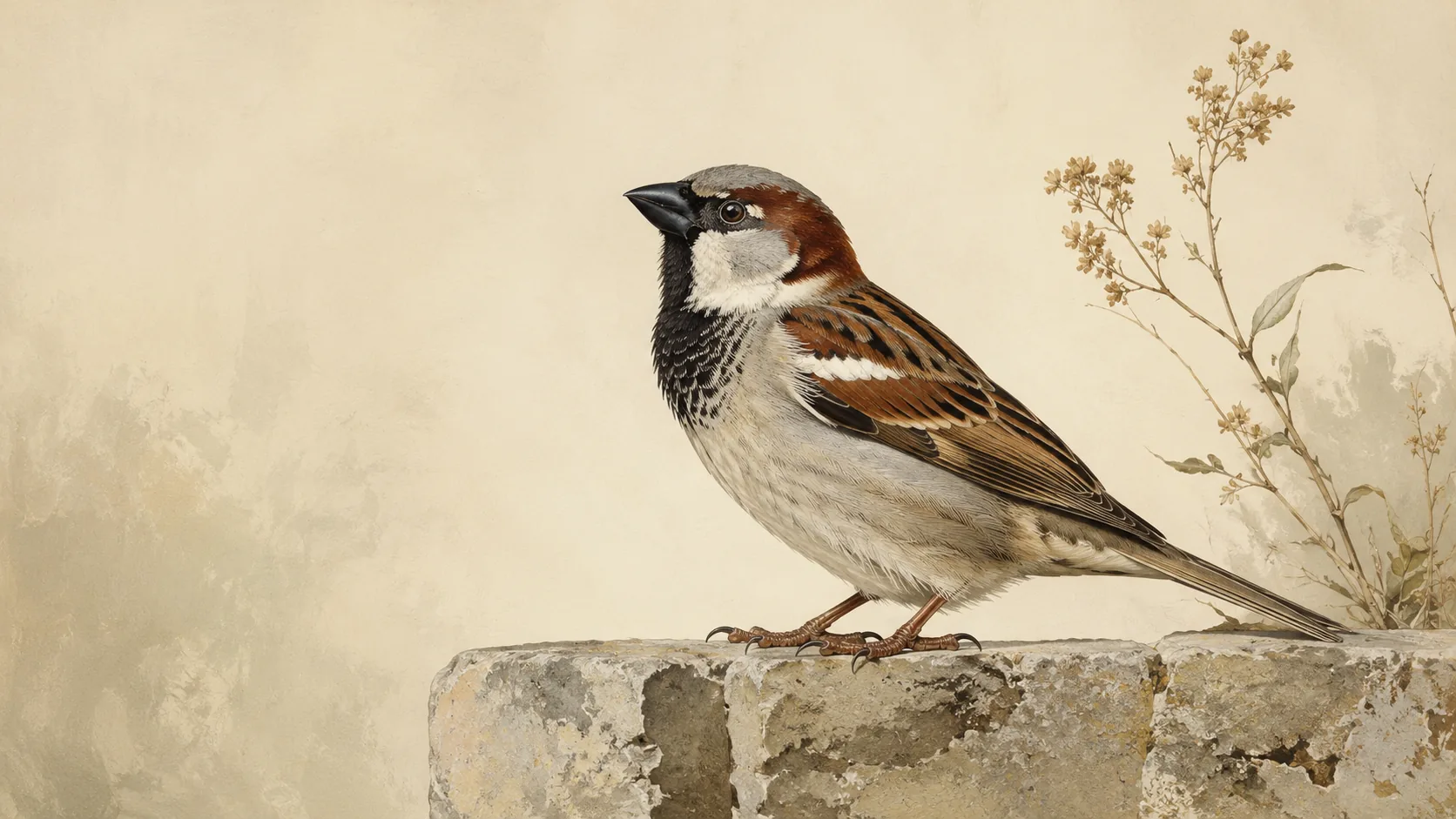
The sparrow in the Bible is a unit of currency.
This is the part of sparrow symbolism that the comfort cards do not say. Matthew 10:29 reads: “Are not two sparrows sold for a penny? And not one of them will fall to the ground apart from your Father.” Luke 12:6 goes further: “Are not five sparrows sold for two pennies? And not one of them is forgotten before God.”
The sparrow here is the cheapest bird in the market. You got two for a penny, or five for two pennies - the gospel writer’s price comparison implies you got a slightly better rate buying in bulk. The theological point of both verses is that God attends to even the least valuable thing. The sparrow is the baseline of cheapness. If even this unimportant bird is not forgotten by God, then you, a person of greater worth, certainly are not forgotten.
The verse is not saying sparrows are sacred. It is saying sparrows are cheap. The comfort it offers is derived from that cheapness: the elevation of the trivial is the rhetorical move. You are not a sparrow. But God notices sparrows, and therefore you.
The greeting card industry, working backward from this verse, produced a “sparrow as God’s watchful care” reading that is technically present in the theology but inverted in its emphasis. The verse casts sparrows as cheap precisely so the argument can land. Making the sparrow sacred removes the mechanism.
Sappho’s Sparrows: Birds of Aphrodite
Before the Bible, the sparrow belonged to Aphrodite.
Sappho’s Fragment 1, the Hymn to Aphrodite, is the only complete poem of Sappho’s that has survived intact. Written in the seventh or sixth century BCE, it opens with a call to Aphrodite who arrives in her chariot. The vehicle is pulled by sparrows. The Greek is strouthoi - small birds, the word used for sparrows. Sappho calls them “swift sparrows” and describes them flying a great distance from heaven to earth on fast-beating wings.
The connection between Aphrodite and sparrows was not Sappho’s invention. It was sufficiently established in Greek culture that it could be used as a given. The reason is straightforward to anyone who has watched House Sparrows in spring: they copulate constantly, noisily, and in public. They were birds of reproductive energy and sexual drive, not of gentleness or modesty. Aphrodite’s sparrows were appropriate to the goddess of desire for the same reason Aphrodite’s doves were appropriate: they were conspicuously fertile birds.
The sparrow’s association with comfort, watchfulness, and the humility of small things is a Christian revaluation. In Greek tradition the bird was not humble. It was carnal.
The Sailor’s Sparrow
Maritime tattooing tradition included the sparrow as a mark of distance traveled. The convention varies by source and era - some traditions placed it at five thousand miles of sailing, others at one thousand - but the structural meaning was consistent: a sparrow meant you had been out and were coming back.
The sparrow as a harbor bird gave it an association with return that the swallow - the more common maritime tattoo - also carried, but the sparrow’s year-round presence at docks and coastal towns made it more domestic than the swallow, which migrates. A sparrow on a sailor’s hand meant familiarity with the sea and confidence in homecoming. The bird that lives at the harbor does not leave. The sailor who tattoos a sparrow is saying he will also come back.
This is an oral tradition documented in tattooing histories rather than in texts, and the conventions shifted enough by region and period that specific numbers should be held loosely. What is consistent is the homecoming association. The sparrow as a comfort symbol in maritime culture came from its permanence at the port rather than from any religious or supernatural function.
The Imported Bird
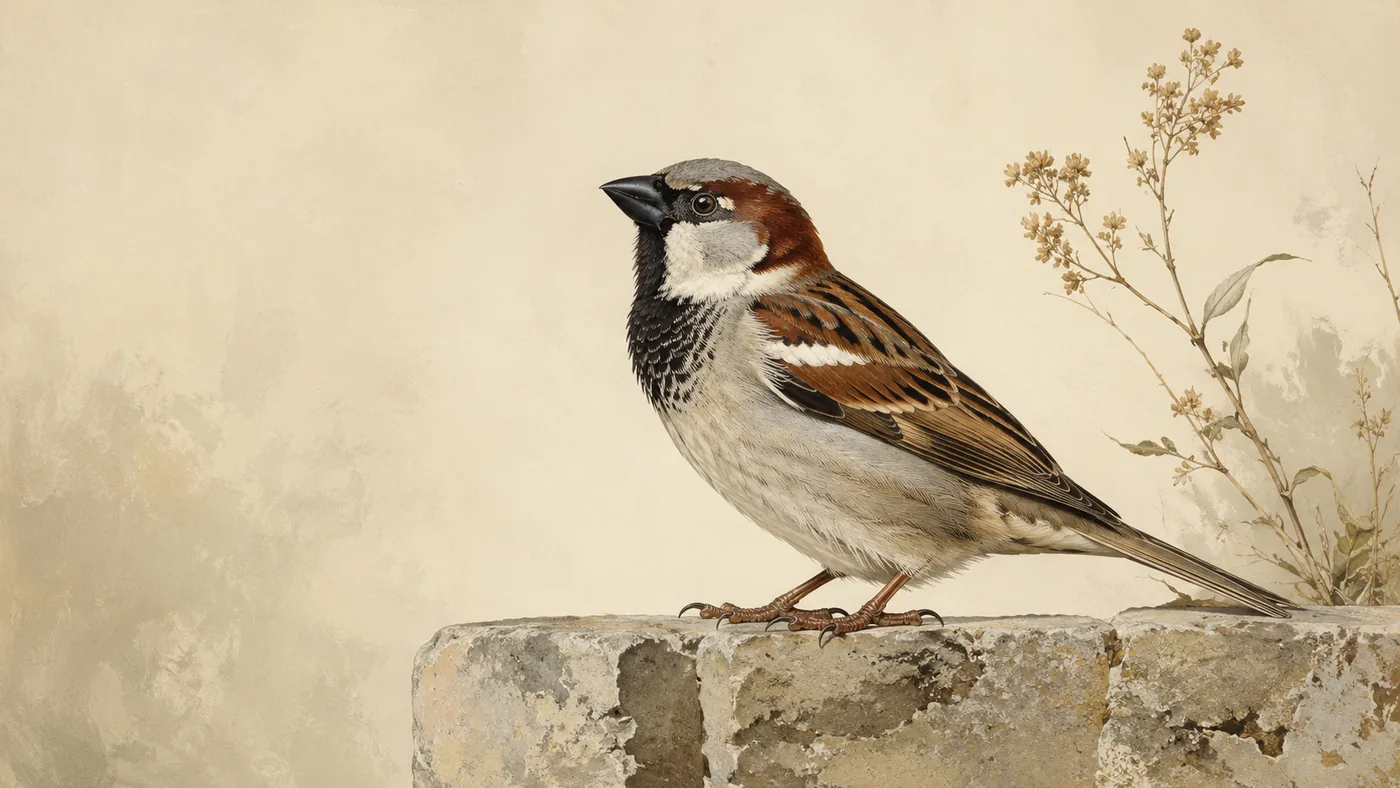
The House Sparrow (Passer domesticus) is not native to North America.
The first deliberate introduction took place in Brooklyn, New York, in 1851, when the Brooklyn Institute released approximately one hundred birds. The intention was practical: the city’s trees were under severe stress from cankerworms, and sparrows were believed to control insect pests. The birds established immediately and spread so rapidly that within two decades they were across the continent. No other North American animal colonized the country’s full breadth as fast.
The House Sparrow is one of the few birds that evolved alongside human agriculture specifically - not merely adapted to it, but co-evolved with it over thousands of years. Its natural range before European colonization tracked almost exactly with wheat cultivation. Where early farmers thresh grain, seeds fall. The sparrow’s presence in ancient Mediterranean cities, in Roman forums, in medieval English churchyards, in the market stalls where the gospel writers priced them at two per penny: these were not coincidences. The bird was following the food that human civilization produced.
When British colonists went to Australia, to New Zealand, to South Africa, and to North America, they brought wheat and they brought House Sparrows, intentionally or not. The sparrow’s global range today is a map of European agricultural expansion.
This is what the Bible was pricing: a bird so thoroughly embedded in human civilization that any market in the ancient Mediterranean world would have them for sale at the bottom of the price list. Not because they were spiritual. Because they were everywhere.
The Song Sparrow Thoreau Heard
The Song Sparrow (Melospiza melodia) is a completely different bird, native to North America, with nothing of the House Sparrow’s imported cosmopolitanism about it. It is also the sparrow most likely to make a naturalist stop.
Henry David Thoreau transcribed the Song Sparrow’s call phonetically in his journals: “Maids! Maids! Maids! Hang up your tea-kettle-ettle-ettle!” The phrase is often attributed to him and the rendering, however awkward in type, is acoustically accurate. The Song Sparrow sings in a pattern of two or three introductory notes followed by a complex trill, and the cadence does carry the rhythm of a domestic instruction being repeated with increasing urgency.
The Song Sparrow is also one of the most variable birds in North America. At least thirty-nine recognized subspecies exist, ranging from the large, dark, heavily streaked birds of the Pacific Northwest coast to the small, pale birds of the desert Southwest. The “Song Sparrow” a birder in Maine sees and the one a birder in Arizona sees are almost unrecognizable as the same species. The bird adapted to every environment in which it found itself over thousands of years of geographic isolation.
Thoreau was listening to a native bird. The sparrow he transcribed was the American one. The sparrow the Bible priced was the Old World one. They are not related except by name and by the visual anonymity that gave both their common label.
The Visual Anonymity Problem
Of the roughly 159 species in North America that fall under the loose label “sparrow” - the Passerellidae family of New World sparrows plus the House Sparrow and Eurasian Tree Sparrow of the Old World family Passeridae - most are medium-length songbirds, most are streaked brown on the back, and most look almost identical at casual glance. Professional birders have a word for the exercise of telling them apart: “little brown job” identification, abbreviated LBJ, and it is considered one of the hardest skills in birdwatching.
The word “sparrow” in the King James Bible, translated in 1611 from the Greek strouthos and the Hebrew tsippor, is doing the same work it does in casual English today: it means “small brown bird I cannot specifically identify.” The theological weight of the Matthew and Luke verses fell on the most anonymous bird the translators could name. The sparrow is cheap and overlooked and everywhere - which is exactly what the argument requires.
The irony is that what makes the sparrow symbolically powerful in the Christian reading is precisely what makes it ornithologically invisible. A bird you cannot tell from its thirty-eight closest relatives is a bird that God nonetheless notices. The argument is about visibility and value. The sparrow’s very indistinction from every other sparrow is the mechanism.
The Honest Accounting
What is documented: Sappho’s sparrows pulling Aphrodite’s chariot in Fragment 1, sixth century BCE. The Matthew and Luke price comparisons establishing the sparrow as the cheapest market bird in first-century Palestine. The maritime homecoming association in tattooing traditions. The House Sparrow’s documented 1851 Brooklyn introduction and its rapid continent-wide spread.
What is recent: the “sparrow as comfort symbol, watched over by God, messenger of divine attention” reading in popular spiritual content. This reading exists in the Bible verse, but the verse is making a different argument than the comfort reading suggests. The comfort reading extracts the conclusion (God notices even sparrows) without the premise (sparrows are cheap and overlooked). Without the premise the conclusion feels like elevation. With the premise it is a price comparison with transcendent stakes.
The Song Sparrow singing in February - three sharp notes and then a complex trill that sounds like urgent domestic instruction - is a native bird with nothing of the imported House Sparrow’s checkered history. Thoreau heard it and felt compelled to write down what it sounded like.
That particular sparrow is not in the Bible. It is in the hedgerow at the edge of the field. It has been there since before anyone was pricing birds at the market. It is going to be there after the theological argument is finished.
It sings whether or not it is being watched. That, depending on your theology, is either the whole point or not the point at all.