Biology
Why have the cardinals left my feeder?
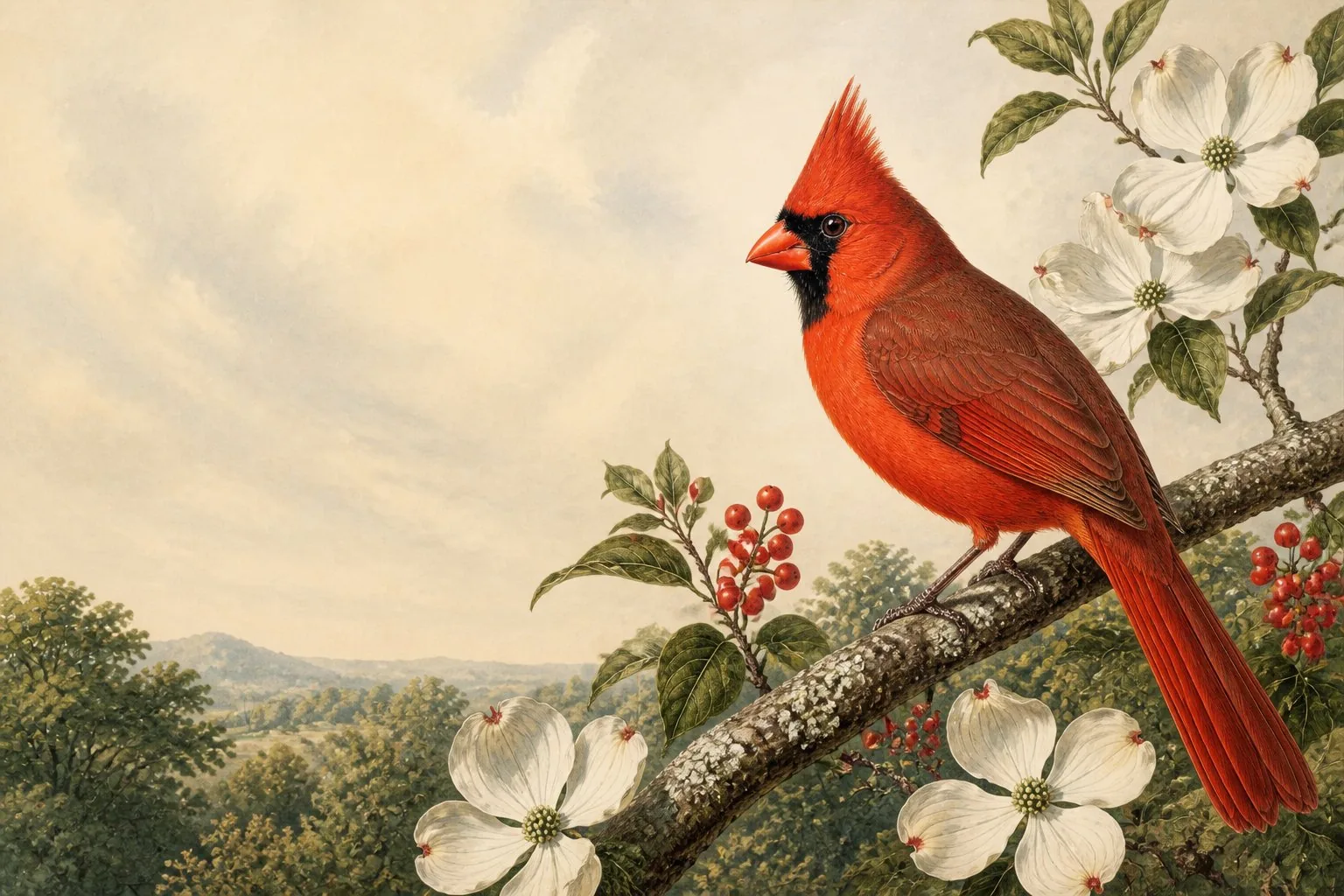
Some morning in July the sunflower feeder is busy. By the first week of August it sits untouched until noon, and the pair of Cardinalis cardinalis you have watched since February are simply gone.
They have not gone far. The disappearance is not random. Three events in the cardinal’s annual biology arrive in close succession between May and October, and together they pull a feeder-dependent bird into the wider landscape for months at a time. This is not a problem to solve. It is a schedule to read.
The nestlings eat insects, not seeds
The first departure comes quietly, in May or early June, when nesting begins in earnest. Cardinals crack seeds through the cold months and take reliably to platform feeders stocked with black oil sunflower. But nestlings cannot digest hard seeds. Cornell’s Birds of the World records that nestlings are “fed primarily insects,” and both parents shift almost entirely to prey-hunting while chicks are in the nest - beetles, caterpillars, grasshoppers, spiders, whatever the shrubs and leaf litter around a territory provide.
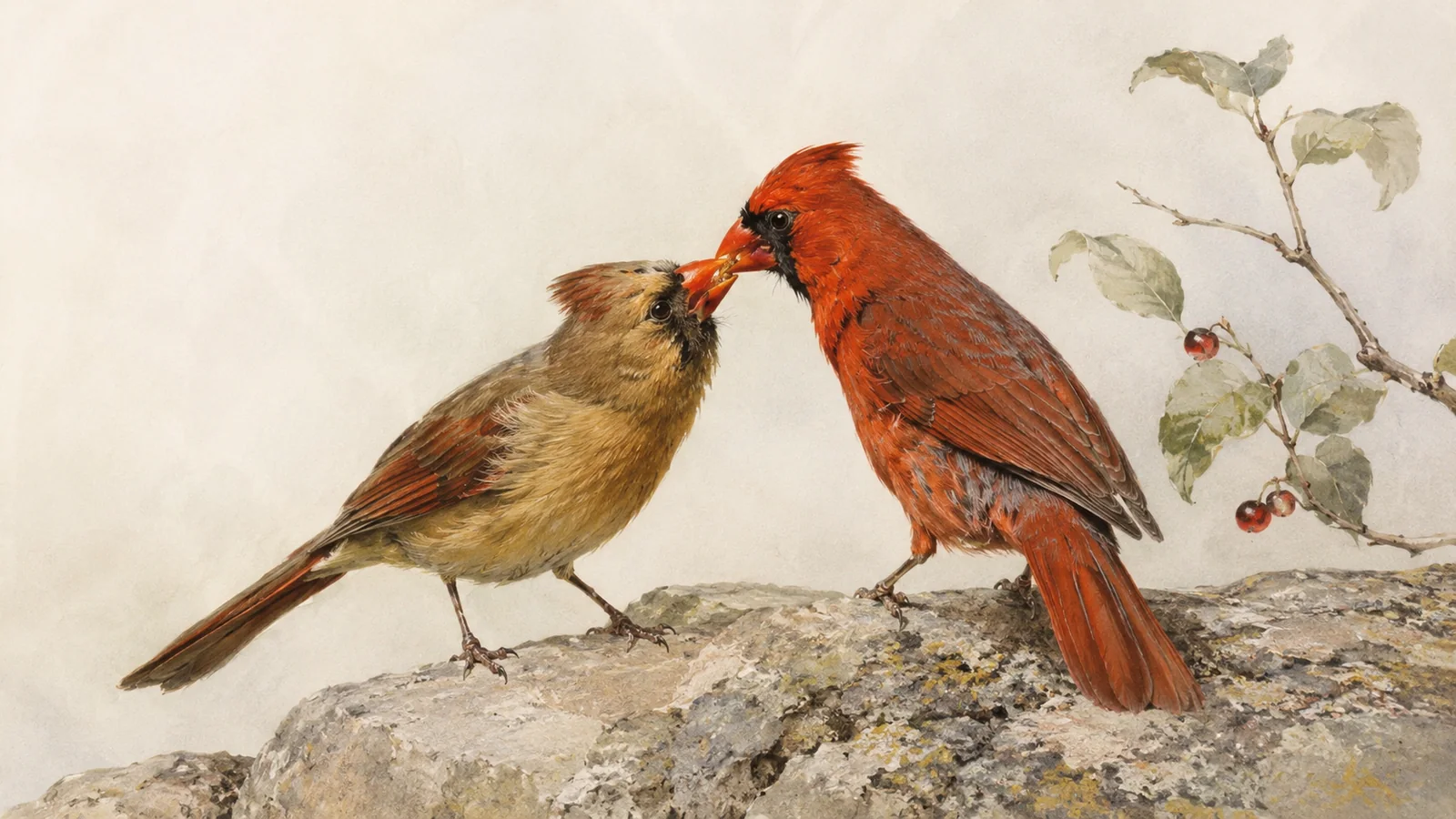
The breeding season is long. Audubon’s field guide notes egg-laying continues from March or April through late August. Cornell’s Birds of the World records that a pair may initiate eight to 10 clutches in a season when early nests fail, with two to three broods typically succeeding. After fledging, young birds remain dependent on their parents for 25 to 56 days - a range documented in Cornell’s Birds of the World breeding data. When the female starts a second nest, the male often takes sole charge of the first brood. A male who spent January at your feeder before 8 a.m. is now, through most of summer, gleaning insects from shrubby cover a few hundred metres away and carrying them back to wherever the young birds are sitting.
Seeds come back into the picture only when the last fledglings go their own way. That is usually September.
The molt makes them reclusive
The second absence is the one most people notice without understanding. Cornell’s Birds of the World records that the complete adult prebasic molt runs primarily July through October - coinciding exactly with the tail end of the breeding season above. Audubon notes that cardinals can lose all their head feathers at once, producing the bald-headed bird some feeders see in August. (For the full account of that phenomenon, see the piece on cardinal molting.)
The molt is not a crisis. It is the annual audit - the bird spending metabolic capital to rebuild every feather it will rely on for the next twelve months. The cost of being seen while feathers are incomplete is real, and cardinals pay it by staying closer to cover.
Cornell’s Birds of the World specifically flags “reclusive behavior of molting cardinals” and notes unusually low capture rates at monitoring stations during this period, suggesting birds actively avoid open, exposed ground while feathers grow back. A sunflower feeder in the middle of a lawn is exactly the kind of exposure that costs more than it’s worth during the molt. By October the new plumage is complete and the birds become visible again.
Winter flocks break up in spring
A third pattern catches people off guard earlier in the year, in the opposite direction. Through November to March, Northern Cardinals often move in loose flocks. Cornell’s Birds of the World records mean flock sizes of 13.8 birds in southern Indiana populations, with groups gradually disbanding between January and March as individuals re-establish breeding territories.
A yard that hosted a dozen cardinals through a snowy February may see none by April - not because the birds left the area, but because each pair has staked a territory. Cornell’s Birds of the World puts defended territory size at 0.21 to 2.60 hectares during the breeding season, with a mean around 0.93 to 1.50 hectares. Your yard may simply fall outside the territory that now matters to the pair you were watching.
There is also a hierarchy at feeders through all seasons. Cornell’s Birds of the World documents that females avoid feeders when other cardinals are present, while males displace females and avoid other males. If a pair has claimed territory near your feeder but ranks below a neighbour’s pair, you may see them rarely, or not at all, during the weeks when that dominance is being sorted.
What to do while you wait
Cardinalis cardinalis is a permanent resident throughout its range - Audubon’s field guide records no migratory movement anywhere it occurs. The birds that left your feeder in May are almost certainly still within earshot. Fresh black oil sunflower, kept dry in a covered hopper, is enough to hold the relationship. Dense shrubs within a few metres of the feeder let birds feed without staring at open sky.
The feeder’s job in summer is to stay ready. When breeding ends, when the molt completes, when winter re-forms the flocks and then disperses them again, the pair you know will notice that the sunflower is still there. They always do.
For more on the pair you are watching, the Northern Cardinal species guide covers range, habitat, and status in full. If you have seen an unusual white bird at your feeder, white cardinals explains what drives leucism in the species. For broader context on population health, are cardinals endangered has the current picture, and are cardinals rare explains why an empty feeder says nothing about how common the species actually is. And if you want to know what to call the flock that formed in your yard last January, what is a group of cardinals called has the answer.
The disappearance in July is not a sign that something is wrong. It is a sign that the birds are doing exactly what they are supposed to do. The feeder will matter again when biology makes room for it.