Biology
The bird the joggers learned to fear
The first one in the winter of 2015 was a German tourist running the eucalyptus loop at Tilden Park in the East Bay. She went down. She was bleeding from a wound at the back of her head. There was no one near her. She reported the assault to police, who treated it as a robbery without context and started looking at the park’s homeless population.
The second one was eleven days later, same trail, same time of evening. The third was three days after that. By mid-February five joggers had been hit, all from behind, all bleeding from scalp wounds, none of them having heard or seen anything. The local paper called it the Tilden Park Mystery. The police closed the trail. The Audubon Society read the paper and called the park.
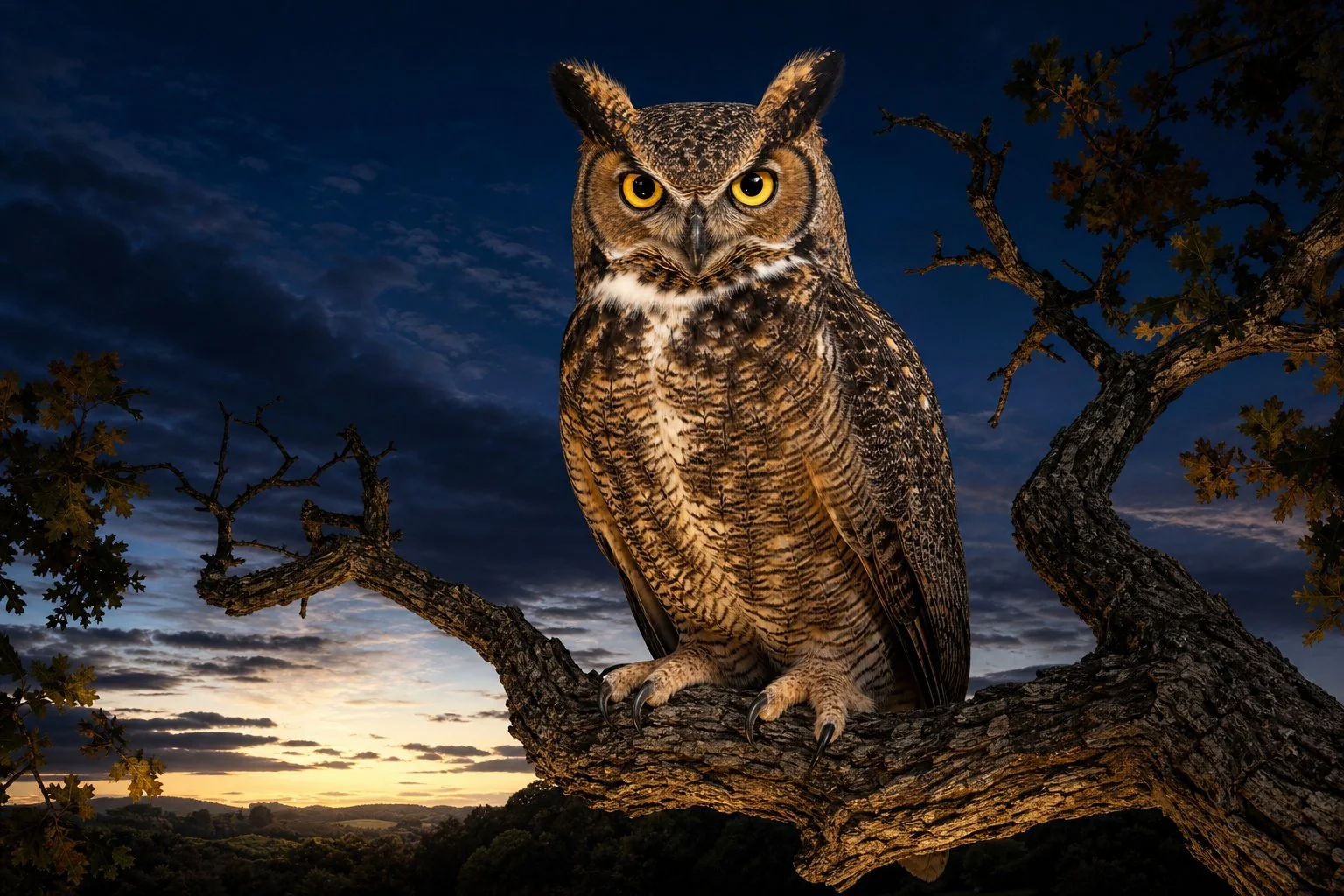
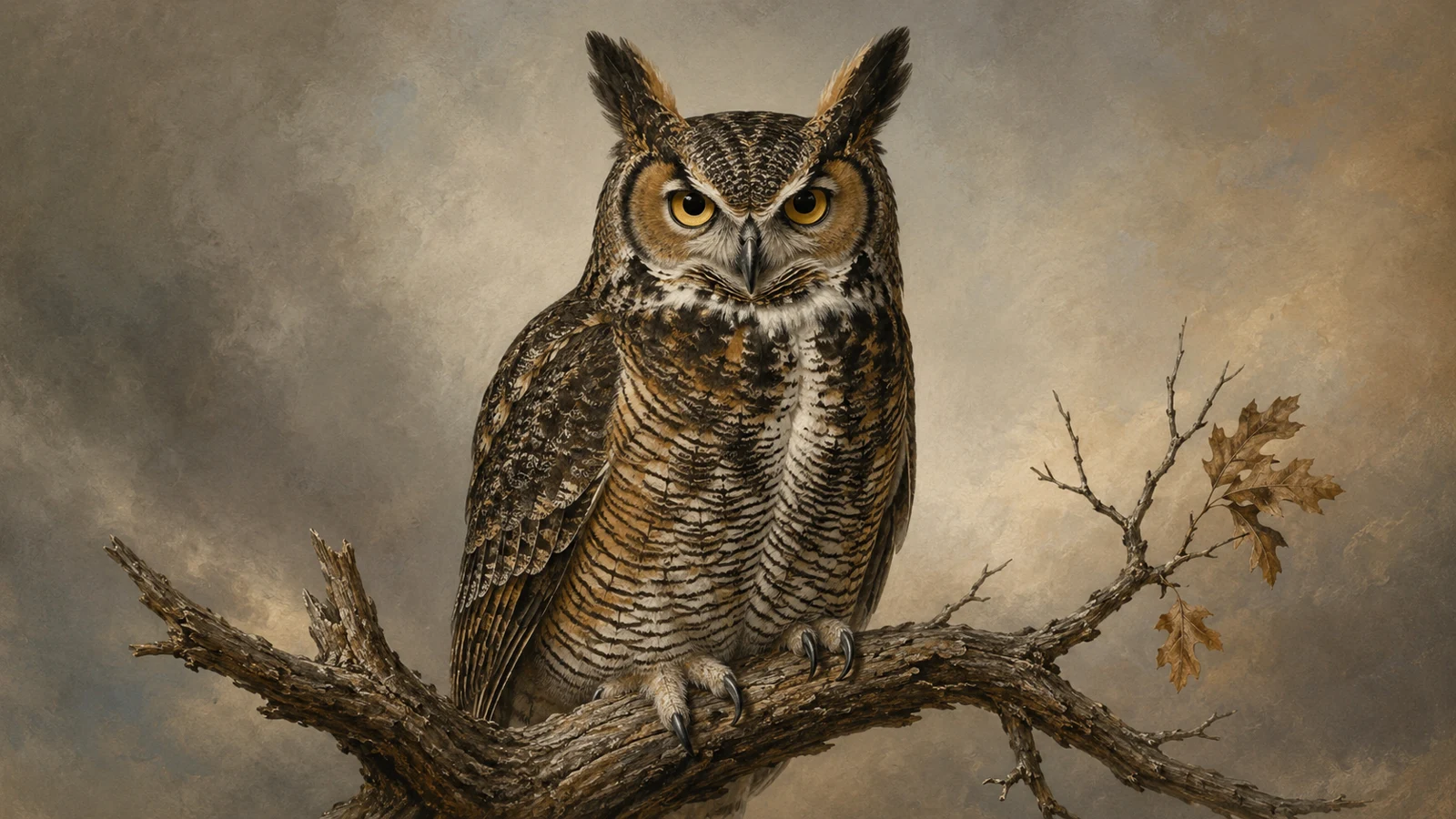
The bird was a Great Horned Owl with a nest in a Monterey pine about thirty metres off the path. She had two owlets, six weeks from fledging. The joggers were running underneath her in twilight at exactly the time of day she was leaving to hunt. She was clearing the airspace under her tree.
The joggers stopped running when the park signposted the tree. The signs went up at the end of February. By May the owlets had branched. By June the family had moved on. No one was attacked again.
This is roughly the entire story of owl attacks on humans. They happen, they are surgical, and they are not what they look like.
The owl who hits you in the back of the head is not hunting you. She is defending a nest. The flight is silent because the leading edge of her wing carries a serrated comb of feather barbs that breaks the air over the wing into small turbulent eddies instead of one large sheet. The acoustics that should warn you do not exist. The strike comes in at the only target that matters on a hunting owl’s prey: the skull. With a human, the talons cannot close, but the line of approach is the same. You feel impact before you feel anything else.
The species involved are large enough to do real harm and territorial enough to use it. Great Horned Owls in North America. Barred Owls, expanding from the East into Pacific Northwest suburbs, with a striking record of bold nest defence. Snowy Owls in the Arctic. Tawny Owls in Europe, the species that took the right eye of the British wildlife photographer Eric Hosking in 1937 - he wrote his autobiography under the title An Eye for a Bird - and that any British nest photographer working without safety glasses is, statistically, courting. Powerful Owls in Australia. Barn Owls almost never. Screech-Owls almost never. The size class matters.
The timing matters more. Owls hit humans in a tight calendar window. Most temperate species incubate eggs from February through April and care for fledglings into June. The peak danger is the two weeks immediately after the owlets leave the nest, when they perch low and visible on accessible branches and the parents have to defend them from ground threats for the first time. Walk under a Great Horned Owl nest in November and nothing will happen. Walk under it in late May and you have walked into a defended territory.
What an attack looks like is consistent across the published descriptions. One pass, one hit, no follow-up unless you stay. The owl returns to a perch above you. If you walk away, she watches you go. If you stand still or look up, she will hit you again. Joggers who have been struck more than once almost always describe stopping, looking up, and being struck a second time within seconds. The protocol the rangers eventually settled on at Tilden was the one a sensible person would arrive at on their own, given fifteen seconds of clear thinking: cover your head, keep moving in the direction you were going, do not look up, do not stop.
What makes the Tilden story interesting is what it took to identify the perpetrator. There was a literal eyewitness for several attacks - the victim, in good light, on a public trail, conscious throughout. Nobody saw the bird. The silent flight is not a metaphor; it is engineering. Wagner and colleagues at the University of Bonn published acoustic measurements in 2017 showing near-total silence below 1.5 kHz, which is the frequency band where rodents hear best. The acoustic stealth that evolved for hunting voles works equally well against humans in a park.
The deeper Tilden story is about who owns the airspace above a public path. The park belongs to the East Bay Regional Park District. The trail is signposted, mapped and maintained. The trees are inventoried. The owl is not on any inventory and was not on any map, but her territory existed before the park did and her use of the Monterey pine that year was, in every meaningful sense, prior. The joggers’ running route through her territory in twilight was the intrusion. The signposting that ended the attacks was not deterrent. It was disclosure. We told the humans where the bird’s living room was.
There is a quieter version of this story playing out in suburban America right now, across thousands of yards. Barred Owls are expanding west and south through forested suburbs at a pace nobody predicted. They tolerate humans well, nest at the edges of large gardens, and defend their fledglings energetically in late spring. A 2021 paper in the Journal of Raptor Research by Smith and colleagues documented a steady rise in Barred Owl nest-defence reports from suburban property owners across the Pacific Northwest over the previous decade. The pattern matches the Tilden one: tight calendar window, fledgling dependency, strike from above, single pass.
What this changes for a casual reader is small. Do not stand under a known owl nest in May. If you walk the same trail every dawn and one morning something hits the back of your head, the bird is the answer before the assailant is. If you have small children in a yard with a known owl pair, the late-spring weeks after fledging are the weeks to keep an eye on the kids.
What it changes for the bigger question is more interesting. The owl in the suburban tree has been there longer than the suburb. She is doing the same work, in the same way, at the same hours, on the same schedule. She has no map of the trail and no list of the path users. She has only a tree and a brood and the airspace under it. When the airspace is disputed her response is the one that nothing in the airspace’s evolution has ever needed to argue with.
The right response is the one the rangers worked out. Acknowledge her. Reroute around her. Walk a different loop for three weeks. Take the kids the long way. Read the sign.
In June, after the owlets branch and the territory relaxes, you can run the trail again. The bird will still be there. You will not see her. That is the entire point of her.