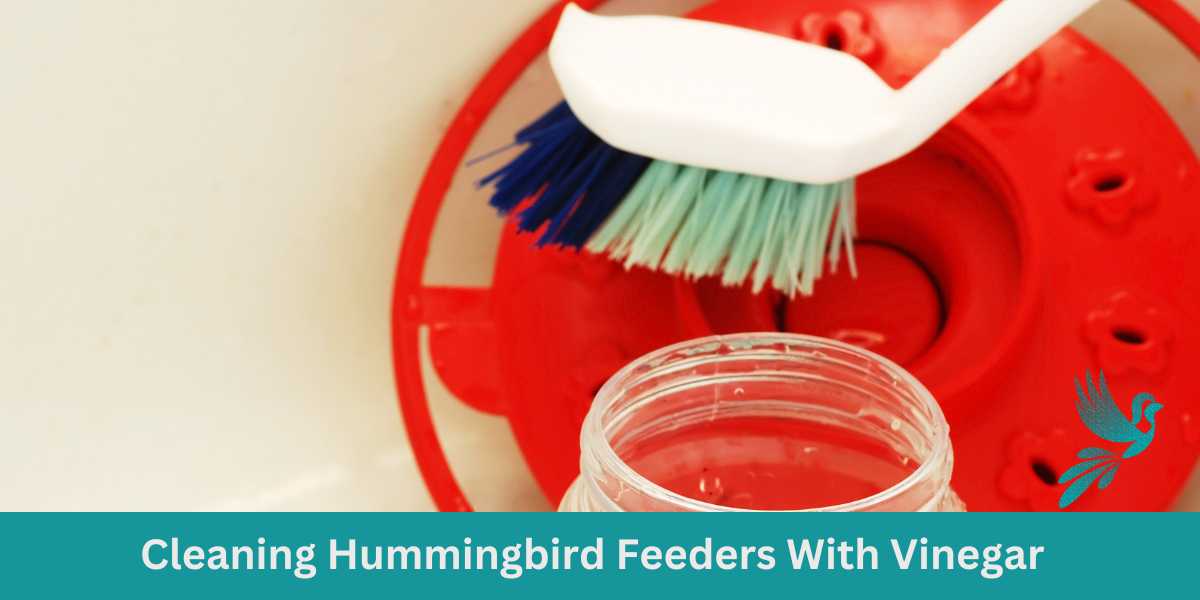
White vinegar is the best cleaning solution for hummingbird feeders - it kills mould and bacteria without leaving harmful residue. Clean your feeder every 3-5 days in warm weather, or weekly in cool weather.
Step-by-Step Cleaning
| Step | What to do |
|---|---|
| 1. Disassemble | Take the feeder apart completely - lid, base, bee guards, all removable parts |
| 2. Dump old nectar | Pour out all remaining sugar water |
| 3. Soak | Submerge all parts in a 1:1 mix of white vinegar and warm water for 30 minutes |
| 4. Scrub | Use a bottle brush or pipe cleaner to scrub every surface, especially feeding ports and crevices |
| 5. Rinse | Rinse thoroughly with clean water until no vinegar smell remains |
| 6. Dry | Air dry completely or wipe with a clean cloth |
| 7. Refill | Fill with fresh nectar (4 parts water to 1 part white sugar) and rehang |
For stubborn mould, add uncooked rice to the feeder with the vinegar solution and shake vigorously. The rice acts as a gentle abrasive.
Cleaning Schedule
| Temperature | Clean every |
|---|---|
| Above 30C (86F) | Every 2-3 days |
| 20-30C (68-86F) | Every 3-5 days |
| Below 20C (68F) | Every 5-7 days |
In hot weather, nectar ferments rapidly. Cloudy nectar, black spots, or a sour smell mean the feeder is overdue for cleaning.
Why Cleaning Matters
Mould and bacteria - Sugar water ferments quickly, growing mould and bacteria that can cause fatal infections in hummingbirds, including aspergillosis (a fungal lung infection) and salmonella.
Pests - Dirty feeders attract ants, wasps, and bees that can contaminate nectar and block feeding ports.
Disease transmission - Multiple hummingbirds using a dirty feeder spreads disease through the shared nectar.
What NOT to Do
| Mistake | Why it’s a problem |
|---|---|
| Using bleach | Leaves toxic residue that is difficult to rinse completely |
| Using dish soap | Leaves residue that hummingbirds can taste and avoid |
| Using red dye | Unnecessary and potentially harmful - the feeder itself is red |
| Using honey | Ferments rapidly and grows deadly fungus |
| Using artificial sweetener | Zero calories - hummingbirds need real sugar for energy |
Nectar Recipe
The only nectar recipe you need: 4 parts water to 1 part plain white sugar. Boil the water, dissolve the sugar, let it cool completely before filling the feeder. No red dye, no honey, no additives.
Feeder Placement Tips
Shade - Place feeders in shade or partial shade. Direct sun causes nectar to ferment much faster.
Multiple feeders - Use several small feeders rather than one large one. Small feeders get emptied and cleaned more frequently.
Away from windows - Prevent bird strikes by placing feeders either within 1 metre of windows or more than 3 metres away.
The number one mistake hummingbird feeder owners make is not cleaning often enough. A feeder full of fermented nectar is worse than no feeder at all. If you cannot commit to cleaning every few days in summer, take the feeder down.