Free shipping to the US, Canada & Europe
Identification
Most 'eagle' sightings are turkey vultures or ospreys. Learn the one field mark that separates each lookalike from a true Bald Eagle.
February 27, 2023 5 min read
A birder outside Pittsburgh scanned a ridge for twenty minutes convinced she was watching a Bald Eagle ride the thermals. Flat wings, dark body, big. When it banked, the wings dipped into a shallow V and the tail fanned out bare and red. Turkey vulture.
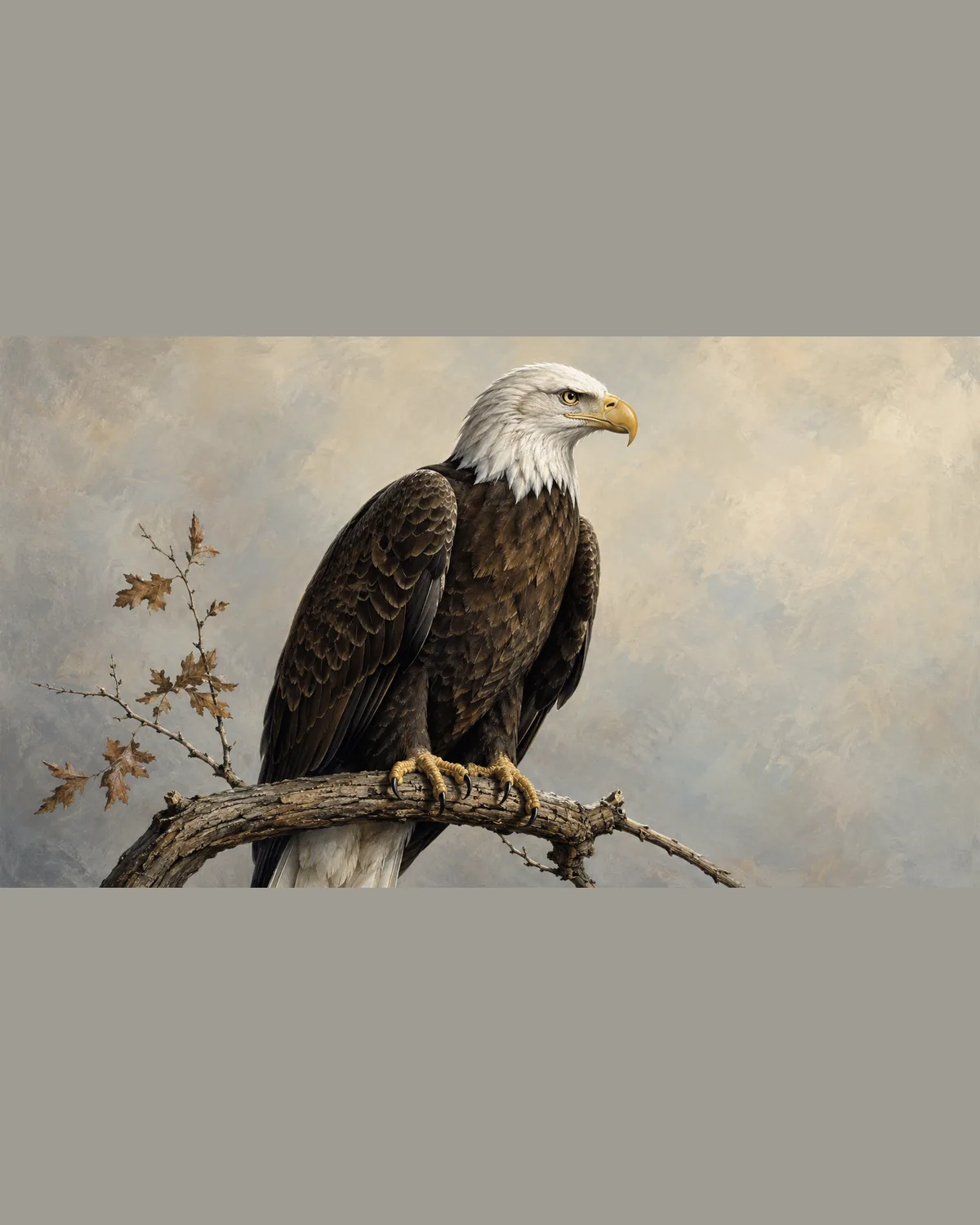
That story repeats across the continent every spring. Most large dark raptors reported as Bald Eagles are not Bald Eagles. The habit of calling every soaring dark bird an eagle is understandable - Bald Eagles (Haliaeetus leucocephalus) are the symbol, so people see the symbol. The field marks are not subtle once you know them.
The working rule: if you are more than a kilometre from open water, it is probably not a Bald Eagle.
Cathartes aura is responsible for more misidentified “eagles” than any other bird. At a distance the silhouette reads large, dark, and soaring - all three boxes ticked. The tell is in the wing posture. Vultures hold their wings in a dihedral - a shallow upward V when viewed from the front - and they rock and tilt in the wind as if balancing on a wire. Bald Eagles hold the wings flat, almost horizontal, and fly as if on rails.
The secondary tell: the Turkey Vulture’s head is tiny, bald, and red. An adult Bald Eagle’s white head reads large and pale from hundreds of metres away.
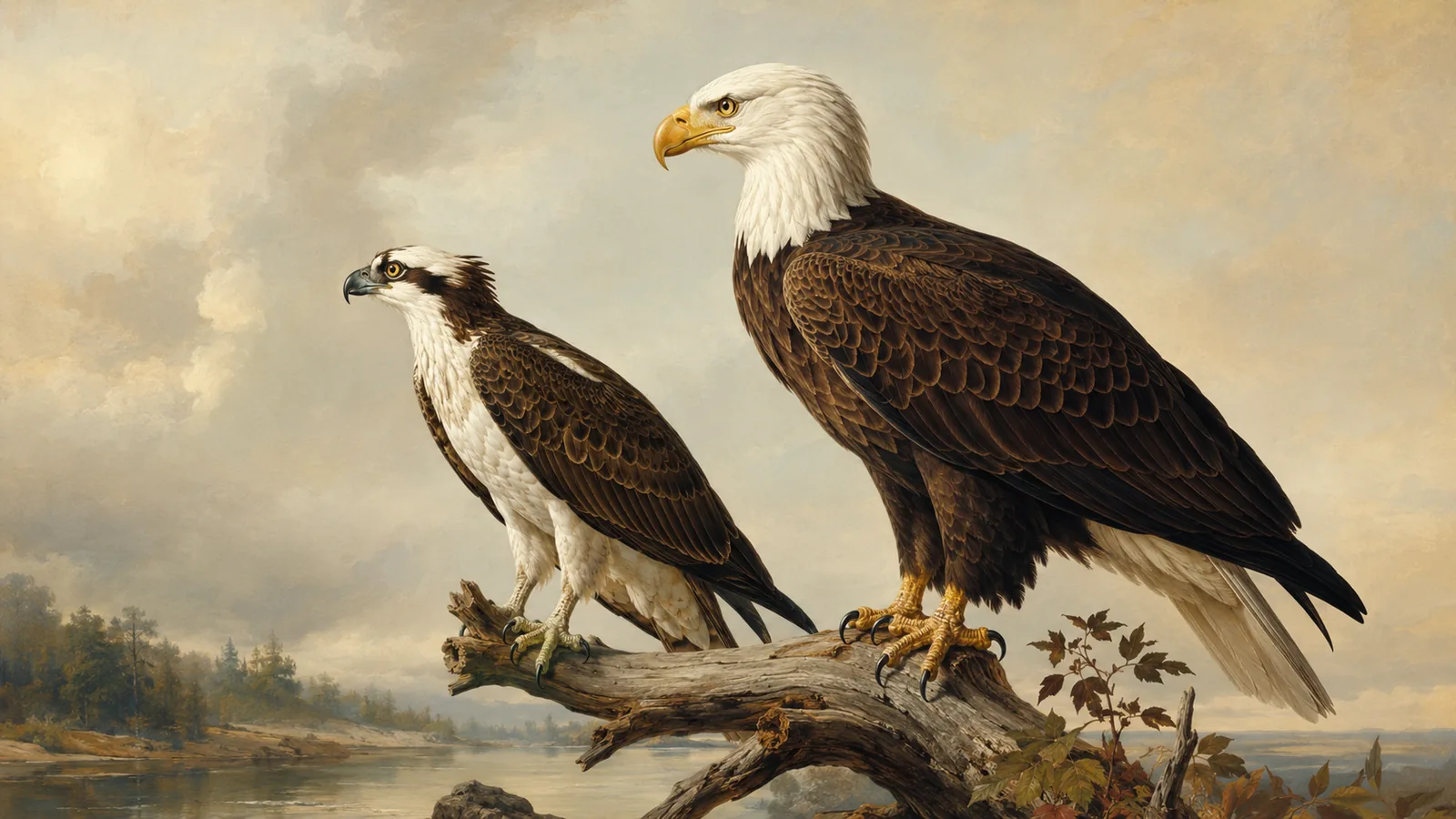
The Osprey (Pandion haliaetus) is the bird that actually shares the Bald Eagle’s habitat. Both patrol open water. Both eat fish. At altitude they can look similar. But the Osprey’s wing shape is different: the wings are long and narrow with a distinctive crook at the wrist, giving a gull-like angle that no eagle matches. Seen from below, an Osprey is mostly white with a dark eye-stripe and dark wrist patches. An adult Bald Eagle is dark-bodied with a white head and tail, the inverse.
The behaviour is the final separator. An Osprey will hover - stall into the wind over a fish - before plunging feet-first. Bald Eagles do not hover. They steal. Watching a large raptor plunge-dive into water is watching an Osprey. You can also read more about birds that look like hawks to sharpen the same silhouette-reading skills.
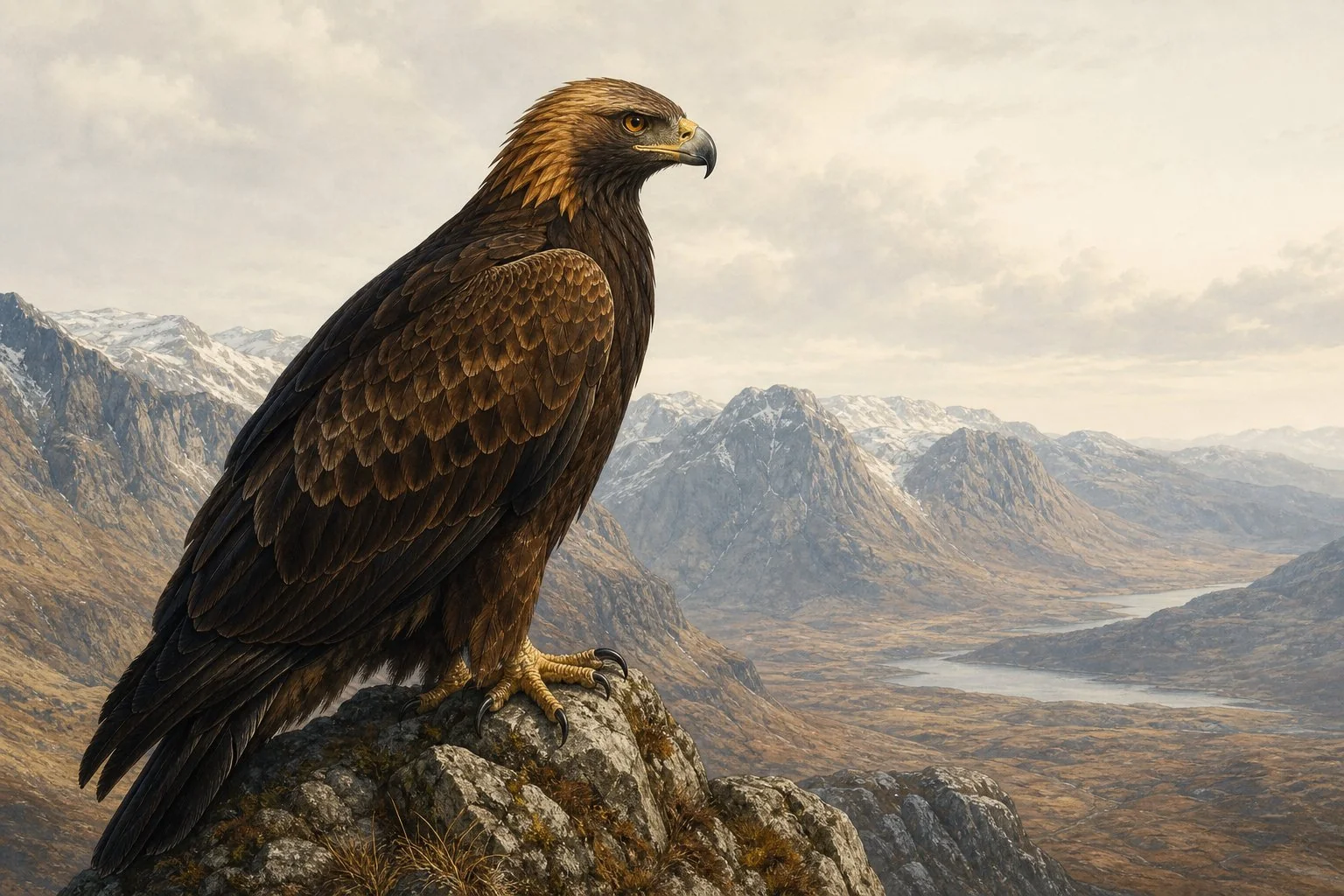
Aquila chrysaetos is the legitimate lookalike, the one that justifies field guides. Both species are large, both soar on broad wings, and in poor light both read as uniform dark brown. The differences are consistent enough to be reliable:
A large dark eagle circling above a Utah canyon rim in October is almost certainly a Golden Eagle. A large dark eagle low over a Virginia reservoir in January is almost certainly a Bald Eagle - or an immature one, which leads to the next entry.
This is where expert birders sometimes pause. Young Bald Eagles take four to five years to develop their white head and tail. Before that, they are chocolate brown with irregular white mottling on the underwings and belly - a pattern that can read as Golden Eagle to an observer who expects every Bald Eagle to look like the national seal.
The easiest check: bill size. The Bald Eagle’s bill is large, deep, and hooked - proportionally massive. The Golden Eagle’s is smaller, more hawk-like. A juvenile Bald Eagle also shows more white on the underwing linings than a Golden Eagle ever does.
The Red-tailed Hawk (Buteo jamaicensis) is the most common large raptor in North America and is routinely called an eagle by people who have not tallied the size difference. A Red-tailed Hawk’s wingspan is roughly 1.3 metres. An adult Bald Eagle spans 2.1 metres and weighs three times as much. On a telephone wire, a Red-tail looks impressive. Next to a Bald Eagle, it looks like a sparrow.
The signature tail - brick red on the upper surface, pink-orange when backlit - is visible at surprising distances. No eagle has a red tail. If you ever wondered how strong eagles really are, the size comparison with a Red-tail is a useful anchor.
| Bird | Wing posture | Key tell | Habitat |
|---|---|---|---|
| Turkey Vulture | Dihedral (V) | Wobbling flight, tiny red head | Widespread, inland |
| Osprey | Kinked wrist, gull-like | White belly, dark eye-stripe | Open water |
| Golden Eagle | Flat, broad | Amber nape, no white head or tail | Mountains, ridges |
| Immature Bald Eagle | Flat, broad | White mottling on belly/wings, large bill | Near water |
| Red-tailed Hawk | Flat, narrower | Much smaller, brick-red tail | Everywhere |
If you are inland, away from open water, the large dark bird overhead is almost certainly a Turkey Vulture, Red-tailed Hawk, or Golden Eagle. Bald Eagles cluster along coasts, major rivers, and the Great Lakes.
The Bald Eagle recovery is a genuine success story - Audubon Society counts show numbers rising from fewer than 500 nesting pairs in the 1960s to more than 300,000 birds today. But they remain tied to water. Turkey Vultures roam every habitat. The large dark bird over your backyard is almost never a Bald Eagle. The large dark bird over the Chesapeake in February is another matter entirely.
For more on sorting large birds by silhouette, birds that look like herons applies the same single-rule logic to waterbirds - one posture check, done before you raise binoculars. The same approach sorts birds that look like cranes, where one flight tell settles it.
As an Amazon Associate we earn from qualifying purchases. Linked products are ones we genuinely recommend.
 IdentificationBirds that look like goldfinches (the bill rule)
 IdentificationBirds that look like hawks (a rule that ends the confusion)
 IdentificationBirds that look like herons (the neck rule)
 IdentificationBirds That Look Like Hummingbirds
 IdentificationPyrrhuloxia vs Northern Cardinal: How to Tell Them Apart
 IdentificationRobin vs Cardinal (crest yes, crest no)
 February 27, 2023
 5 min read