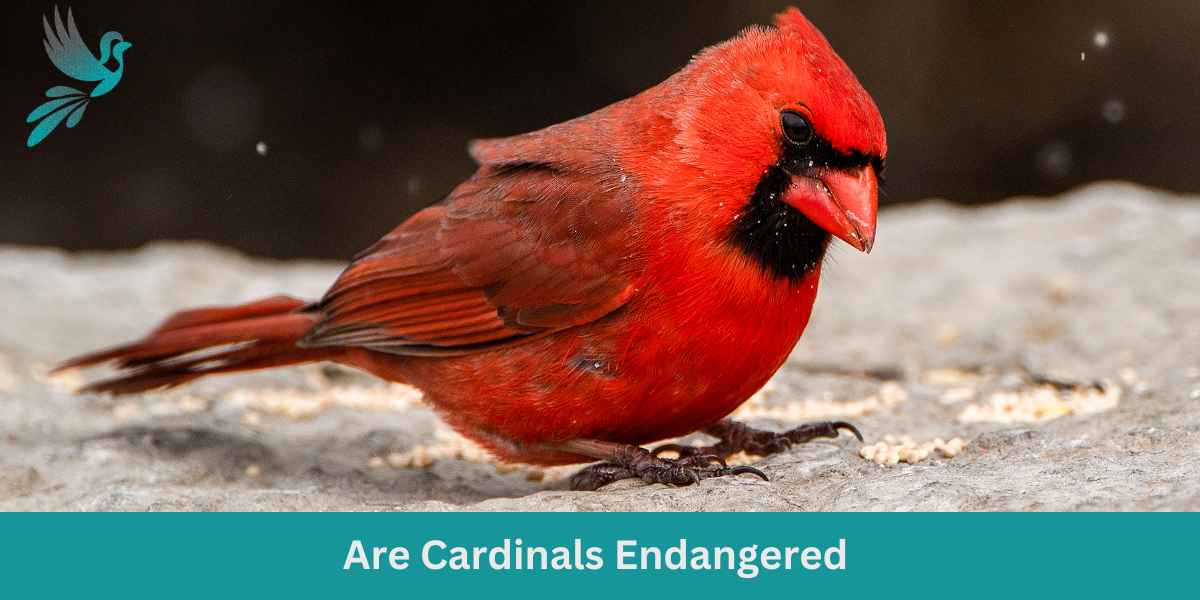
Not even close. Northern cardinals are one of the most abundant songbirds in North America, with an estimated population of over 120 million breeding individuals. Their numbers are stable and increasing.
Population at a Glance
| Estimated population | 120 million+ |
| Population trend | Increasing |
| IUCN status | Least Concern |
| Range | Eastern US, Mexico, Central America |
| Expanding into | New England, S Canada (historically rare there) |
| State bird of | 7 US states (more than any other bird) |
Cardinals thrive because they are adaptable generalists. They eat seeds, fruit, and insects. They nest in gardens, parks, forests, and suburbs. They visit bird feeders readily and benefit hugely from backyard birdwatching culture.
Where to Find Them
Cardinals are year-round residents across their entire range - they do not migrate. You are most likely to see them in:
- Suburban gardens with shrubs and feeders
- Woodland edges and hedgerows
- Parks and cemeteries with dense planting
- Anywhere with sunflower seeds - their favourite food
They are most visible at dawn and dusk, when they are often the first and last birds at the feeder.
The Rare Ones
While the species itself is common, a few colour variations are genuinely rare.
| Variation | Cause | How rare |
|---|---|---|
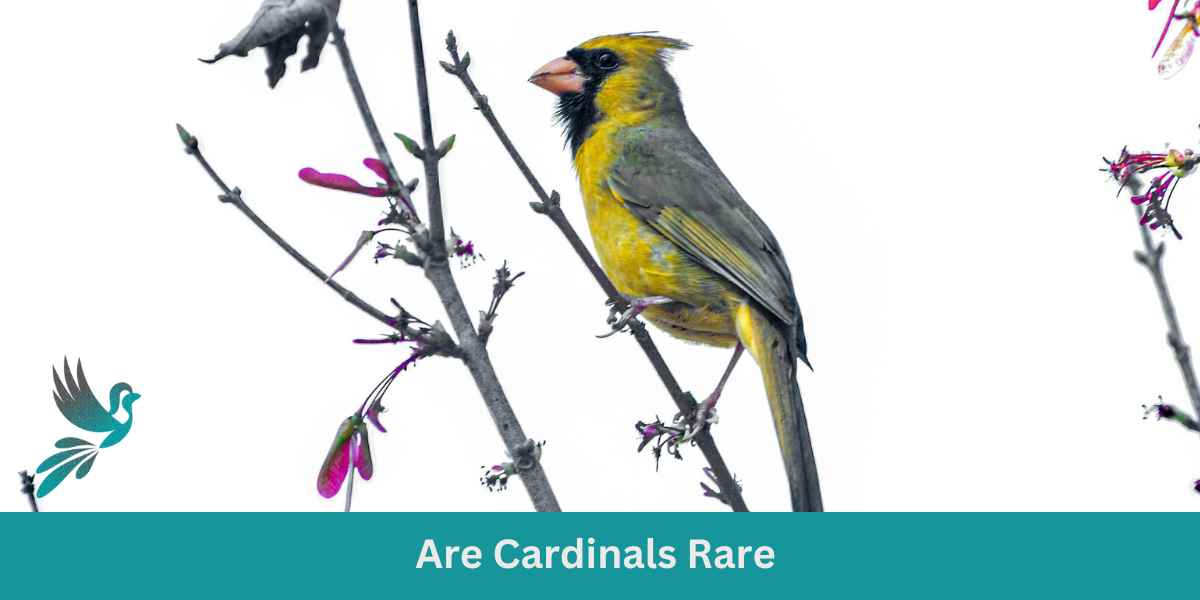
| Yellow cardinal | Genetic mutation affecting carotenoid pigments | Roughly 1 in a million |
| White cardinal | Leucism - reduced pigmentation in feathers | Very rare, a few reported each year |
| Half-and-half cardinal | Bilateral gynandromorphy - one side male, one side female | Extraordinarily rare, only a handful documented |
Yellow Cardinals
Yellow cardinals have a genetic mutation that prevents them from converting yellow dietary pigments into red. The result is a bright yellow bird with the same shape, crest, and behaviour as a normal cardinal. They are estimated at roughly 1 in a million.
White Cardinals
White cardinals have leucism, a condition where feather cells produce little or no melanin. Unlike true albinos, leucistic cardinals retain normal eye colour. They stand out dramatically against a flock and are more vulnerable to predators because they lack camouflage.
Half-and-Half Cardinals
The rarest of all. Bilateral gynandromorphy produces a bird that is male on one side and female on the other - bright red on the left, tan on the right, split straight down the middle. Only a handful have ever been documented and photographed.
Cardinals are common, not rare. If you are not seeing them in your garden, the issue is almost certainly habitat or food - not scarcity. Black oil sunflower seeds in a platform feeder near dense shrubs will bring them in reliably.