Biology
How to Attract Cardinals to Your Yard
The male cardinal at your neighbor’s feeder is not visiting yours because your feeder is hanging in the wrong place.
Cardinalis cardinalis is a ground-feeding bird. In the wild he works the leaf litter and the low scrub, not the open canopy. When a hopper feeder is strung from a shepherd’s hook in the middle of a lawn with no cover within five meters, most cardinals - the wary ones, the older ones, the ones worth having - will see it and keep flying. The setup that fills a feeder with house sparrows is often the same one that keeps cardinals away.
The fix is not complicated. Get the feeder low and get it near cover. Everything else is secondary.
What cardinals actually eat
Black oil sunflower seeds are the single most reliable food. The shell is thin enough for a cardinal’s thick, conical bill to crack in one motion - that bill is built for exactly this work. Hulled sunflower seeds work as well and leave no shell debris. Safflower seeds are worth adding because house sparrows and most squirrels leave them alone, while cardinals take them readily.
| Food | Notes |
|---|---|
| Black oil sunflower | First choice, year-round |
| Safflower | Repels squirrels and starlings |
| Hulled sunflower | No mess, same appeal |
| Shelled peanuts | Unsalted only; good protein in late summer |
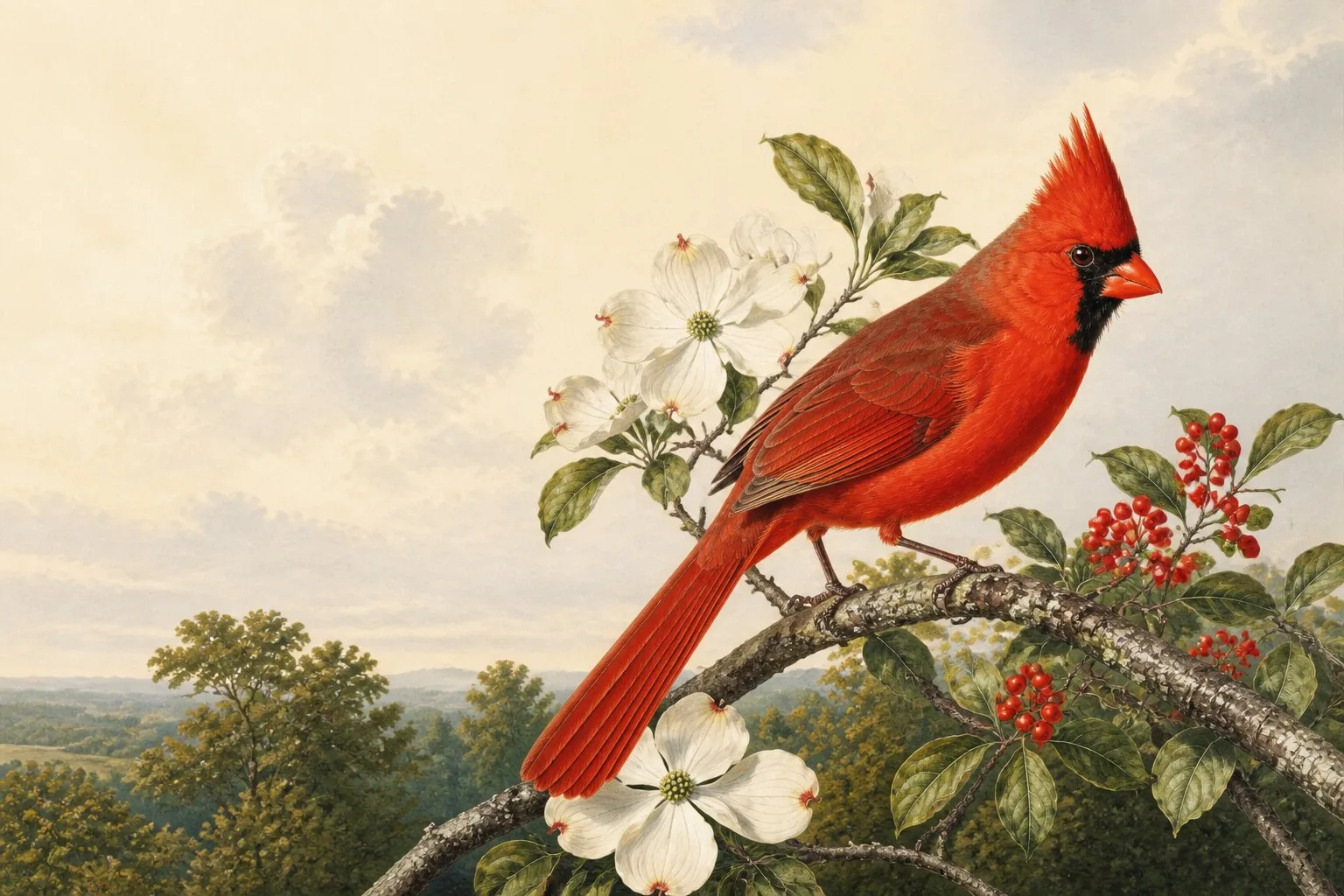
| Native berries | Dogwood, sumac, holly - see the plants section below |
Skip millet and milo. Cardinals ignore both.
The feeder that works
A hopper feeder with a wide tray is the standard choice - the tray gives the bird room to turn and face outward while feeding, which is how cardinals prefer to eat. Platform feeders work just as well. Tube feeders with narrow perches frustrate cardinals and they will eventually stop trying.
Place the feeder no more than two meters off the ground, ideally lower. Place it within three meters of a dense shrub or hedge. Cardinals are crepuscular feeders - they are the first birds at the feeder before sunrise and the last ones still eating at dusk. If the feeder is empty at those hours, they will find a yard where it is not.
Keep the seed dry and the feeder clean. Cardinals avoid mouldy seed. A feeder that sits in standing water for a week will lose its cardinals faster than a winter cold snap will.
Cover matters more than food
The most common reason a well-stocked feeder does not attract cardinals is that there is nothing to flee to.
Cardinals nest in dense shrubs one to three meters off the ground. They do not use enclosed birdhouses. They need thick foliage: holly, juniper, arborvitae, hawthorn, viburnum. A yard with two or three of these plants within view of the feeder is a yard a cardinal can commit to. A yard with open lawn from fence to fence is a yard a cardinal visits once and files away as dangerous.
Evergreens serve double duty. They provide year-round cover for roosting and shelter from winter wind. A male cardinal huddled in a dense juniper on a January night is using that shrub the same way he uses a thick hedge in August, when he is mid-moult and flying less well than usual.
Water
A birdbath with moving water - a dripper, a small pump, even a slow hose drip - attracts cardinals from a distance. They hear it before they see the feeder. In winter, a heated birdbath becomes the most powerful attractor in the yard because open water is scarce. Keeping it clean matters - the same mineral and mold buildup that ruins hummingbird feeders affects cardinal bathing sites just as fast.
A bird that finds your bath once will return on a schedule.
Native plants close the loop
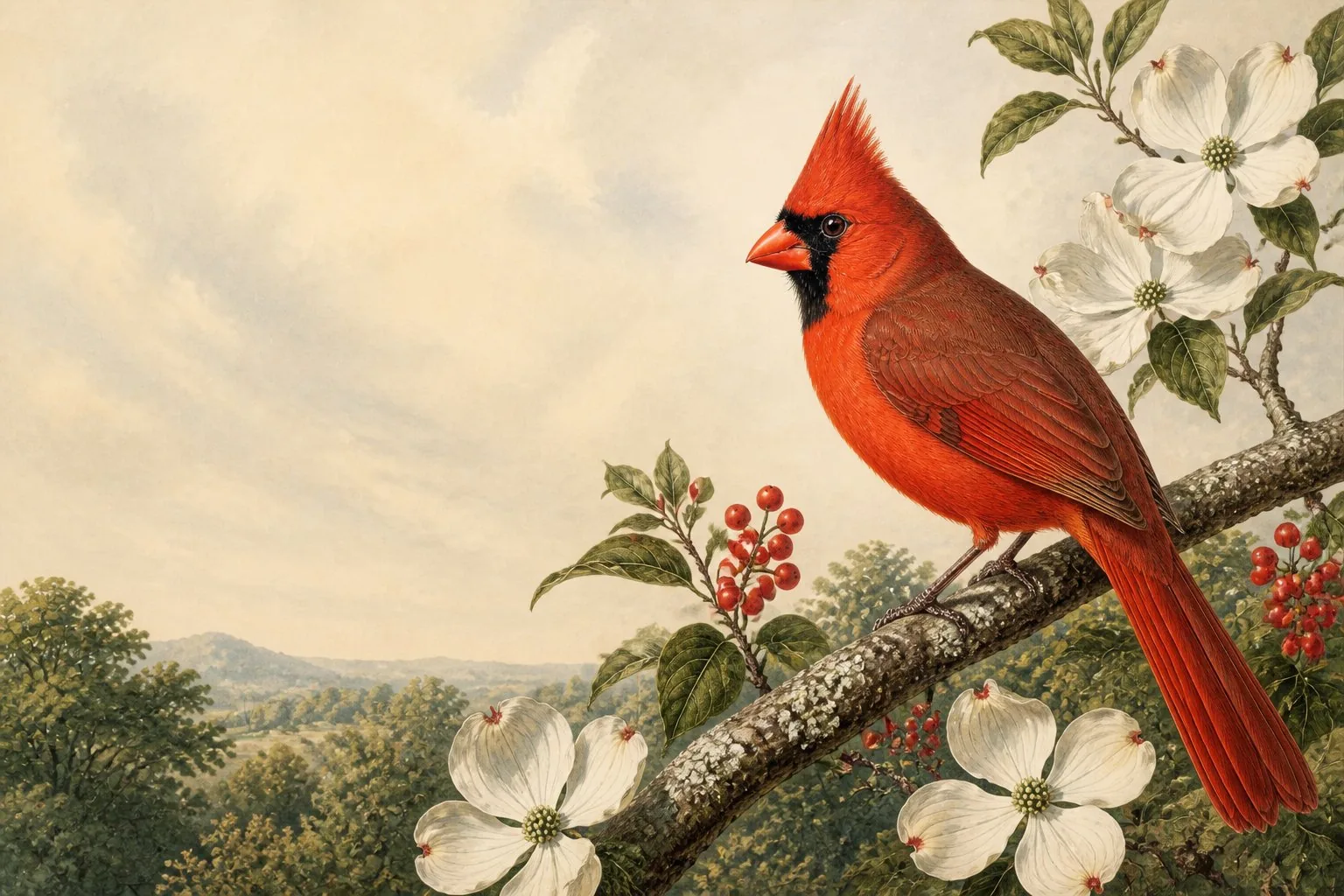
The berry shrubs are not optional extras. Dogwood, sumac, and wild grape carry carotenoid-rich fruit that feeds directly into a male cardinal’s feather pigmentation. The brightest cardinals at late-winter feeders are the ones whose autumn range included native fruit - carotenoids are not synthesised by the bird but absorbed through diet. Cornell’s Project FeederWatch has documented this link through long-term monitoring.
Plant the shrubs for nesting cover and the food follows. A holly hedge that shelters a nest in April provides berries in November from the same plant.
Sunflower seed in a hopper feeder near dense shrubs is the core of every successful cardinal setup. The shrubs are not a decoration - they are the reason a cardinal decides your yard is safe enough to stay.
The male that comes back
Two things drive cardinals away before they commit: outdoor cats and window strikes. A cat that hunts beneath a feeder ends visits to it, sometimes permanently. Window strikes are preventable - place feeders either within one meter of glass (too close for fatal speed) or more than five meters away.
White and leucistic cardinals aside, the male who finds your yard in November is likely the same male who visits in March. Cardinals have small home ranges and strong site fidelity. Banding studies have tracked individual males returning to the same feeders across consecutive winters.
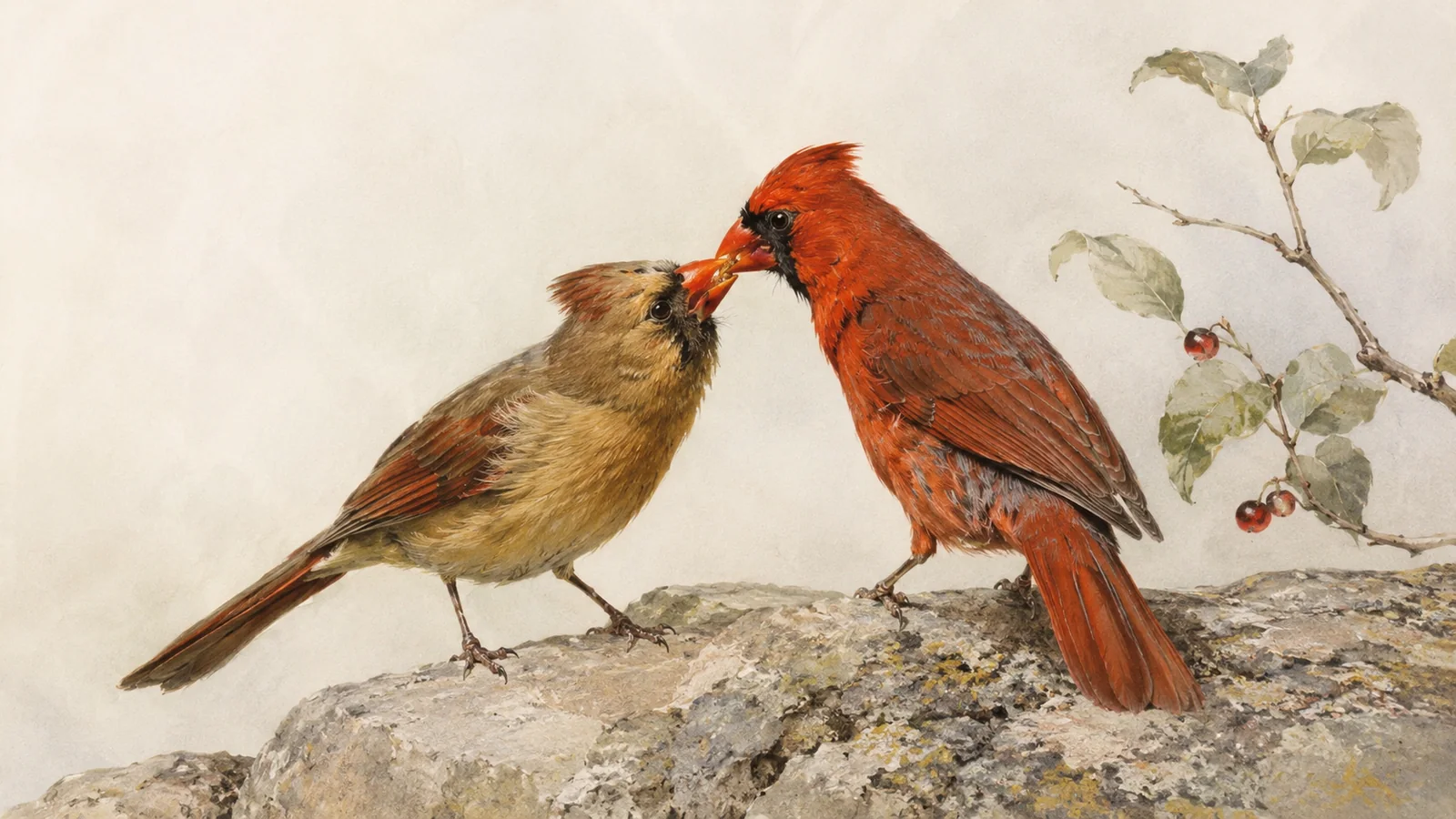
The female is harder to win over and more important to keep. She chooses the nest site and evaluates the cover. If she decides your yard is safe, you have a pair. A pair that raises a brood in your holly shrub in May will likely return to the same territory the following year. Groups of cardinals that forage together over winter share information about reliable food sources - get one, and others follow.
Set the feeder up right once. The birds do the rest of the work.