Biology
How smart are cardinals?
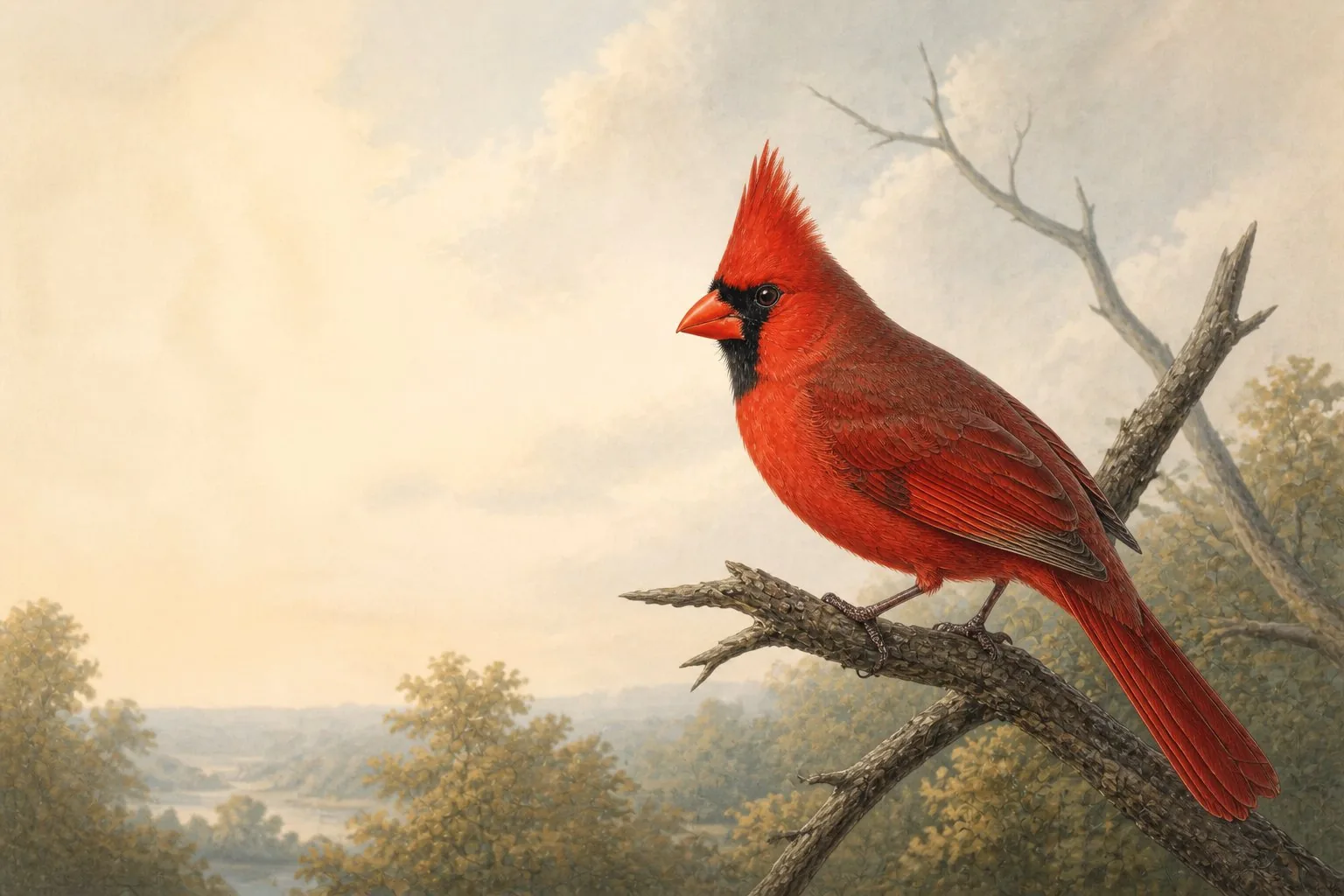
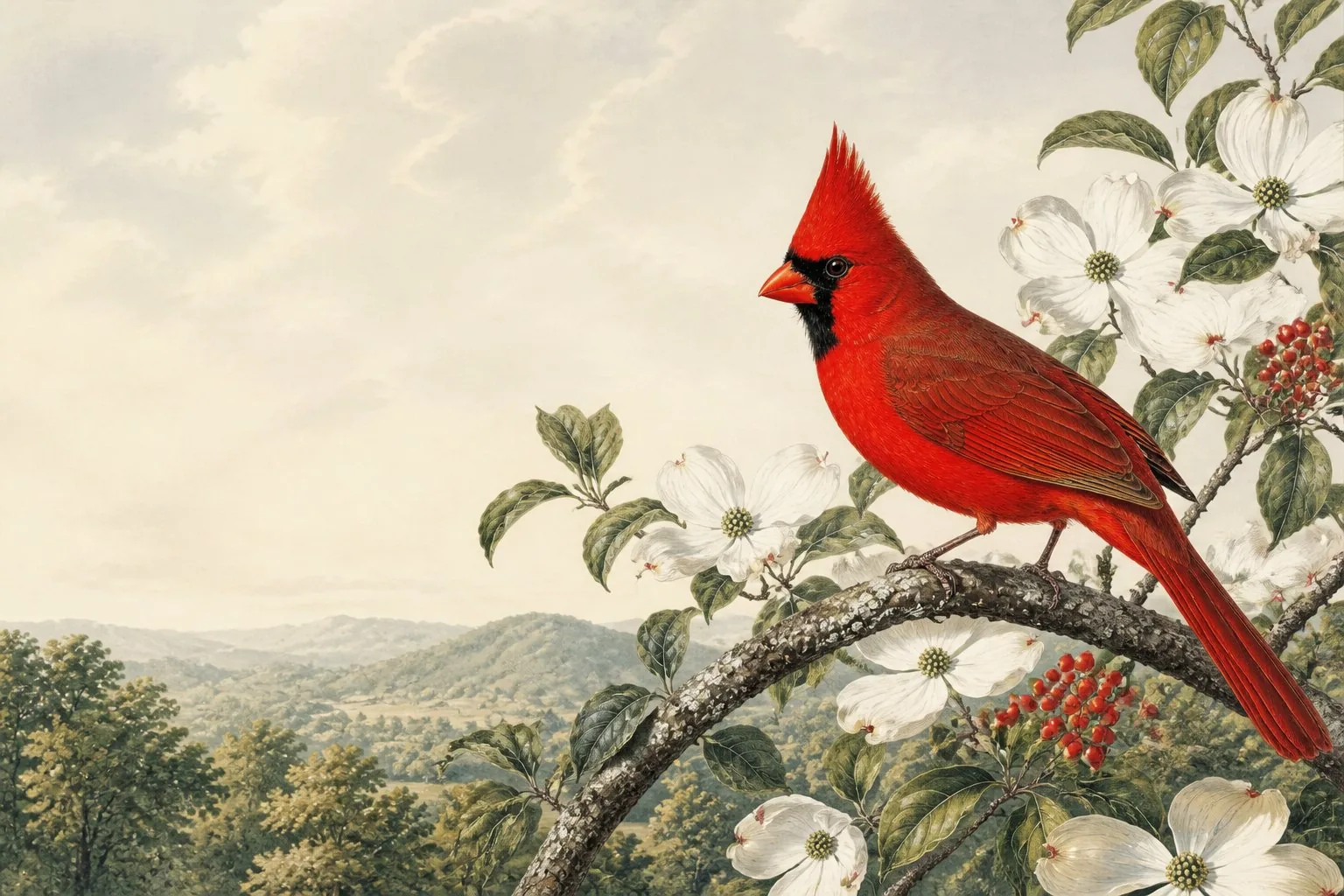
In summer 2023, a male Cardinalis cardinalis at Great Smoky Mountains National Park picked up a piece of gravel, flew to a parked car’s side mirror, and struck his own reflection with it. He repeated the sequence. Then again. Three observers - Jason P. Love, Reagan Jarret of Highlands Biological Station, and a North Carolina State University undergraduate named Rom Stanek - watched and filmed several minutes of it. The Wilson Society published the observation in January 2025. No prior scientific record existed of a Northern Cardinal using an object as a tool.
The bird was trying to drive off a rival, not solve a puzzle. But the gap between those two things is smaller than it looks, and that gap is where the honest answer to the question lives.
Cardinals are not corvids
The starting point is the comparison you are probably making. Crows remember individual human faces for years. Rooks use stones to raise water levels and retrieve floating food. Jays rebury food caches when they have been watched, apparently modeling what another bird is thinking. Cardinals do none of those things - none documented, anyway. If you are asking whether a Northern Cardinal is as cognitively complex as a crow, the answer is no.
That framing asks the wrong question. A cardinal is an oscine passerine - one of the roughly 5,000 songbird species that learn their songs rather than inheriting them fixed. The cognitive story of learned song is distinct from the tool-using intelligence of corvids. Both are real. They are not the same thing.
Song learning is a form of intelligence
Cardinals learn to sing. This sounds unremarkable until you understand what it requires. According to Birds of the World, a young male begins developing song between approximately 11 and 30 days of life, copying syllable types from adult males on his hatching territory. He assembles them through improvisation and refines them through auditory feedback until they match adult patterns. Deafened juveniles in laboratory settings produce abnormal songs with irregular syntax - confirming that the bird monitors his own output and corrects it against an internalized model. That is not instinct. That is learning.
The repertoire that results is substantial. Birds of the World records male syllable-type counts of nine to 14 across most populations, with some regional populations reaching 18 distinct types. Females carry comparable repertoires - up to 17 syllable types recorded in certain populations. Both sexes sing, an arrangement rare among North American songbirds, and mated pairs often share song phrases. The coordination of learned material between individuals is something you do not get in birds whose calls are genetically fixed.
Song also varies geographically. Cardinals in the Sonoran Desert sing recognizably different syllable arrangements from those in the Chihuahuan Desert. In playback experiments, males respond more strongly to local songs than to distant variants. They categorize unfamiliar songs as foreign - pattern recognition applied to socially learned material.
Cardinals are not intelligent in the corvid sense - planning ahead, using tools reliably, reasoning about other minds. They are intelligent in the songbird sense: they absorb information from their environment, store it, and produce flexible behavior from it. That is a different kind of smart, and it does not need corvids to justify it.
What else the data shows
Several documented behaviors describe cardinal cognition more precisely than any ranking would.
Birds of the World records winter flocks that move in a coordinated rolling pattern: front birds settle to feed while the flock passes over them, then fly forward to lead again. Marked individuals in these flocks were tracked moving 500 to 900 meters within six-hour periods while shifting between flock associations. Young birds join and watch adults for foraging cues. Birds of the World documents adults leading juveniles through feeder routes - teaching them which yards to use and how to approach human-occupied spaces. The knowledge that a particular yard has sunflower seed is not instinct. It travels from bird to bird through observation.
Cardinals also adjust behavior near specific predator locations. Males were documented singing less in territories adjacent to known Cooper’s Hawk nest sites. Urban cardinals show reduced responses to interspecific predator alarm calls compared to rural individuals, which researchers interpret as habitat-specific behavioral adaptation: the bird adjusting a default response to match its actual environment.
Females sing during nest defense, at elevated rates in newly formed pairs, and when establishing territory with a new mate. The female on a nest in late April in central Virginia is not producing fixed calls by reflex. She is using learned material in context.
Where this leaves the question
A cardinal will not open a box with three latches. Cardinals are not endangered, and their success does not depend on the open-ended problem-solving that corvid ecology rewards. What they have is a learning system that runs throughout life - for song, for territory, for threat, for route. The male learning new syllable types into his first spring. The female singing at elevated rates when establishing a new pair bond. The juvenile watching his father work the feeders along a suburban yard and building a map he will use for years.
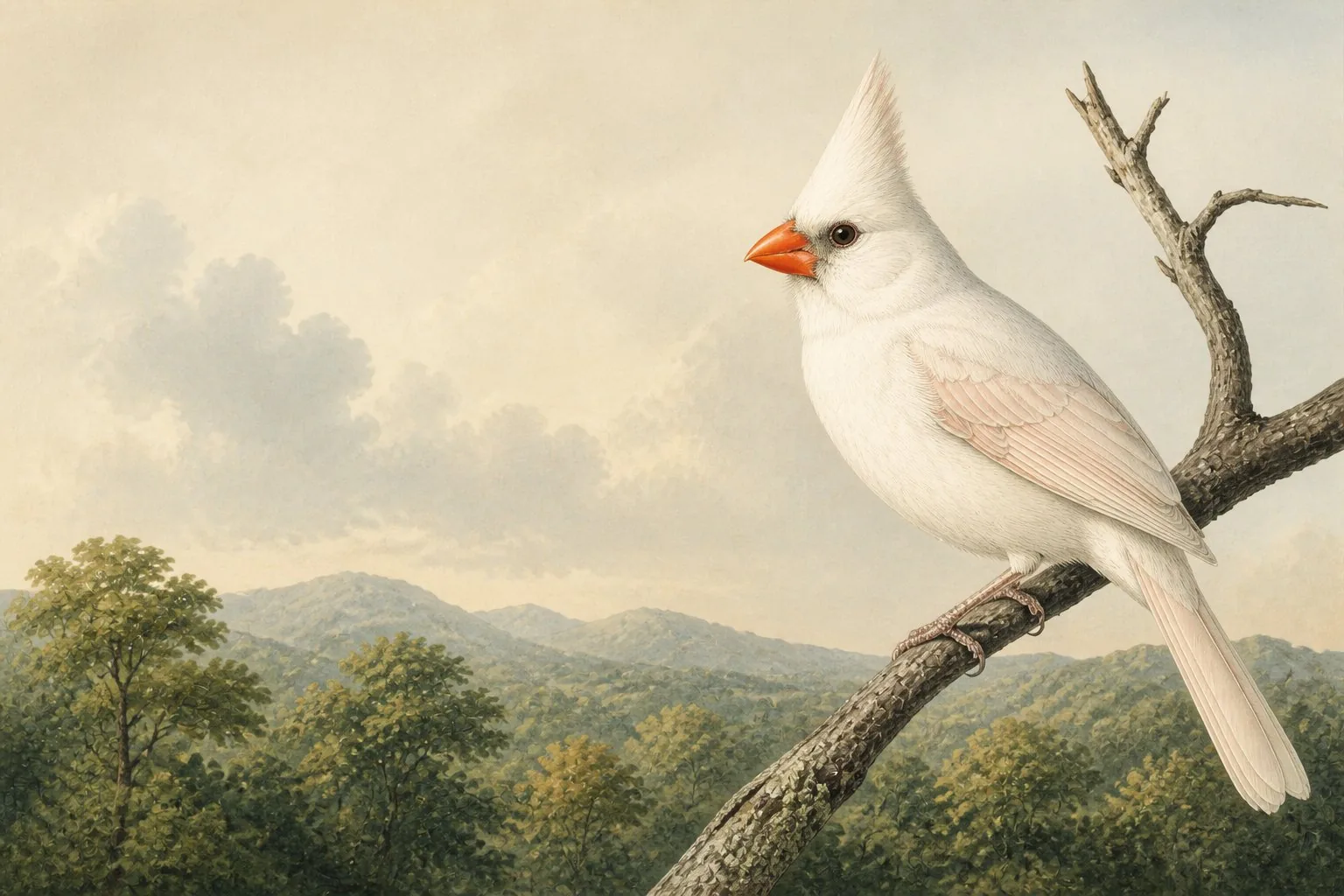
White cardinals that turn up at feeders - leucistic birds conspicuous to predators - navigate these same social structures without being excluded, which tells you the flock runs on learned behavior, not appearance.
The gravel-throwing at the Smokies mirror is the outlier in the documented record, or it was until someone filmed it. Most questions about animal cognition begin with one surprised observer and several minutes of video. What matters is that the footage exists, and that the behavior had no scientific precedent in this species. The cardinal’s molting cycle is elaborate and publicly invisible in the same way - a system running under the surface, visible only to people willing to watch.