Biology
Do Male Cardinals Feed Their Young?
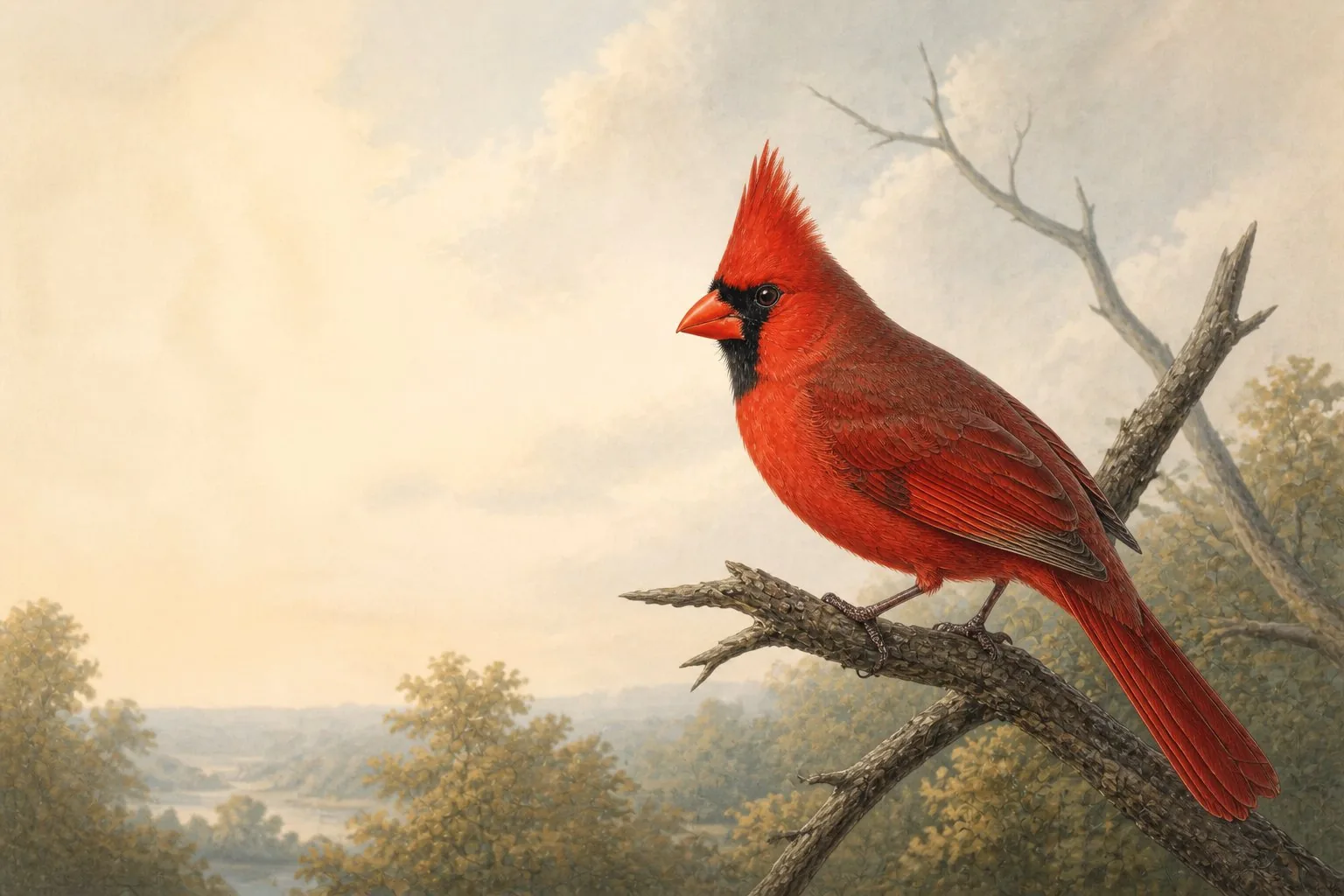
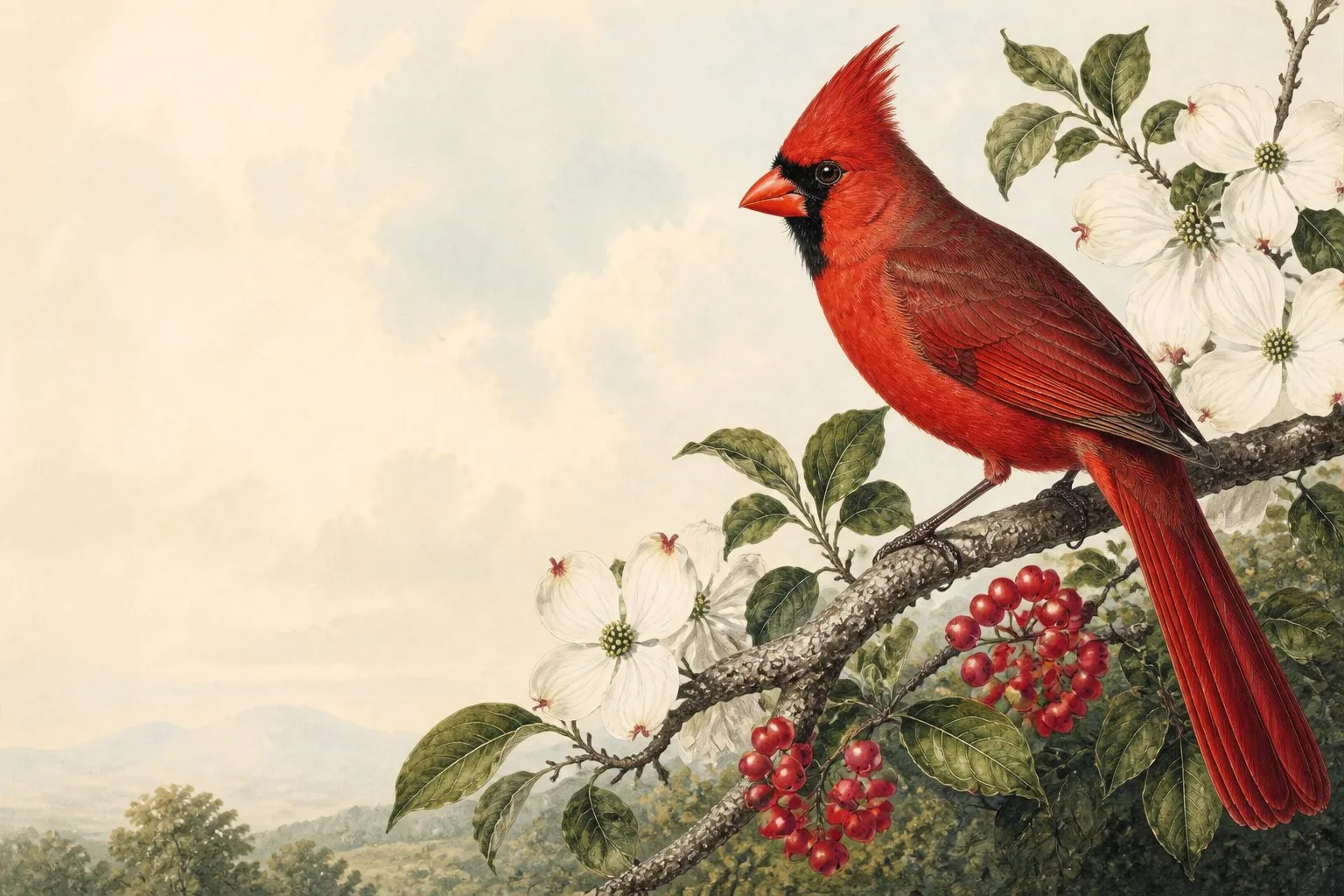
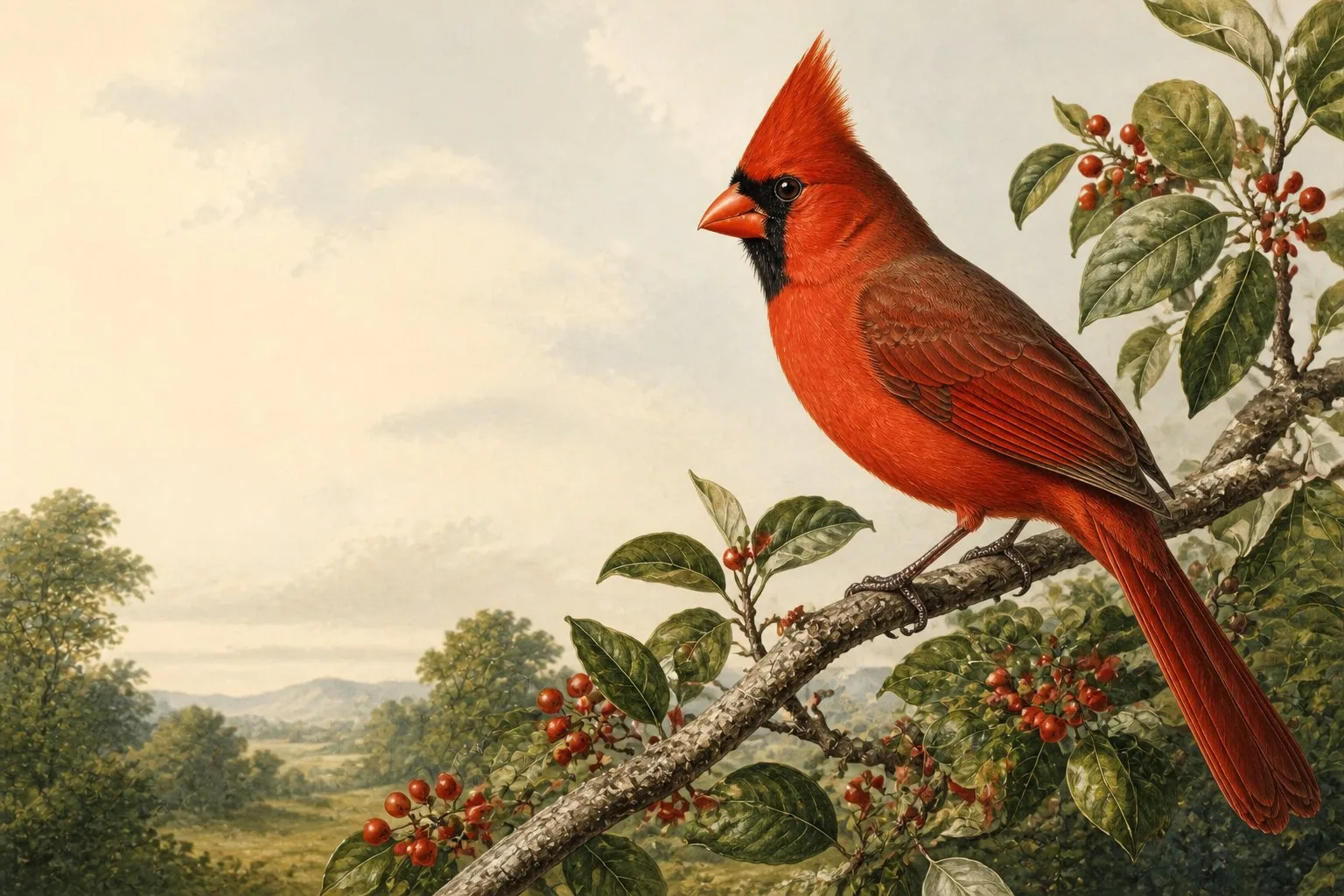
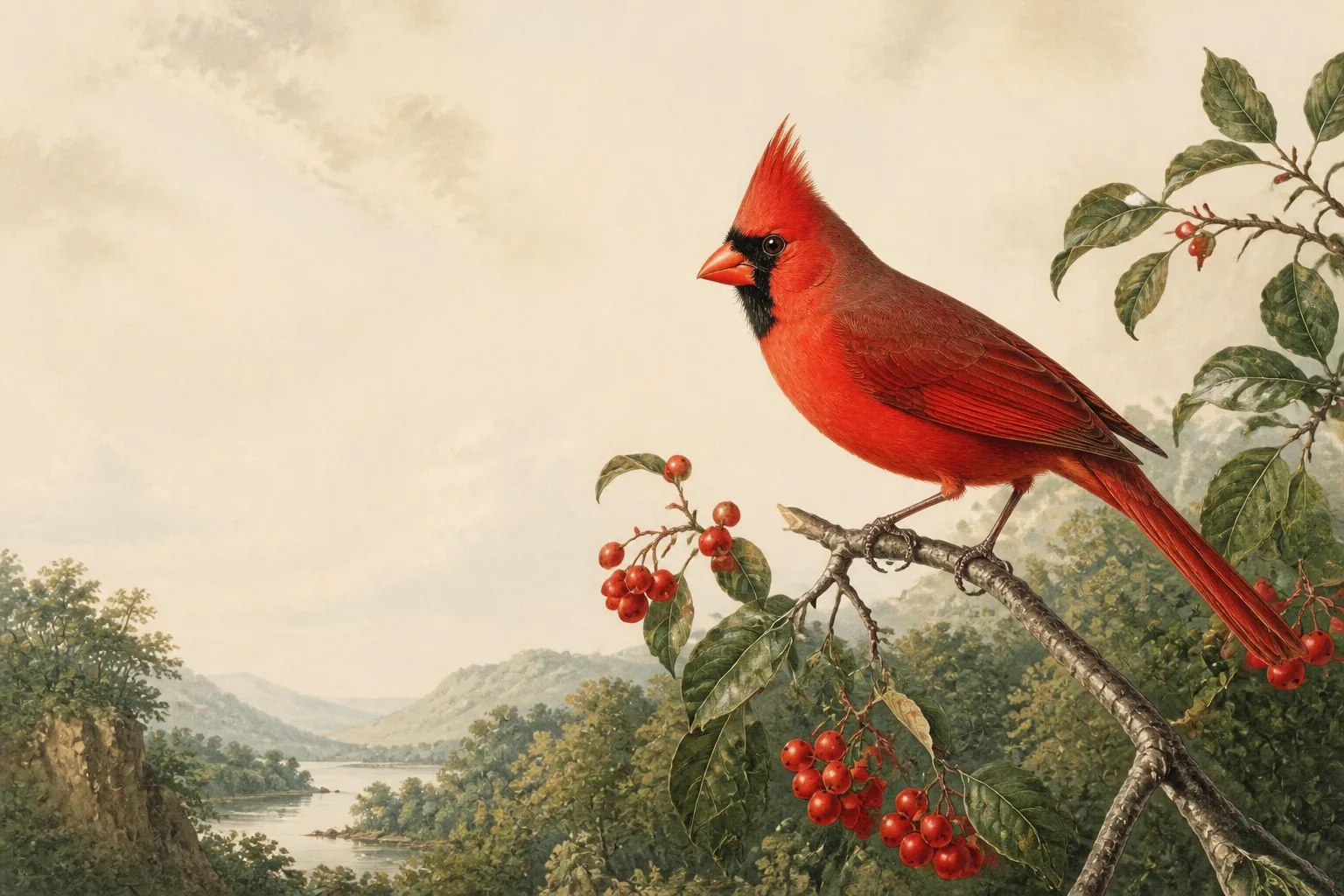
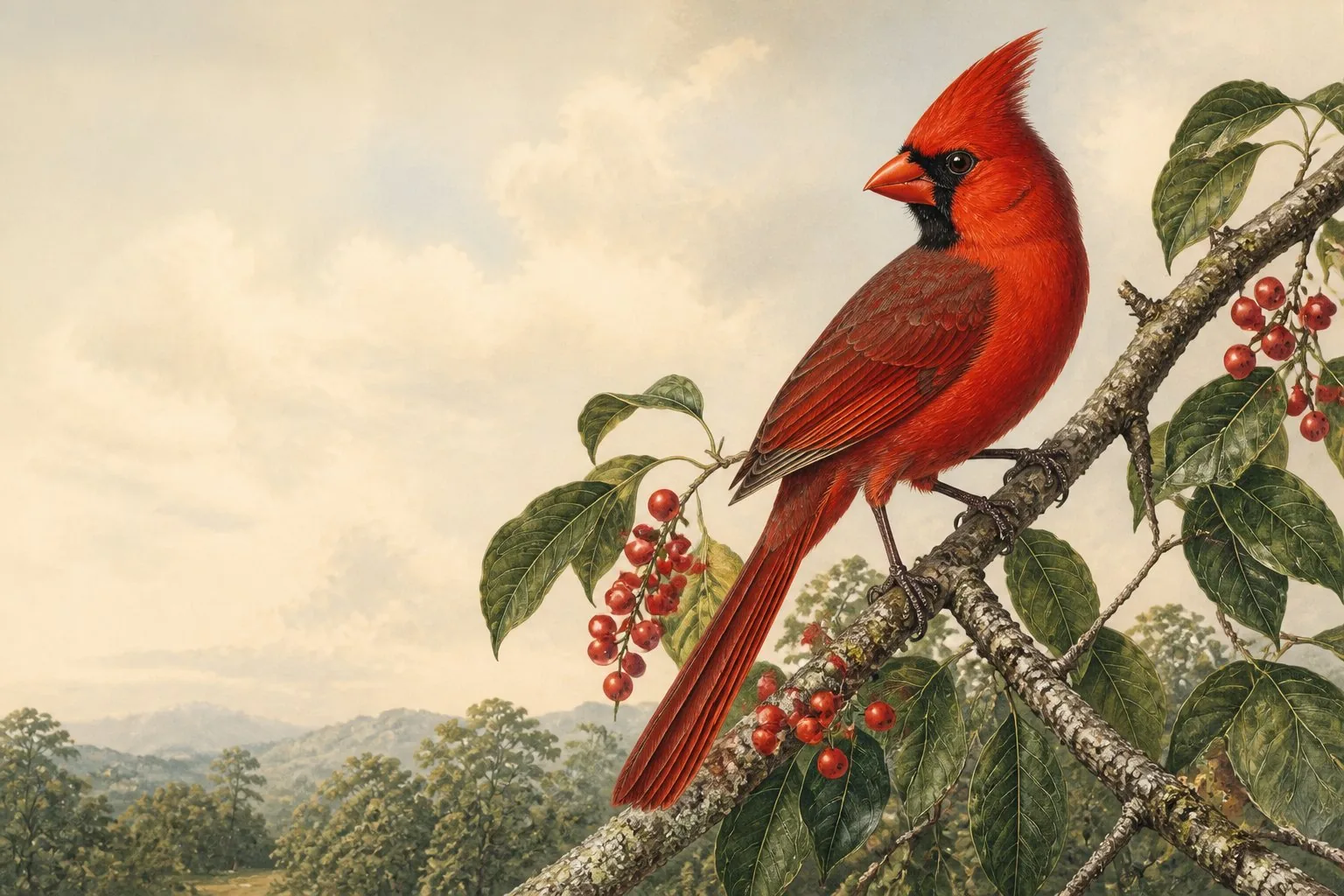
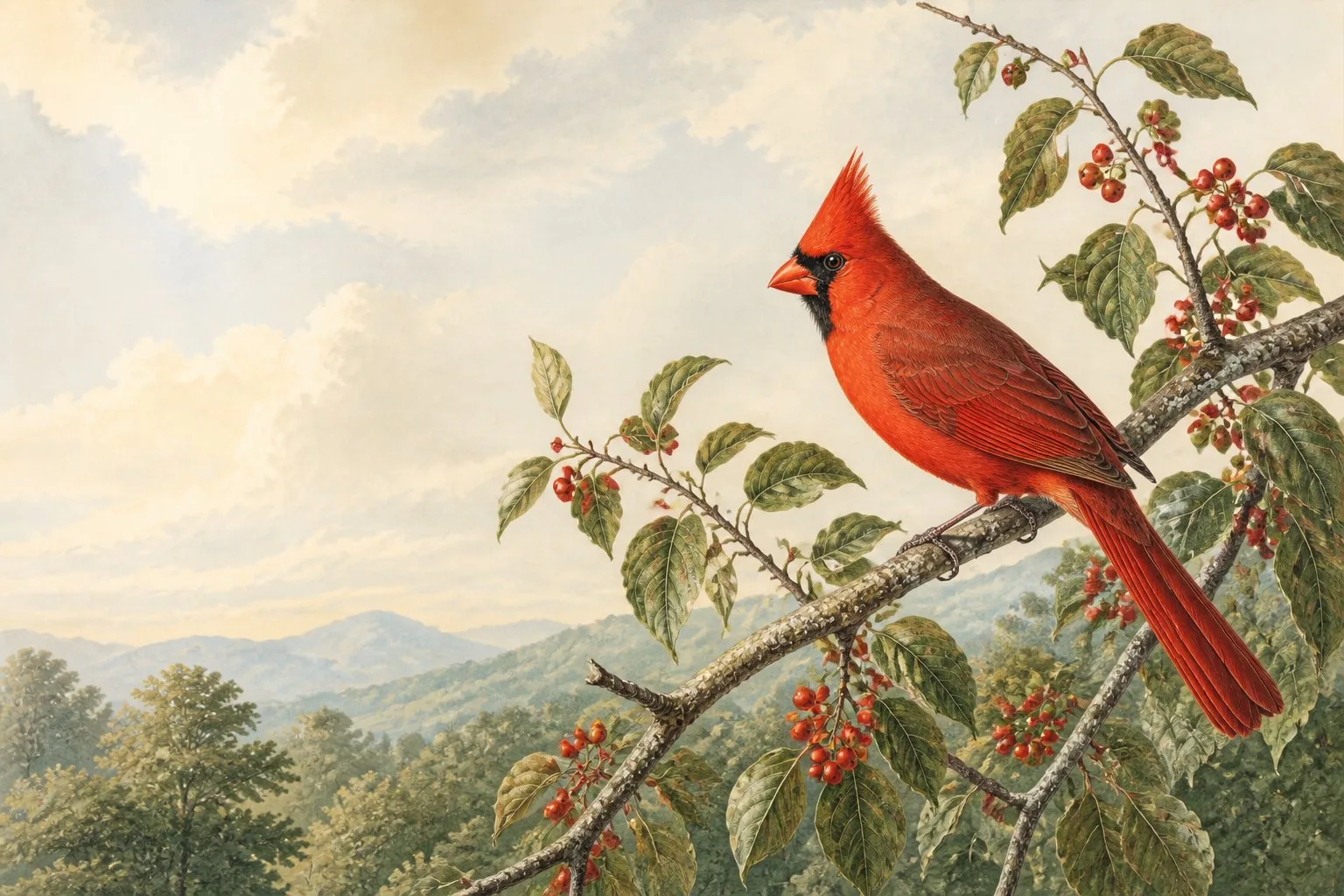
Watch a male Cardinalis cardinalis at a dense shrub in June and you will see him lean over the rim of the nest, crush an insect between his bill, and push it into a gaping mouth. He does this more often than the female does.
That last detail surprises most people. The expectation is that a bird this brightly coloured - a bird whose red makes him visible to predators - is not the one doing the close work at the nest. He is. Cornell’s All About Birds confirms that both parents provision nestlings, and data from Cornell’s Birds of the World shows males visiting at higher rates than females across multiple observed seasons.
Before the eggs hatch
The male’s feeding role begins before the chicks exist. During courtship and through incubation he collects food and delivers it to the female beak-to-beak - the same physical gesture he will repeat at the nest rim weeks later. Audubon’s field guide notes that the female incubates alone for 12 to 13 days while the male brings her food and defends the territory. He occasionally sits on the eggs, but this is rare. His job during incubation is provisioning and patrol.
The nestling stage
Chicks hatch naked and blind, weighing roughly 3 to 3.5 grams according to the Wikipedia species account. They have no feathers for the first four or five days. The diet at this stage is almost entirely animal matter - insects that the adults crush before delivery, since the seeds that dominate the adult diet cannot be swallowed by birds that small. Both parents also remove fecal sacs from the cup.
The young leave the nest 9 to 11 days after hatching, per Audubon’s field guide. That is a short nestling period by songbird standards. They drop into the shrubs below and wait.
What the male does when the female re-nests
This is where his contribution becomes structurally critical. According to the Animal Diversity Web account maintained by the University of Michigan, Northern Cardinals raise two or three broods between March and September. The female may begin building the second nest while fledglings from the first brood are still begging. When that happens, the male takes over.
The male cardinal’s most important parenting shift is the one most observers never see: he feeds the entire first brood alone while the female is already incubating the next clutch on the other side of the territory.
Birds of the World data from an Indiana study found fledglings receiving food a mean of eight times per hour in the 11 days immediately after leaving the nest, with individual young receiving between four and 15 feeds per hour across 60 hours of observation. That workload, during the re-nesting window, falls almost entirely on the male.
The brood may be divided before re-nesting begins - each parent tracking different fledglings through the territory - but once the female is incubating again, Wikipedia’s account of the species confirms that the male cares for the entire previous brood until the next clutch hatches.
How long it lasts
Post-fledging dependence runs longer than most people expect. Animal Diversity Web puts the range at 25 to 56 days after fledging. Young birds begin moving around more between 12 and 20 days post-fledge, occasionally wandering beyond the parental territory, but still receiving most of their food from the adults. The last brood of the season receives parental care for the longest period - with no new clutch coming, there is no pressure on the male to push them away.
Eventually the juveniles are driven from the territory. They form loose flocks with other young cardinals and begin foraging for themselves. By the time they appear at a feeder in November they look nearly adult, and the male who fed them steadily all summer is already running a new territory.
The courtship feeding connection
The beak-to-beak feeding the male performs during courtship is the same act he will perform at the nest. Ornithologists have noted that mate-feeding during pair-bonding may signal to the female how reliably the male will provision chicks. The physical motion does not change across the season. Only the recipient does.
If you watch a pair at a feeder in March, the seed the male passes to the female is the rehearsal. By July, at a different spot in the same hedge, he is passing crushed insects to a bird a fraction of her size.
A bright male arrives at the feeder in June with a dull, brownish juvenile in tow. The juvenile begs. The male cracks a seed, drops the hull, and places the kernel in the gape beside him. He does not look like a bird performing care. He looks like a bird with work to do.
For more on this species, the Northern Cardinal field guide covers the full range and biology. The late-summer moult - and the bald-headed bird that appears at feeders in August - is in Cardinal molting. The are cardinals endangered page covers conservation status, and white cardinals explains the rare pale birds that turn up at nests.