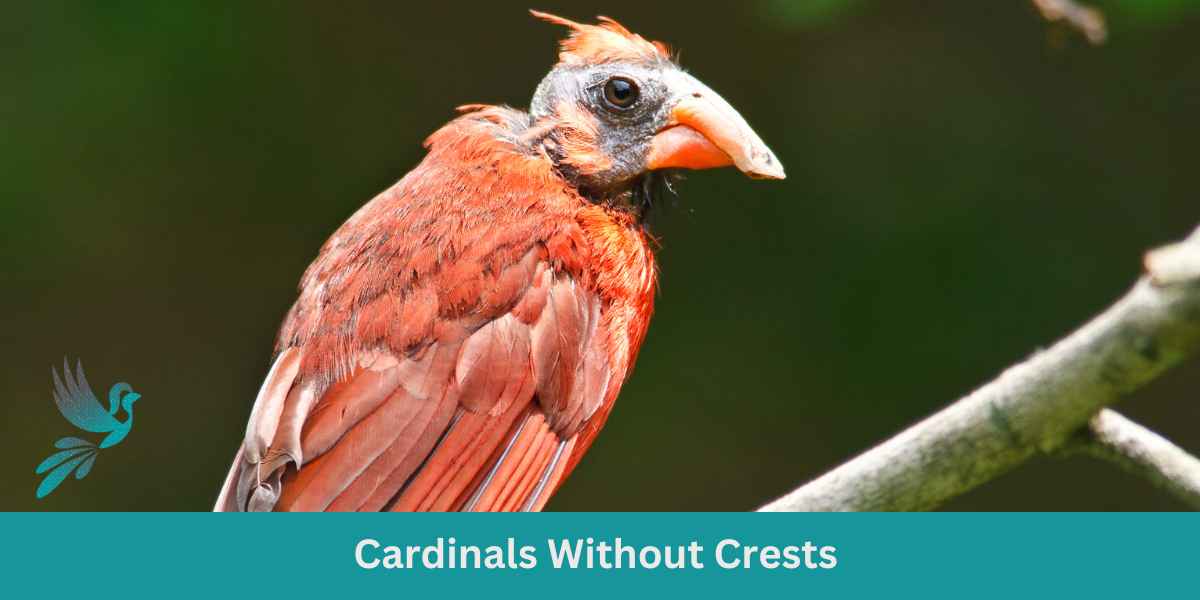
If you see a cardinal with no crest or a completely bald head, do not panic. It is almost certainly a normal part of molting. The feathers will grow back within a few weeks.
Why Cardinals Lose Their Crests
| Cause | How common | Feathers grow back? |
|---|---|---|
| Molting | Very common | Yes - within 2-3 weeks |
| Feather mites or lice | Occasional | Yes - once parasites are treated |
| Juvenile plumage | Common | Yes - crest develops by 3-4 months old |
| Stress | Rare | Usually - once stressor is removed |
| Disease | Rare | Depends on condition |
| Flat crest (not missing) | Very common | N/A - crest is still there, just held flat |
Molting: The Most Common Cause
Cardinals molt once a year, typically from late July through October. During this process, they shed every feather and grow new ones over 6-12 weeks. Sometimes the head feathers all fall out at once, leaving the cardinal temporarily bald.
A bald molting cardinal has dark grey or black skin on its head. It looks strange but is completely harmless. The new head feathers, including the crest, grow back within 2-3 weeks.
Flat Crest vs Missing Crest
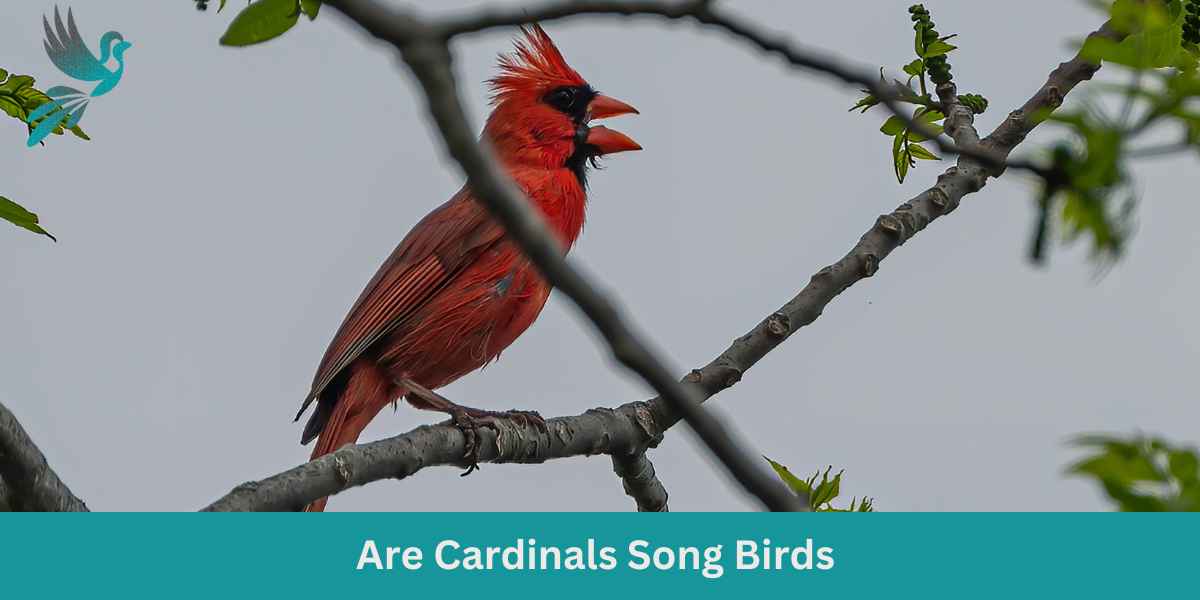
Cardinals raise and lower their crests constantly as a form of communication. A flattened crest does not mean missing feathers - the bird is simply holding its crest down.
Raised crest - Alert, aggressive, or excited
Flat crest - Relaxed, submissive, or feeding calmly
If the bird has smooth feathers on its head but no visible crest, it is almost certainly just holding the crest flat. Watch for a few minutes and you will likely see it raise the crest.
Juvenile Cardinals
Young cardinals do not develop their full crest until they are 3-4 months old. Before that, their head feathers are shorter and the crest is barely visible. Juvenile cardinals are brown-grey overall, so a crestless brown bird at your feeder is likely a young cardinal, not a sick one.
Lookalikes Without Crests
Several red or reddish birds resemble cardinals but naturally lack a crest.
| Bird | Why it’s confused with cardinals |
|---|---|
| Summer Tanager | All-red male, similar size, no crest |
| Hepatic Tanager | Red male, similar size, no crest, SW US |
| Pyrrhuloxia | Grey with red accents, has a crest but different shape |
| Vermilion Flycatcher | Bright red, much smaller, no crest |
When to Be Concerned
A bald cardinal during late summer or early autumn is almost certainly just molting. Contact a wildlife rehabilitator if you notice:
- Baldness outside of molting season (winter or spring)
- Lethargy, weight loss, or laboured breathing
- Sores, swelling, or discoloured skin on the bald area
- The bird is unable to fly or appears disoriented
A bald cardinal at your feeder in August or September is perfectly normal. Give it a few weeks and it will be back to its fully crested, bright red self. In the meantime, offering high-protein food like sunflower seeds and mealworms supports feather regrowth.