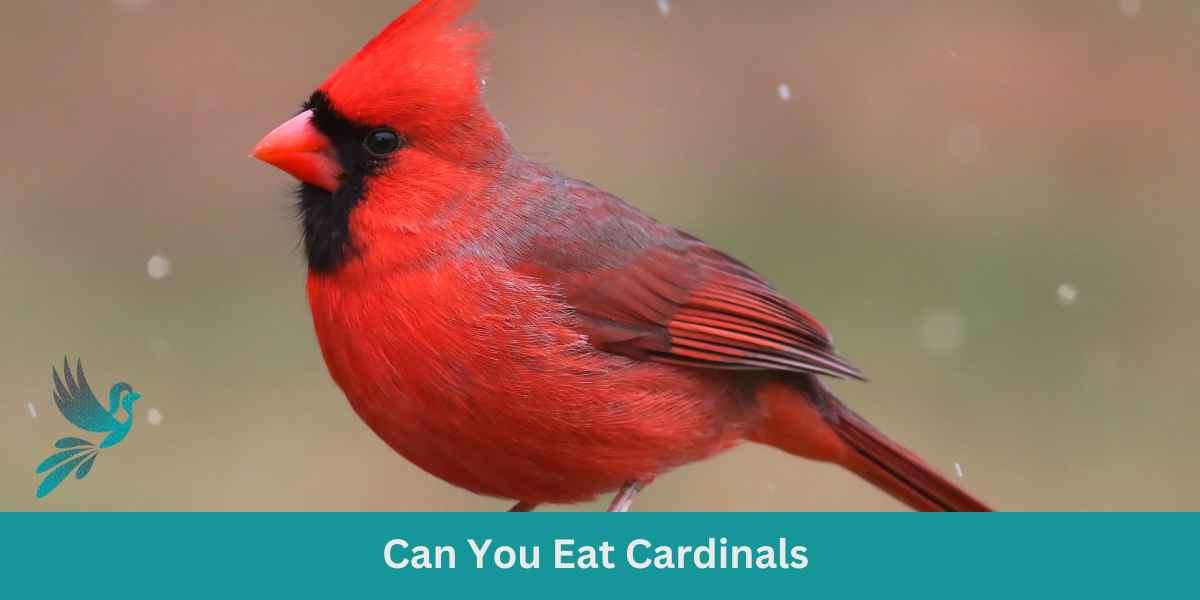
No. It is illegal to eat, hunt, capture, or possess Northern Cardinals in the United States and Canada. They are protected under the Migratory Bird Treaty Act of 1918, and violations carry serious penalties.
The Law
| Law | What it covers | Penalties |
|---|---|---|
| Migratory Bird Treaty Act (1918) | Protects cardinals, their eggs, nests, and feathers | Fines up to $15,000 and 6 months imprisonment per offence |
| Convention for the Protection of Migratory Birds | International treaty between US, Canada, Mexico, Japan, Russia | Varies by country - all prohibit killing protected birds |
| State wildlife laws | Additional protections vary by state | Additional fines and penalties on top of federal law |
These laws apply to all parts of the bird - you cannot legally possess cardinal feathers, eggs, or nests without a specific permit.
Are Cardinals Edible?
Technically, cardinal meat is not toxic to humans. But that is irrelevant - the question is legal, not culinary. You cannot legally obtain cardinal meat in any country that is a signatory to the Migratory Bird Treaty.
Cardinal eggs are also technically edible but equally illegal to collect. Cardinal parents are fiercely protective and will attack anything that approaches their nest.
Why Cardinals Are Protected
Population pressure: Habitat loss from urbanisation and deforestation reduces nesting sites. Pesticide use kills the insects that cardinals feed to their chicks.
Ecological role: Cardinals are seed dispersers and insect controllers. They eat agricultural pest insects and spread native plant seeds through their droppings.
Historical overhunting: Before the Migratory Bird Treaty Act, millions of songbirds were killed for food, feathers, and the pet trade. The law was enacted specifically to stop the mass slaughter of North American bird species.
How to Support Cardinals Instead
Plant native shrubs - Cardinals nest in dense shrubs like dogwood, hawthorn, and viburnum.
Offer sunflower seeds - Black oil sunflower seeds are their favourite feeder food.
Provide water - A birdbath with moving water attracts cardinals year-round.
Skip pesticides - Cardinals feed insects to their nestlings. Pesticide-free gardens provide more food.
Leave leaf litter - Cardinals forage on the ground through fallen leaves for seeds and insects.
The Northern Cardinal is the state bird of seven US states - more than any other bird. Illinois, Indiana, Kentucky, North Carolina, Ohio, Virginia, and West Virginia all claim it.