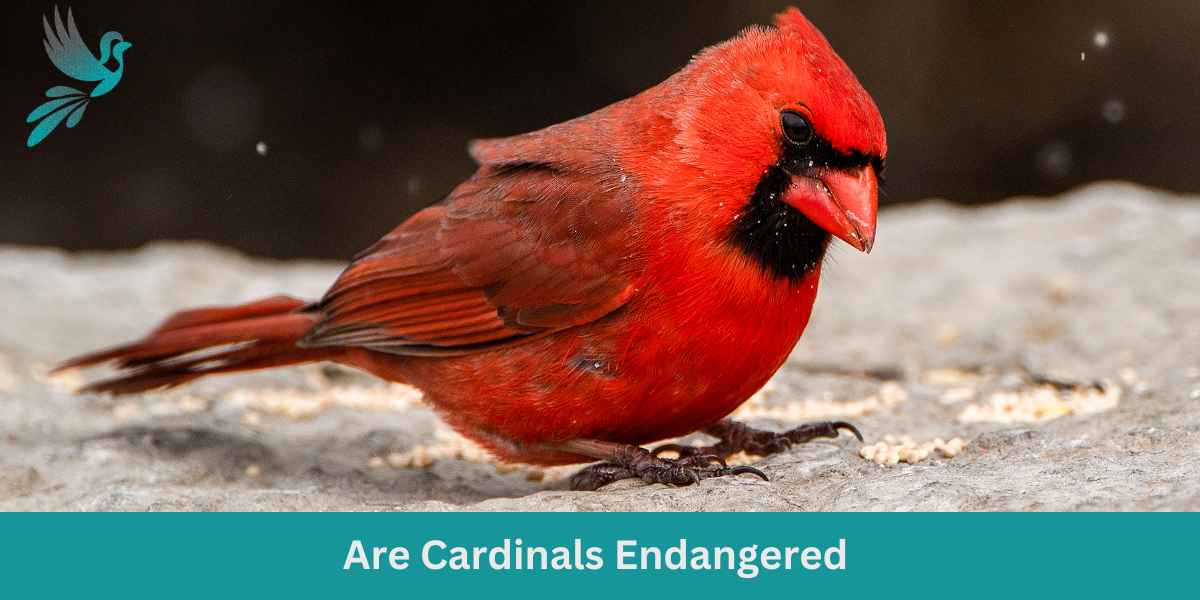
Yes. Cardinals are songbirds - they belong to the order Passeriformes, which includes all perching birds with specialised vocal organs. What makes cardinals unusual is that both males and females sing. In most songbird species, only the male sings.
Cardinal Songs at a Glance
| Classification | Passeriformes (songbirds), family Cardinalidae |
| Who sings | Both males and females |
| Main song types | ”Birdy birdy birdy” (cheer cheer cheer) and “Pretty pretty pretty” |
| Song repertoire | 8-16 different song patterns per individual |
| When they sing | Year-round, peaks during breeding season (Mar-Sep) |
| How they learn | Juveniles learn by imitating parents |
| Song purpose | Territory defence, mate attraction, pair bonding |
The Two Main Songs
Cardinals have a repertoire of song patterns, but two are heard most often:
- “Cheer, cheer, cheer” (also transcribed as “birdy, birdy, birdy”) - A loud, clear whistle delivered in a repeating pattern. Males use this primarily for territorial defence, singing from a high exposed perch to broadcast ownership of their patch.
- “Pretty, pretty, pretty” - A softer, more varied song. Often sung by females as well as males. Used in pair communication and during nesting.
Both songs are learned, not innate. Young cardinals listen to adults during their first year and build their own repertoire by imitating what they hear. Cardinals in different regions develop local dialects - the songs in Virginia sound slightly different from those in Texas.
Males vs Females
| Male | Female | |
|---|---|---|
| Sings? | Yes - loudly and frequently | Yes - softer, less frequent |
| When | Year-round, peaks in breeding season | Mostly during nesting |
| Purpose | Territory defence, attracting mates | Nest defence, communicating with mate |
| Where | From high, exposed perches | From within or near the nest |
Female cardinal song is one of the more overlooked behaviours in backyard birdwatching. While the male belts out territorial songs from a treetop, the female sings from the nest to communicate with her partner - sometimes telling him to bring food.
Alarm Calls
Cardinals also produce sharp, metallic “chip” sounds that are not songs but alarm calls. These short, hard notes warn other birds of predators. A rapid series of chips means immediate danger - a cat, hawk, or snake nearby.
You will hear alarm calls far more often than songs outside of breeding season. If your garden birds suddenly go quiet and then you hear rapid chipping, look for a predator.
Cardinals sing at dawn before almost any other bird and continue singing at dusk after most species have stopped. If you hear a loud, clear whistle at first or last light, it is almost certainly a cardinal.
How Their Singing Compares
Cardinals are good singers, but they are not the best. For context:
- Loudest songbird - White Bellbird (125 decibels - as loud as a rock concert)
- Most complex song - Common Nightingale (over 200 song variations)
- Largest songbird - Common Raven (technically a songbird by classification)
- Most common songbird - House Sparrow (found on every continent except Antarctica)
What makes cardinal song distinctive is not complexity but clarity. Their whistles cut through ambient noise better than almost any other garden bird, which is why they are so noticeable - and why many people start birdwatching after hearing one.