Free shipping to the US, Canada & Europe
Biology
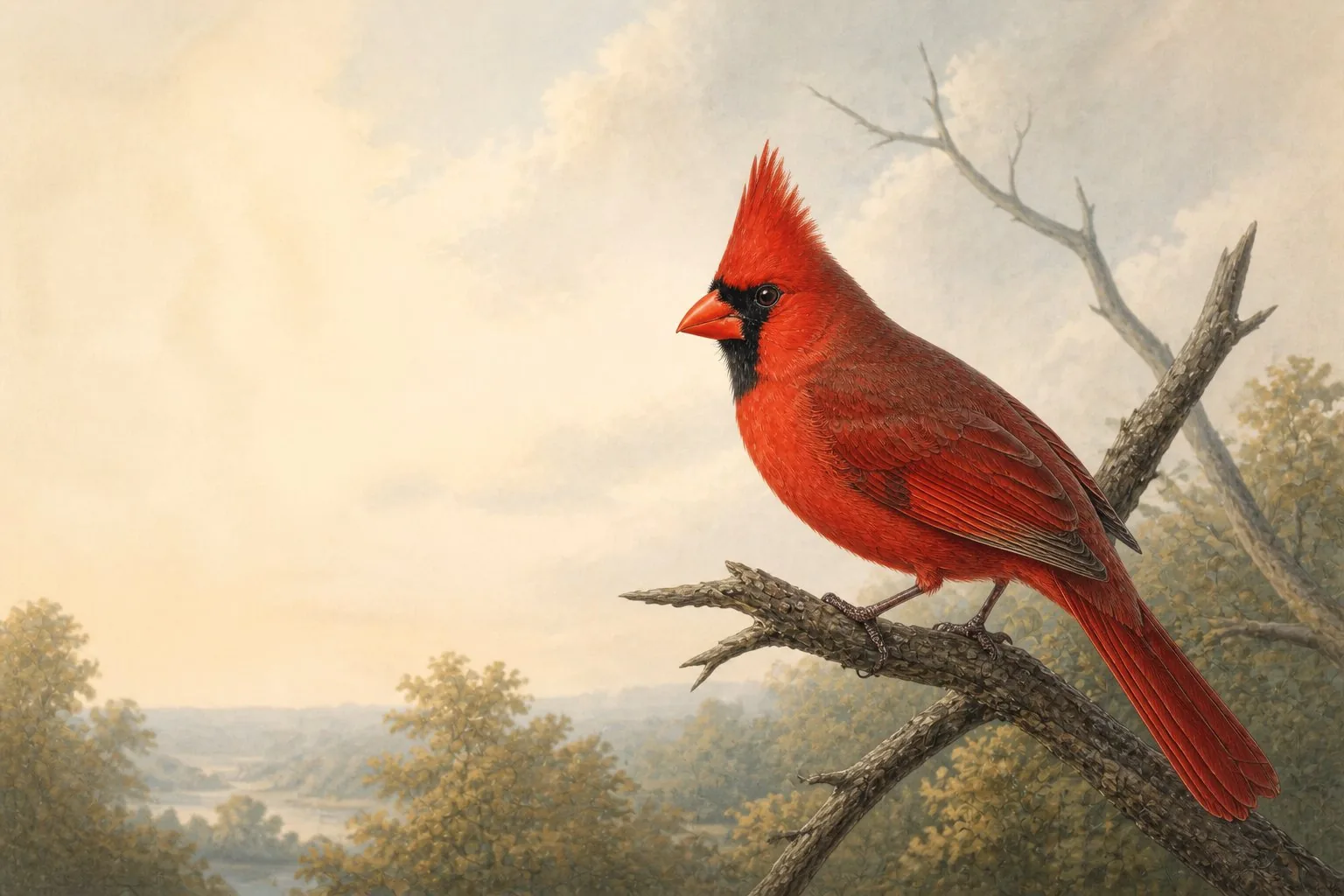
The Northern Cardinal is not endangered. With 130 million individuals and a range still pushing north, it is one of North America's most secure songbirds.
January 24, 2023 5 min read
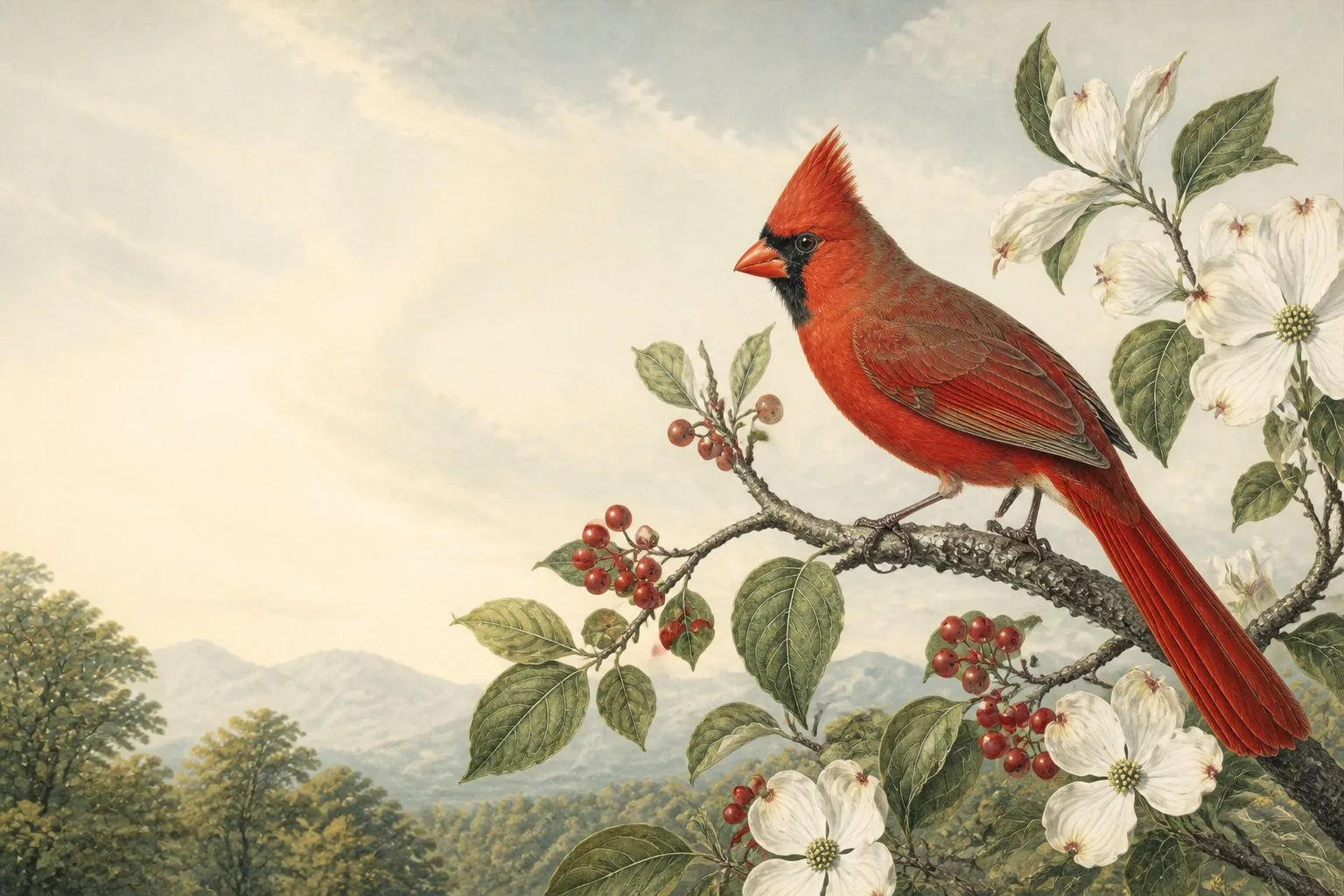
In 1943, the first Northern Cardinals confirmed nesting in Connecticut settled in the southern end of the state. By 1958 they had reached eastern Massachusetts. No conservation programme moved them there. No reintroduction effort, no captive breeding, no protected corridor. They simply followed the feeders.
That story is the honest answer to whether cardinals are endangered. The short answer is no. The more useful answer is that the Northern Cardinal (Cardinalis cardinalis) is one of the few common songbirds whose range is growing, not contracting, and the reason it is growing says something specific about the relationship between suburban America and the birds it attracts.
The IUCN lists the Northern Cardinal as Least Concern with a stable to increasing population trend. Partners in Flight estimates the global breeding population at 130 million individuals. The North American Breeding Bird Survey, which has tracked continental breeding-bird populations since 1966, records an annual increase of 0.32% per year. Cornell’s All About Birds summarises the species’ conservation outlook as low concern, with no population data that gives ornithologists cause for alarm.
The Minnesota Breeding Bird Atlas puts numbers to the expansion. The state’s first confirmed cardinal nesting was in Steele County in 1925. By the 2009 to 2013 atlas period, cardinals had established breeding presence in 79 of Minnesota’s 87 counties - up from scattered sightings in the late 1800s to nearly statewide in under a century.
Status at a glance:
IUCN listing: Least Concern Estimated population: 130 million (Partners in Flight) Population trend: +0.32% per year since 1966 (Breeding Bird Survey) Range: Eastern North America, southwestern US, Mexico, northern Belize and Guatemala
Cardinals do not migrate. They survive winter by staying on territory and finding food. For most of the species’ history, cold-season food scarcity held the northern range boundary somewhere around the Ohio River valley. The bird simply could not stay warm and fed north of a certain latitude through January.
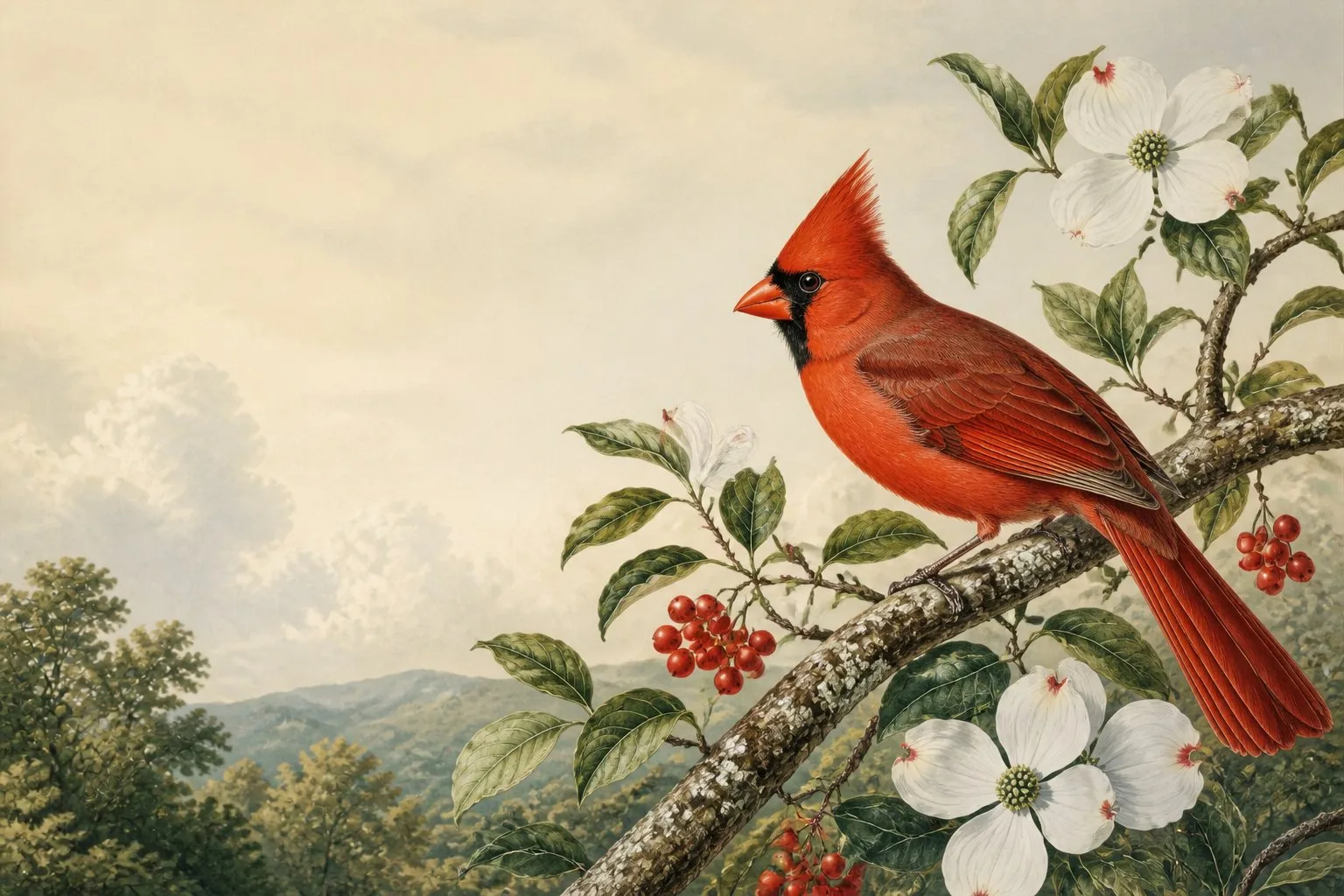
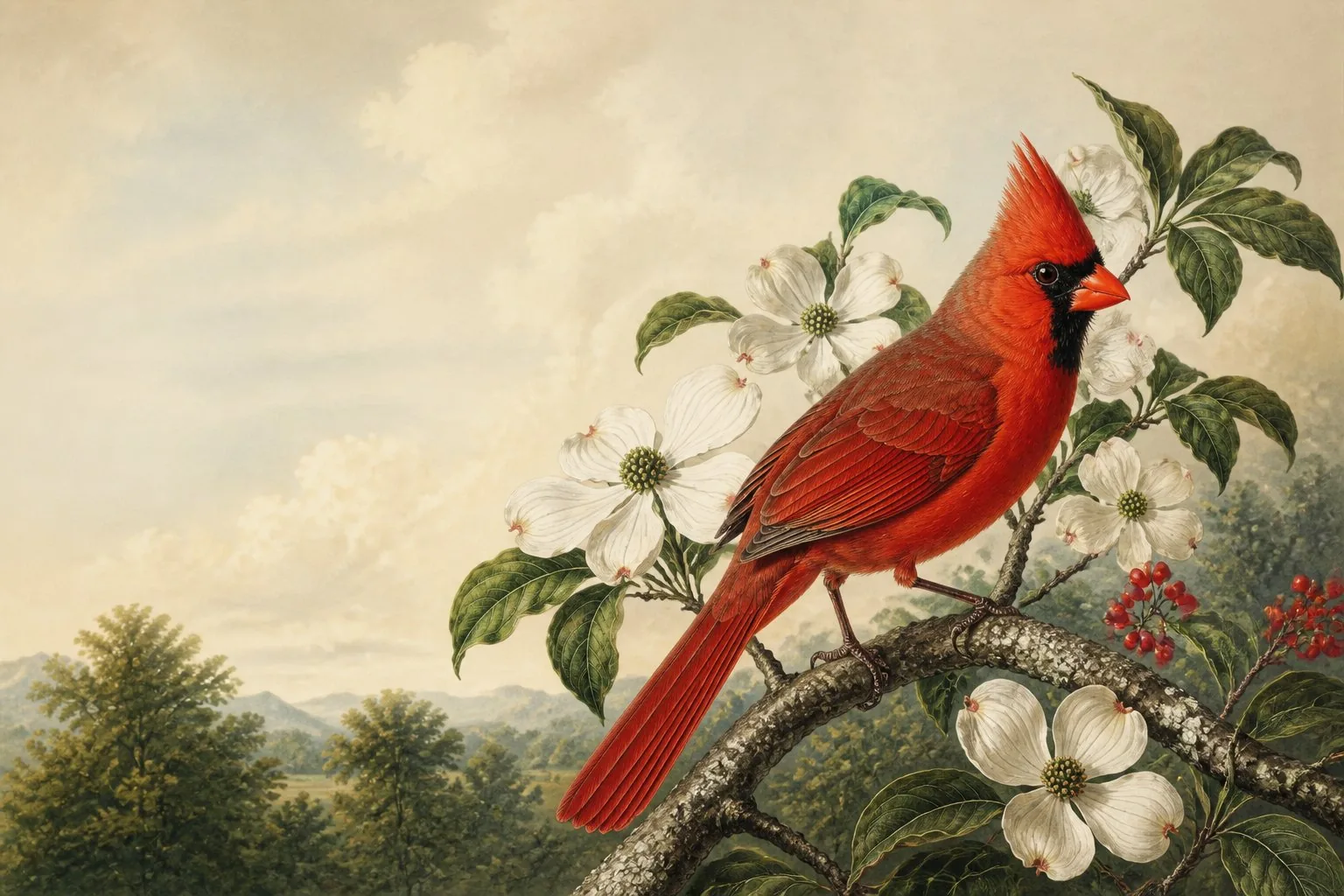
Cornell Lab’s Project FeederWatch, a citizen science programme that launched in the winter of 1987-88 and has grown to more than 20,000 participants across North America, has documented what changed. The Cornell Lab attributes the northward expansion to two factors working in parallel: the growth of winter feeding stations across suburban North America, and the spread of dense ornamental shrubs in residential landscaping - boxwood, holly, and dogwood - that provide both nesting cover and fruit. Ornithologist E. M. Boyd, writing in Bird-Banding in 1962, documented that cardinals had first nested in Connecticut around 1943 and in Massachusetts by 1958. Project FeederWatch data shows that over the subsequent three decades, cardinals became resident in northern Minnesota, Maine, and southern Canada.
Audubon’s field guide notes the connection directly: the northward push is likely driven in part by the growing popularity of sunflower-seed feeders. US Fish and Wildlife Service surveys put the number of Americans who feed wild birds at home at more than 50 million. The cardinal followed the sunflower.
The Northern Cardinal’s range is still expanding northward, and the primary engine of that expansion is the backyard bird feeder - a human habit that, unusually in conservation biology, has demonstrably extended a wild species’ range rather than contracted it.
Least Concern is not the same as invulnerable. The American Bird Conservancy identifies three documented risks.
Outdoor cats are the single largest human-caused driver of bird mortality in North America. ABC’s estimate puts the figure at roughly 2.4 billion birds killed annually. Cardinals forage low - on or near the ground - which leaves them more exposed than canopy feeders.
Window collisions account for more than one billion bird deaths per year in the United States, according to a 2024 study published in PLOS ONE by researchers at the American Bird Conservancy and Fordham University. A territorial male in spring will attack his own reflection in a window or car mirror for weeks on end. The behaviour is well documented and occasionally fatal. External decals or frosted tape on low glass breaks the reflection. See also what cardinals do with their wings in winter for the broader story of how they manage the cold season.
Pesticide load affects chick survival more than adult survival. Adults eat predominantly seeds, but nestlings need protein - caterpillars, beetles, and larvae. A yard or neighbourhood with heavy insecticide use produces fewer of the insects that a female carries to her nest in June.
None of these threats currently registers in any long-term population monitoring as a species-level concern. They are worth naming because each has a practical household solution.
One reason the question gets asked is that there are cardinals that are in genuine trouble.
The Yellow Cardinal (Gubernatrix cristata) of Argentina and Uruguay is endangered and declining, trapped illegally for the cage-bird trade in both countries. It shares a common name with Cardinalis cardinalis and not much else - different genus, different continent, entirely different conservation situation. When an online headline reports that “cardinals are endangered,” it is usually about this species, or occasionally about subspecies in Central America.
The rare yellow colour morph that occasionally appears at North American feeders is a different matter: a genetic variant of the northern species, striking and unusual, but not a separate species and not in any conservation difficulty. If you have seen a pale or yellow cardinal at your feeder, you have seen something genuinely uncommon - not something at risk.
The group of cardinals that gathers at a platform feeder in January is, ornithologically, one of the more stable sights in North American birdwatching. The species is not in trouble, has not been in trouble in recorded history, and is actively expanding into new territory.
What a feeder does for northern cardinals is more nuanced than “saving” them. At the northern edge of the range, where January temperatures are genuinely marginal, a reliable sunflower supply shifts the caloric equation enough to make residence viable. The Cornell Lab’s Project FeederWatch data suggests this is meaningful at the population level - the expansion into Minnesota and southern Canada tracks feeder density. But further south, in the species’ historical core range, feeding cardinals is participation in the ecology of a bird that was never in danger, not conservation intervention.
The biology of how cardinals prepare for winter - the late-summer moult, the autumn fruit diet, the carotenoid loading that builds March plumage - runs on a calendar that has not changed. What has changed is the northern limit of where that calendar plays out. The Connecticut pair that nested in 1943 were not anomalies. They were the first representatives of a species in the middle of rewriting its own geography, using sunflower seeds as the vehicle.
As an Amazon Associate we earn from qualifying purchases. Linked products are ones we genuinely recommend.

 January 24, 2023
 5 min read