Biology
Types of Black Birds in North America
Stand at a marsh edge in April and watch the cattails. The bird perched on the nearest stem is not, in any useful sense, the same bird as the one flapping overhead with its wedge-shaped tail, or the glossy thing picking at the parking lot twenty feet behind you. They are all black. That is where the resemblance ends.
North America’s black-plumaged birds belong to at least five separate families, and the confusion between them is mostly a matter of not knowing which family you’re in. Once you sort that out, the individual species fall into place.
The families, briefly
The biggest split is between corvids and icterids. Corvids - crows and ravens - are large, highly intelligent, and monochromatic. Icterids are the “blackbirds” of popular usage: grackles, red-winged blackbirds, cowbirds, and their relatives, most of them shinier and more iridescent than any crow.
Then there is the European starling, which belongs to neither family and was introduced to North America in the 1890s. And there are a handful of species from unrelated families - the Phainopepla nitens of the desert Southwest, the Black Phoebe of western streams - that happen to wear black plumage and get swept into the category by casual observers.
Corvids: crows and ravens
Corvus brachyrhynchos, the American Crow, is the default “black bird” for most of the continent. It turns up everywhere - cities, farmland, forest edge, beaches - and the call, a flat caw, is one of the most recognizable sounds in North American birding. Its all-black plumage has a slight purplish gloss in good light, and the tail is fan-shaped in flight.
The Common Raven (Corvus corax) is a different proposition. It is roughly 50 percent larger than a crow, and the difference is obvious when the two appear together. The bill is heavier, the tail wedge-shaped rather than rounded, and the call is a deep, hollow croak rather than a caw. Ravens are birds of mountains, northern forests, and deserts. In most of the eastern United States and heavily urbanized areas, you are looking at a crow.
The wedge-shaped tail is the fastest raven field mark in poor light. Fan tail: crow. Wedge tail: raven. Everything else can wait.
Icterids: the actual blackbirds
This is the large, mostly North American family that gives the word “blackbird” most of its North American meaning. The males are often iridescent in ways that require direct sunlight to see properly.
| Species | Male plumage | Reliable field mark |
|---|---|---|
| Red-winged Blackbird | Black with red-and-yellow shoulder patch | The epaulets; females are streaky brown |
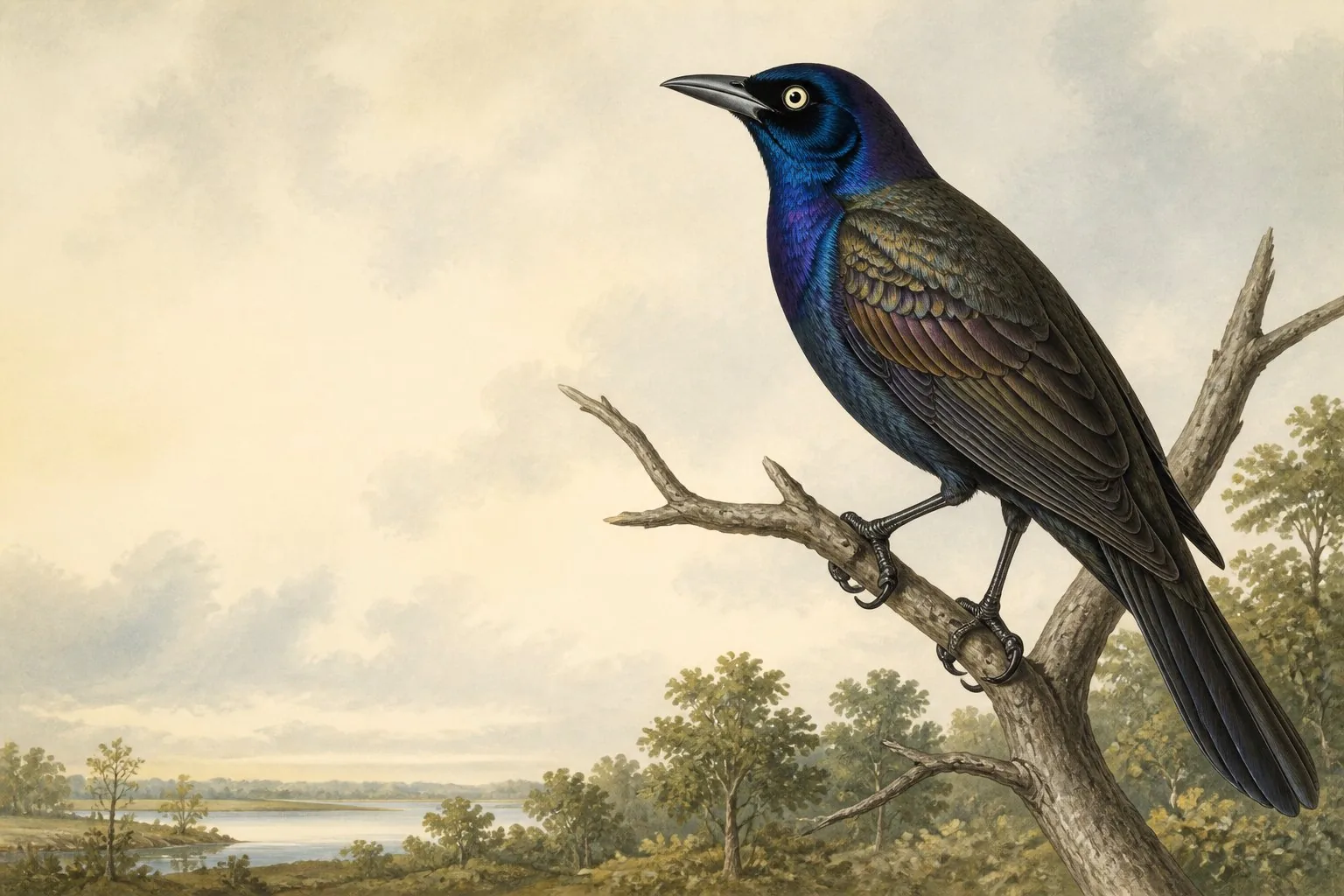
| Common Grackle | Black with bronze iridescence, yellow eye | Long keel tail, pale yellow iris |
| Great-tailed Grackle | Black with strong iridescence | Extremely long, laterally keeled tail |
| Brewer’s Blackbird | Purple-green iridescence on head | Yellow iris, open-country bird |
| Rusty Blackbird | Dull black, rusty edges in fall plumage | Wet forest floor, winter swamps |
| Brown-headed Cowbird | Black body, brown head | Stubby finch-like bill, brood parasite |
The Red-winged Blackbird (Agelaius phoeniceus) deserves a separate sentence because it is one of the most abundant birds on the continent. The male’s shoulder patches are concealed when he sits still and vivid red when he spreads his wings in a territorial display. Females are so unlike males - heavily streaked brown - that beginners sometimes don’t connect them as the same species.
The Rusty Blackbird (Euphagus carolinus) warrants attention for a different reason. It has declined faster than almost any other North American landbird, dropping more than 85 percent from historical levels according to long-term monitoring data. It winters in wooded swamps and is genuinely uncommon now in much of its former range. If you see one - look for the rusty feather edges in fresh fall plumage and the habit of walking, not hopping, across wet leaves - report it to eBird.
Starlings and the outliers
The European Starling (Sturnus vulgaris) was released in Central Park in 1890 by a group who wanted to introduce every bird mentioned in Shakespeare’s plays. It now numbers in the hundreds of millions across the continent. In fresh winter plumage it is heavily spotted white and not especially black. In spring the spots wear off and the bird becomes a glossy purple-green with a yellow bill. The short tail and triangular wing profile in flight separate it from every icterid.
The Phainopepla (Phainopepla nitens) is the odd one out. It belongs to the silky-flycatchers, feeds heavily on desert mistletoe berries, and has a tall erectile crest and red iris. Range separates it from everything else: it is a bird of the Sonoran Desert and its edges, and nothing else in that habitat wears that combination of features.
The field approach that works
Start with size, then tail shape, then habitat. A crow-sized black bird with a fan tail in a city park is almost certainly an American Crow. A large black bird with a wedge tail on a mountain ridge is almost certainly a Common Raven. A smaller black bird in a cattail marsh in spring is almost certainly a Red-winged Blackbird - check the shoulder.
Where it gets trickier is in the grackle group, particularly in the South and Southwest where ranges overlap. For those, bill shape and tail geometry are the deciding marks, and good light matters. The Cornell Lab’s Merlin app handles the common confusions well.
The families matter because behavior and habitat travel with them. Corvids are omnivores, problem-solvers, and generalists. Icterids are often colonial and gregarious, and several species follow agricultural equipment for flushed invertebrates. Knowing you’re in the corvid family, or the icterid family, tells you what to expect next. The plumage color stopped being useful information the moment more than one family adopted it.
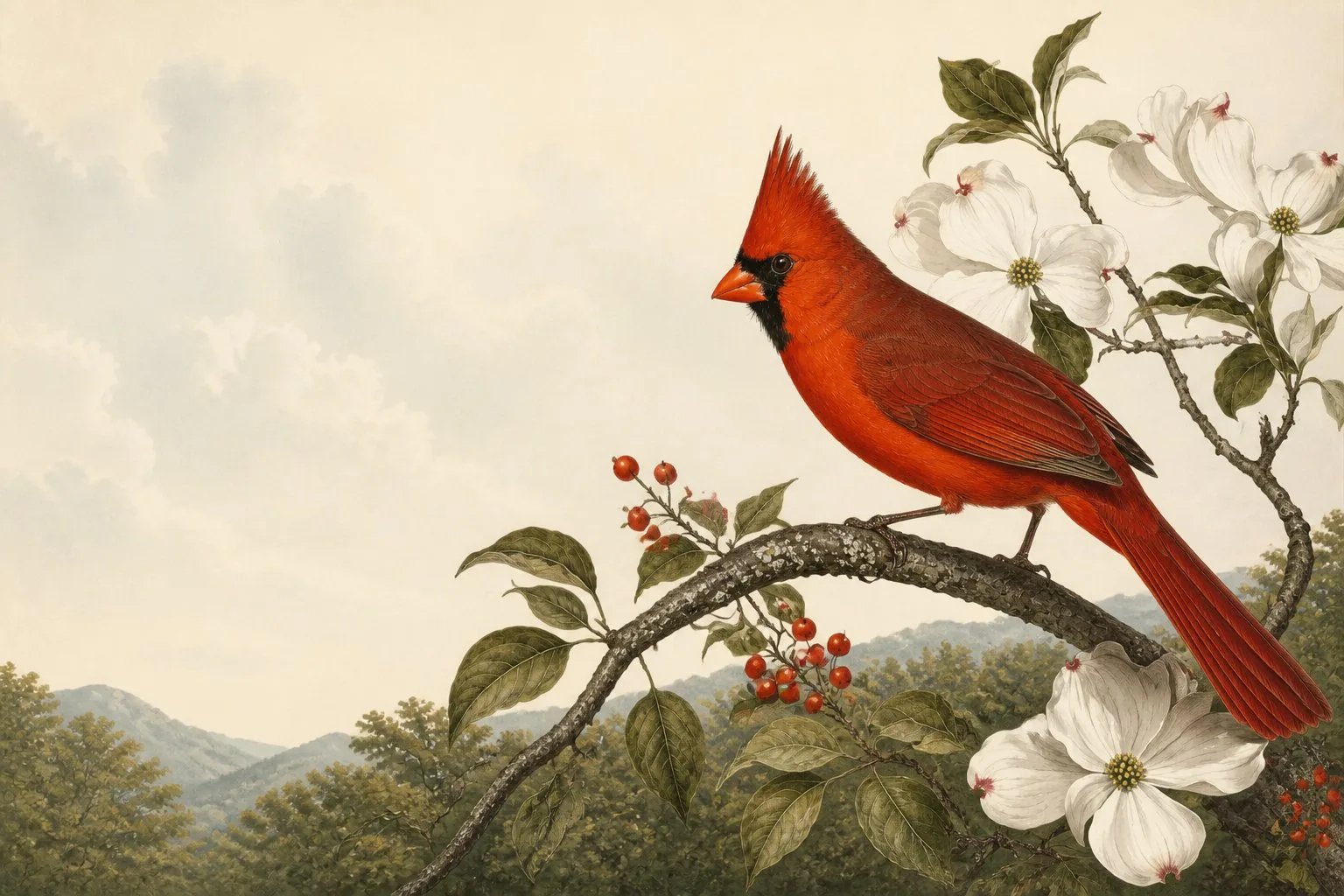
For comparison between the black-plumaged species and the entirely different world of red-plumaged birds, start with the Northern Cardinal. The contrast makes both groups easier to see.