State Guide
Red Birds in Illinois
Stand under the oak canopy at Shawnee National Forest in May and you will hear a sound like a hoarse robin calling from somewhere above the leaves. Look up. You probably will not find it. The male Piranga olivacea, the Scarlet Tanager, weighs less than two ounces and sits still at the tops of tall trees, and his red is so saturated against the blue sky that beginners assume the bird they have spotted must be something else. It is not. It is the bird Illinois earned and mostly ignores.
Illinois has 11 red-plumaged species on the year list. Only one, the Northern Cardinal, gets any credit. The thesis here is simple: the cardinal is the state bird and the most common bird at the feeder, but the red birds worth traveling for are the ones that do not come to feeders at all.
The species
| Species | Red feature | Season | Where to look |
|---|---|---|---|
| Northern Cardinal | Males red all over | Year-round | Gardens, suburbs, forest edge |
| Scarlet Tanager | Males red with black wings | May - Sept | Mature oak forest, canopy |
| Summer Tanager | Males red-orange all over | May - Sept (southern IL only) | Pine-oak in Shawnee |
| Rose-breasted Grosbeak | Red triangle on breast (male) | May - Sept | Deciduous woodlands |
| Ruby-throated Hummingbird | Iridescent red throat (male) | May - Sept | Gardens, forest edges |
| Red-headed Woodpecker | Entirely red head | Year-round | Open woodland, dead snags |
| Red-bellied Woodpecker | Red cap and nape | Year-round | Suburbs, deciduous forest |
| House Finch | Red head and breast (male) | Year-round | Urban, suburban feeders |
| Purple Finch | Raspberry-red wash (male) | Winter | Woodlands, feeders |
| Pileated Woodpecker | Red crest | Year-round | Mature forest with large snags |
| White-winged Crossbill | Rose-red males | Irregular winter | Conifer stands |
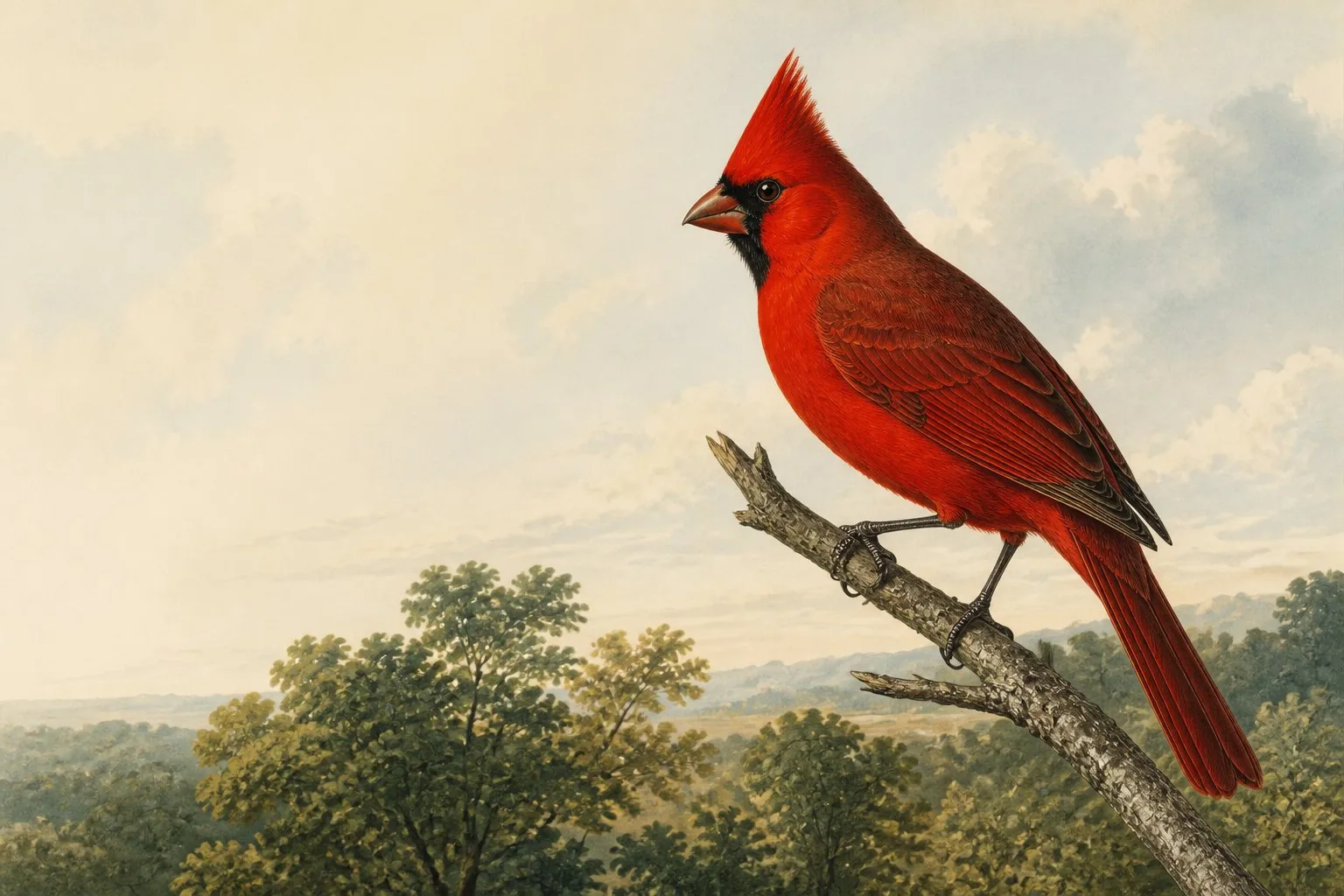
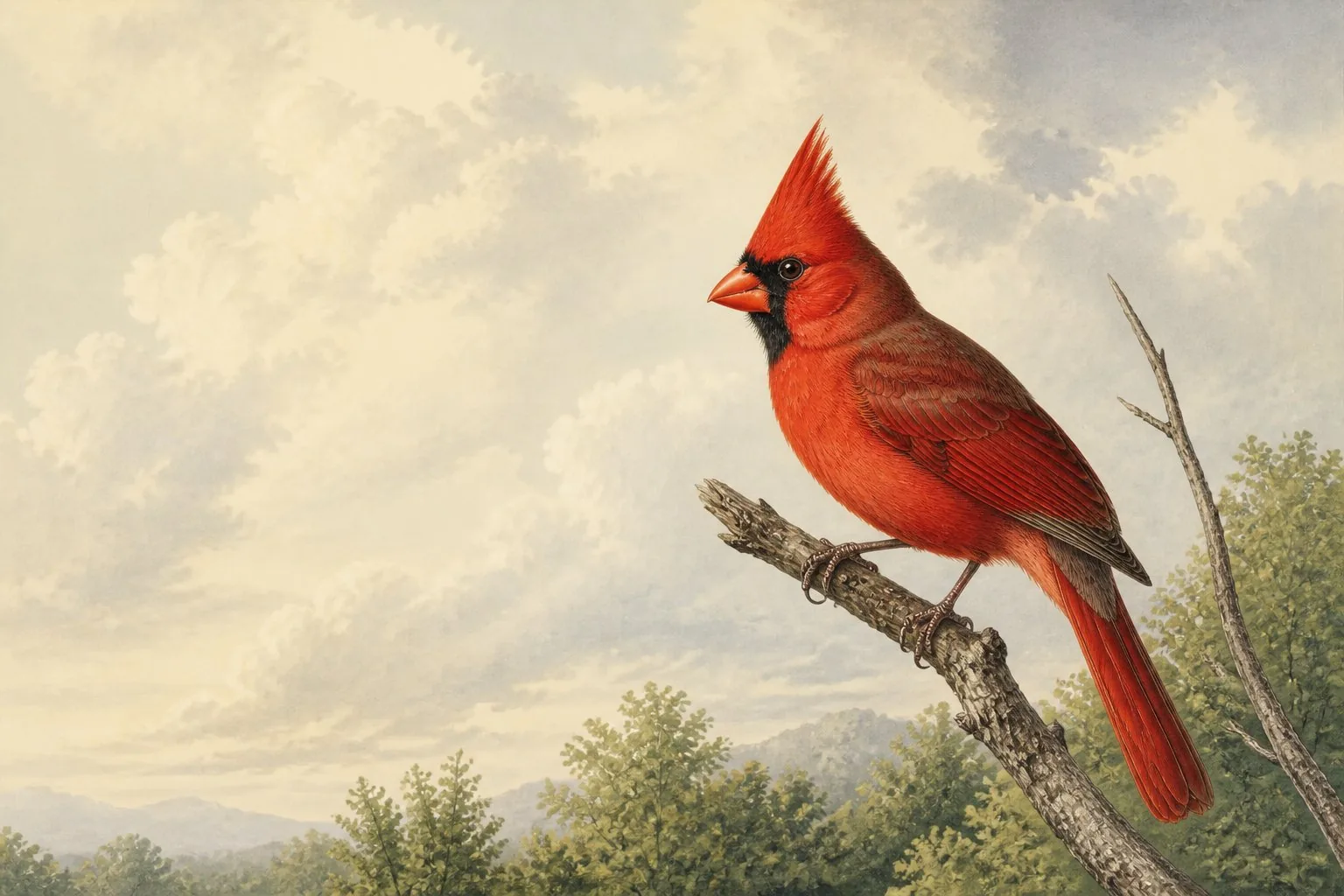
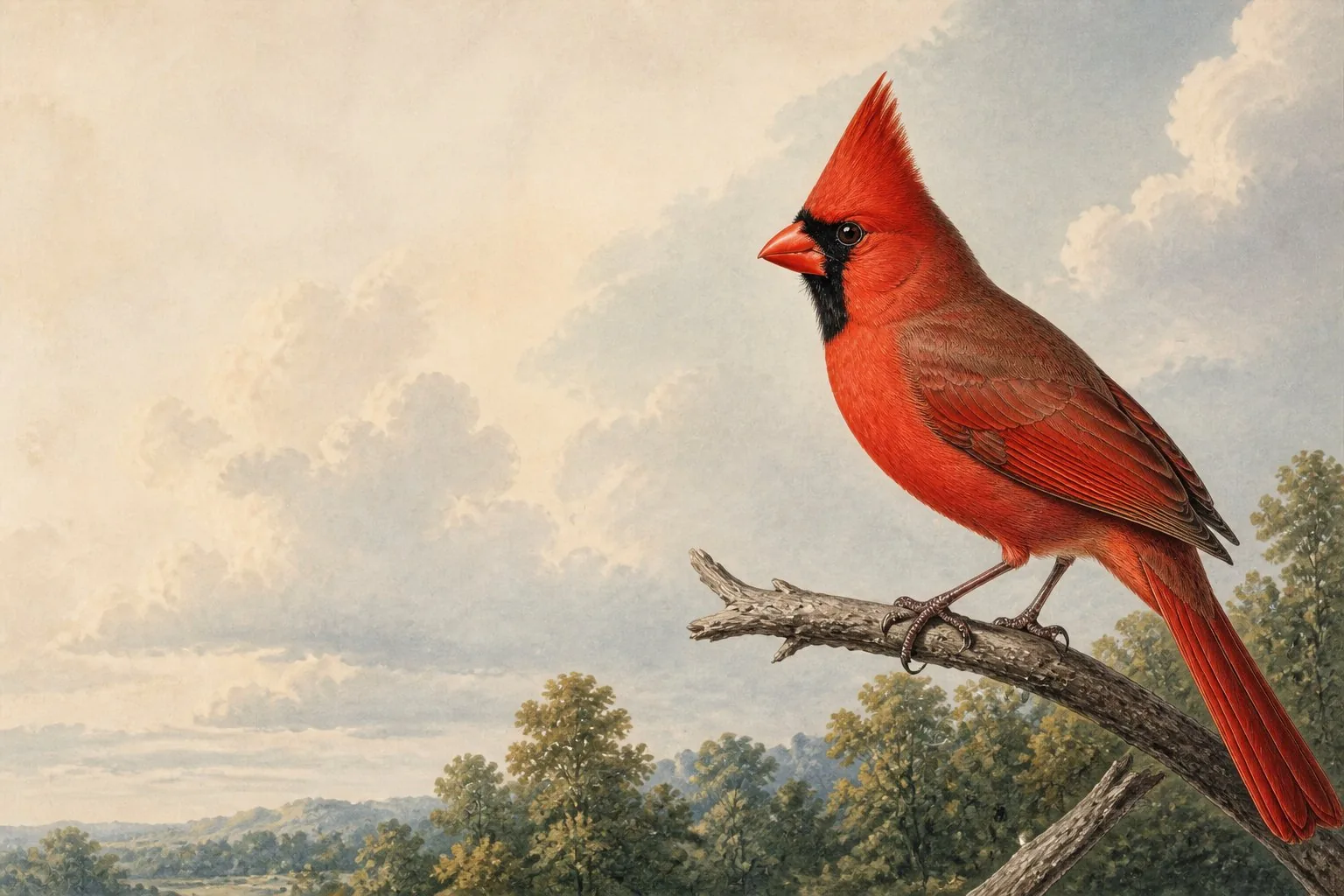
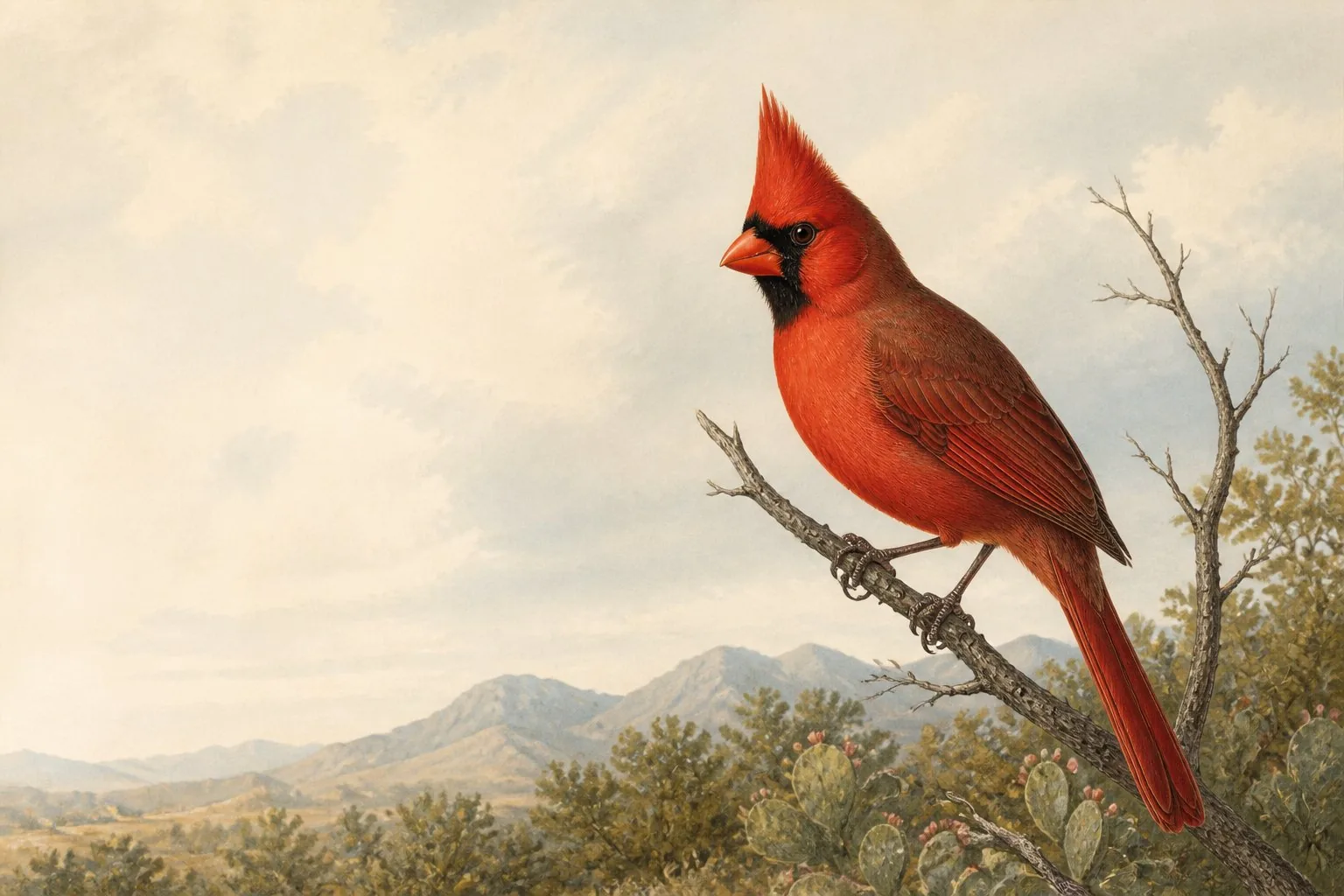
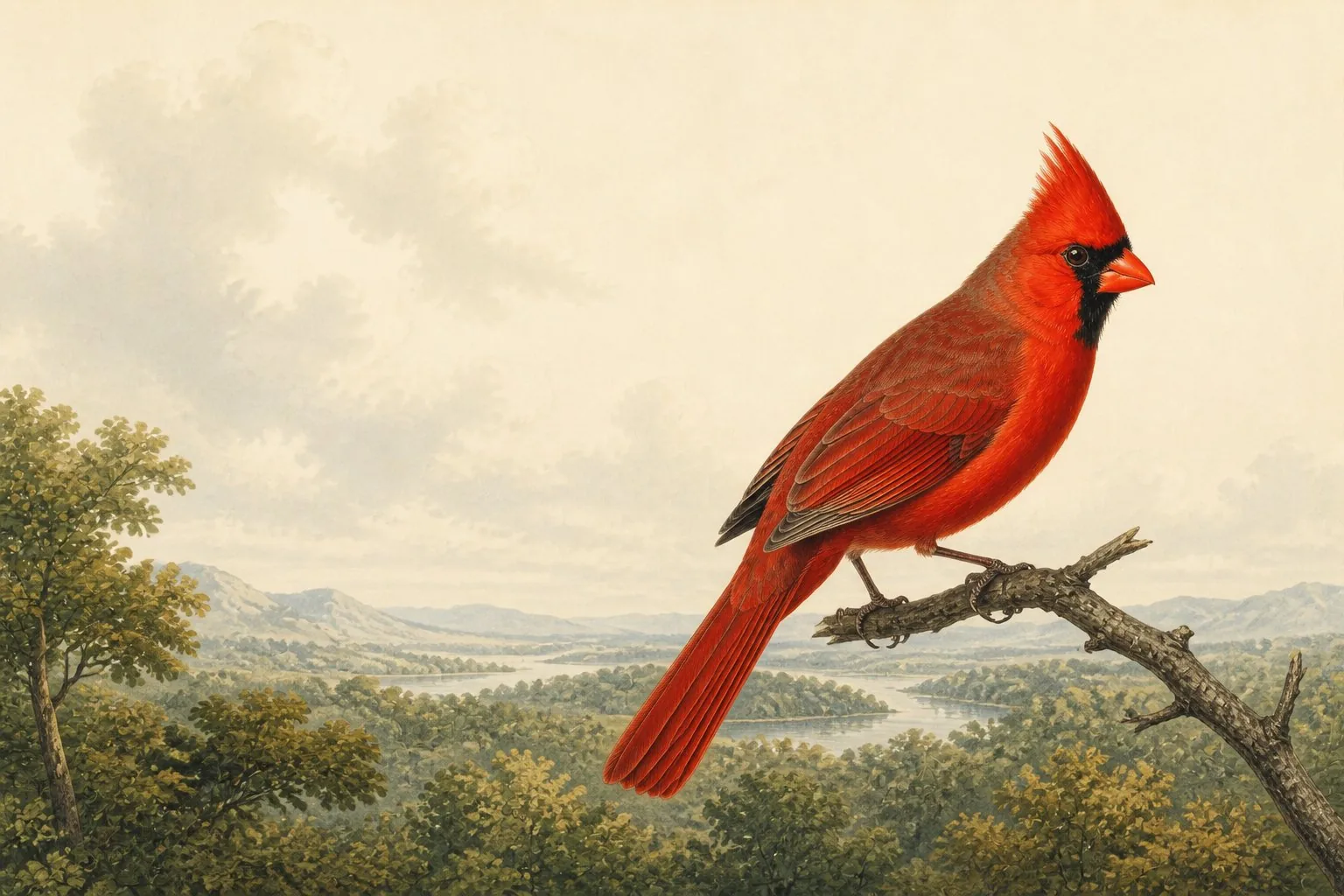
The Northern Cardinal (Cardinalis cardinalis) needs no introduction. He arrives at feeders in January in full breeding plumage and stays through every Illinois winter. If you have a sunflower feeder and a hedgerow, you already know him - see the full Northern Cardinal field guide or the Northern Cardinal print.
The more interesting birds are the ones that breed in the forest canopy and pass through on migration looking like small flames.
The tanagers
Illinois sits on the Mississippi Flyway, and in May the state’s mature oak forest fills with Scarlet Tanagers that most residents will never see - not because the birds are rare, but because they never come down.
The Scarlet Tanager breeds across Illinois wherever mature deciduous forest stands. They arrive in late April and depart by September. By the time they leave, the male has already moulted from scarlet into the dull olive-yellow he wears on the southbound flight - a transformation so complete that birders who missed spring sometimes do not believe it is the same species.
The Summer Tanager (Piranga rubra) is the rarer prize. Illinois marks the northern edge of his range, and he reaches it only in the southern counties near Shawnee. He is all red, no black - the only entirely red breeding tanager in North America. Finding him in June means you have found a bird at the furthest point it has decided the summer is warm enough.
Both tanagers catch insects by gleaning the canopy. Neither will come to seed feeders. Fruit - particularly mulberries in late May - occasionally pulls them lower, which is why patient observers who plant native fruit trees sometimes get brief looks at birds that otherwise exist only as songs above the leaves.
Where to look
Shawnee National Forest is the place for Summer Tanagers and Scarlet Tanagers in the same woodland. The Garden of the Gods area in May is one of the more productive accessible walks in the state for southern species.
Montrose Point Bird Sanctuary in Chicago catches the migrants. Scarlet Tanagers, Rose-breasted Grosbeaks, and Ruby-throated Hummingbirds all pass through in May, pushed against the Lake Michigan shoreline. It is one of the few places you can see a Scarlet Tanager at eye level, resting low after a lake crossing.
Starved Rock State Park holds breeding Cardinals and both resident woodpeckers. The Red-headed Woodpecker - entirely crimson-headed, no streaking - deserves a dedicated search. Long-term monitoring shows populations declining across the Midwest as open woodland and dead snags disappear.
Seasonal timing
Spring migration peaks in the first two weeks of May. By late May the neotropical migrants have settled into breeding territories and become harder to find without knowing the forest. Winter simplifies: the cardinal and both woodpeckers stay, and White-winged Crossbills appear in irruption years when the northern conifer crop fails.
For the orange-red end of the spectrum in neighboring states, see orange birds in Illinois and orange birds in Ohio. Following the flyway south, orange birds in Arkansas covers what pushes past Illinois’s southern edge.
The Northern Cardinal is the state bird of Illinois because he is the bird that meets people where they are - at the feeder, in the yard, in every season. The Scarlet Tanager is the bird Illinois earned by keeping its forests. He stays in the canopy and demands that you come to him. That is not what state bird committees want. It is exactly what makes him worth the trip.