Free shipping to the US, Canada & Europe
State Guide
Georgia spans mountains to coast, and its red birds sort themselves by zone: cardinal statewide, two tanager species by elevation, Painted Bunting on the barrier islands.
April 3, 2024 5 min read
On the road to Brasstown Bald in late May, you hear the Scarlet Tanager before you see him. The call is a burry chip-burr, nothing like the clear whistle of the Northern Cardinal in the parking lot below. That difference is the point. Georgia’s red birds do not share territory. They divide it, and understanding which species belongs where turns a confusing checklist into something you can use.
Georgia stretches roughly 300 miles from the Blue Ridge Mountains in the north to the Atlantic barrier islands in the southeast. That corridor passes through distinct ecological zones - mountains, Piedmont plateau, coastal plain, and coast - and the red-plumaged species each claim a portion.
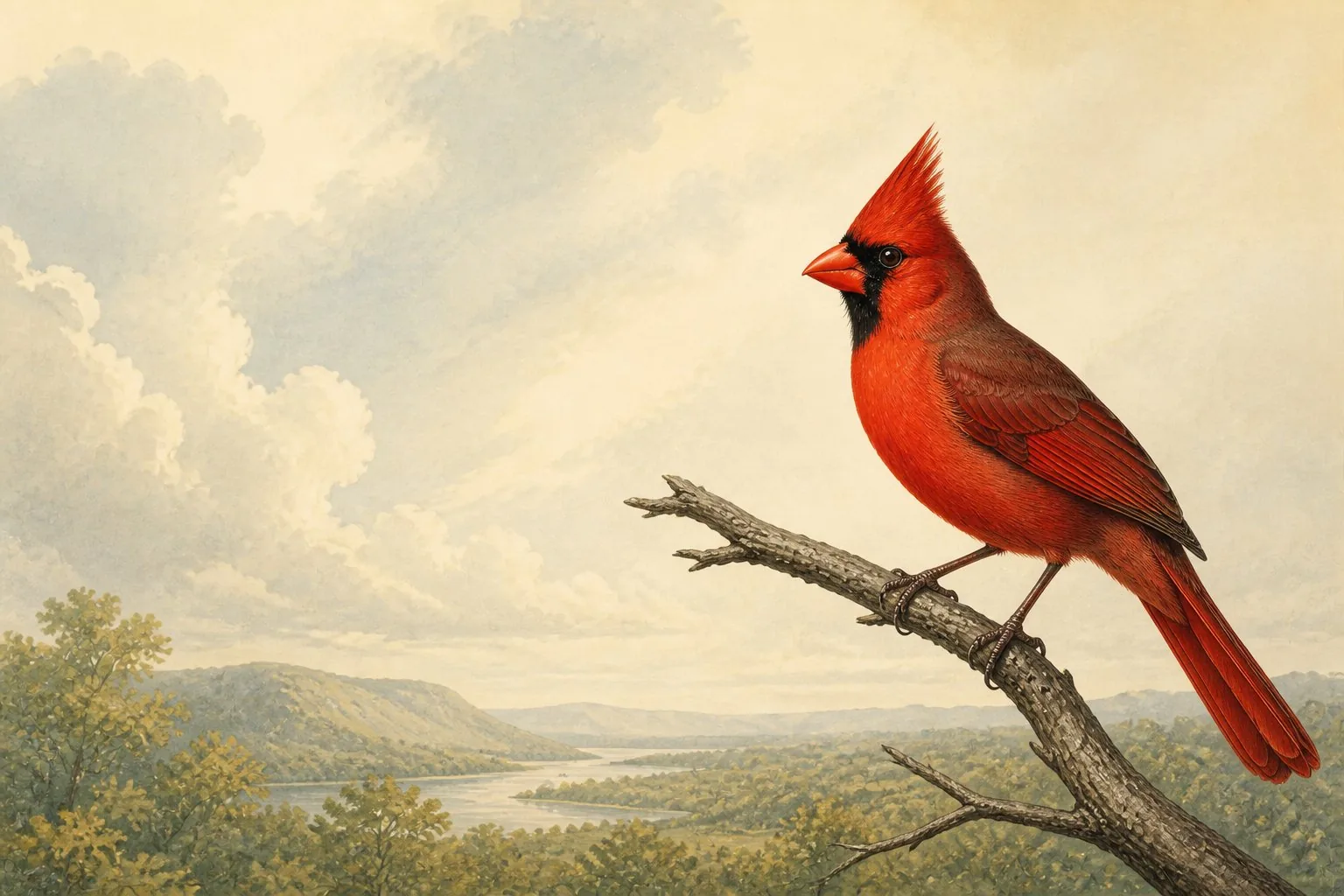
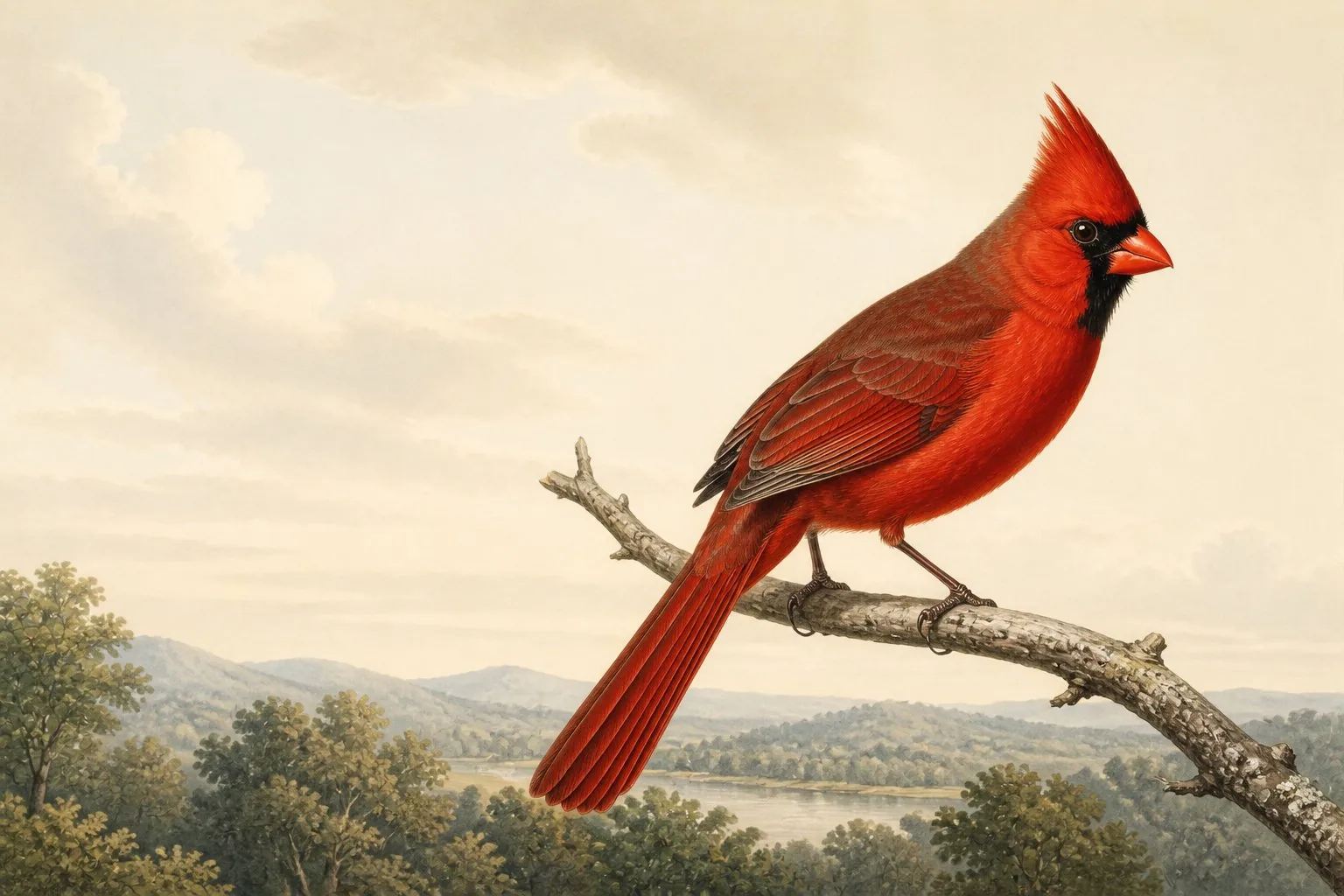
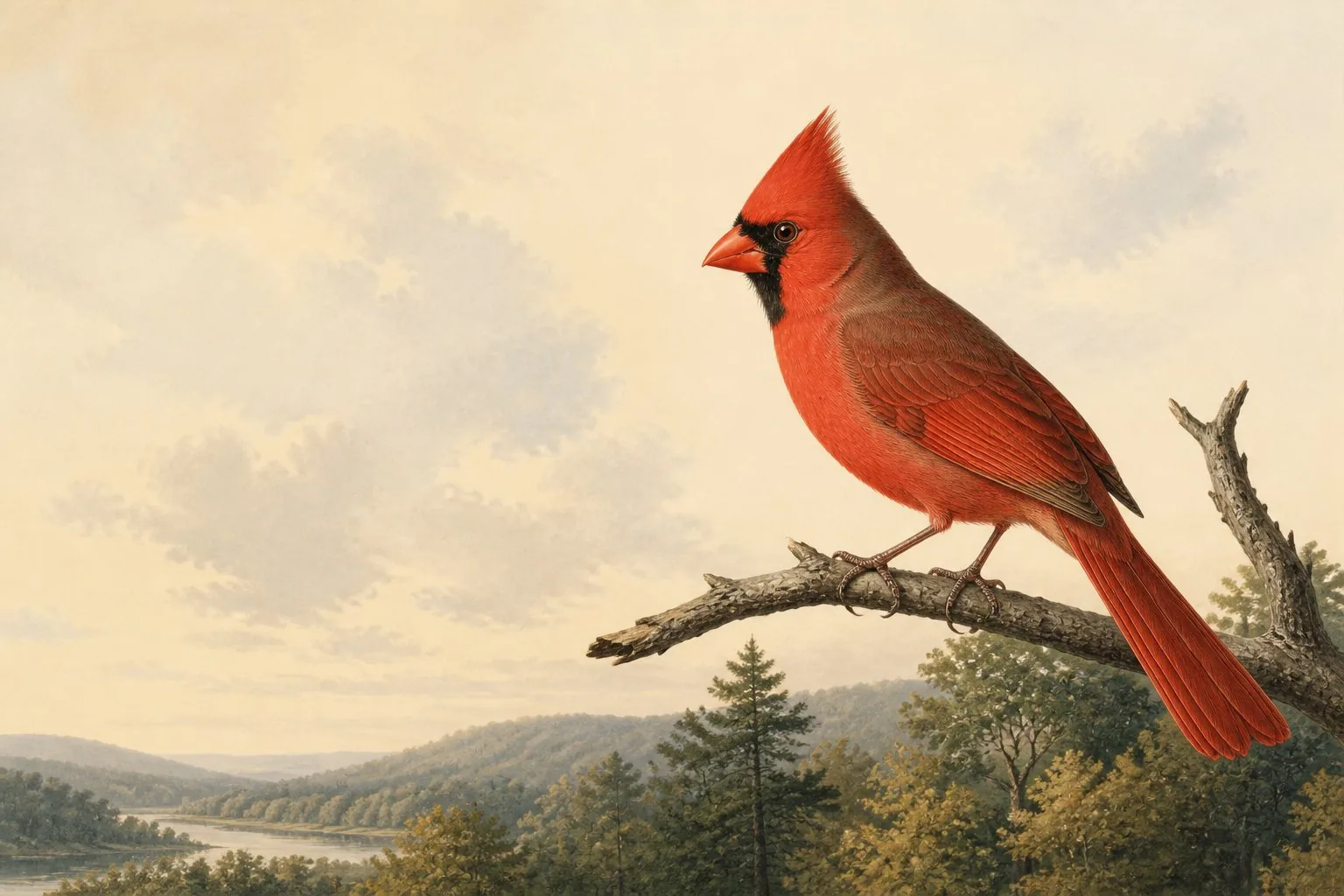
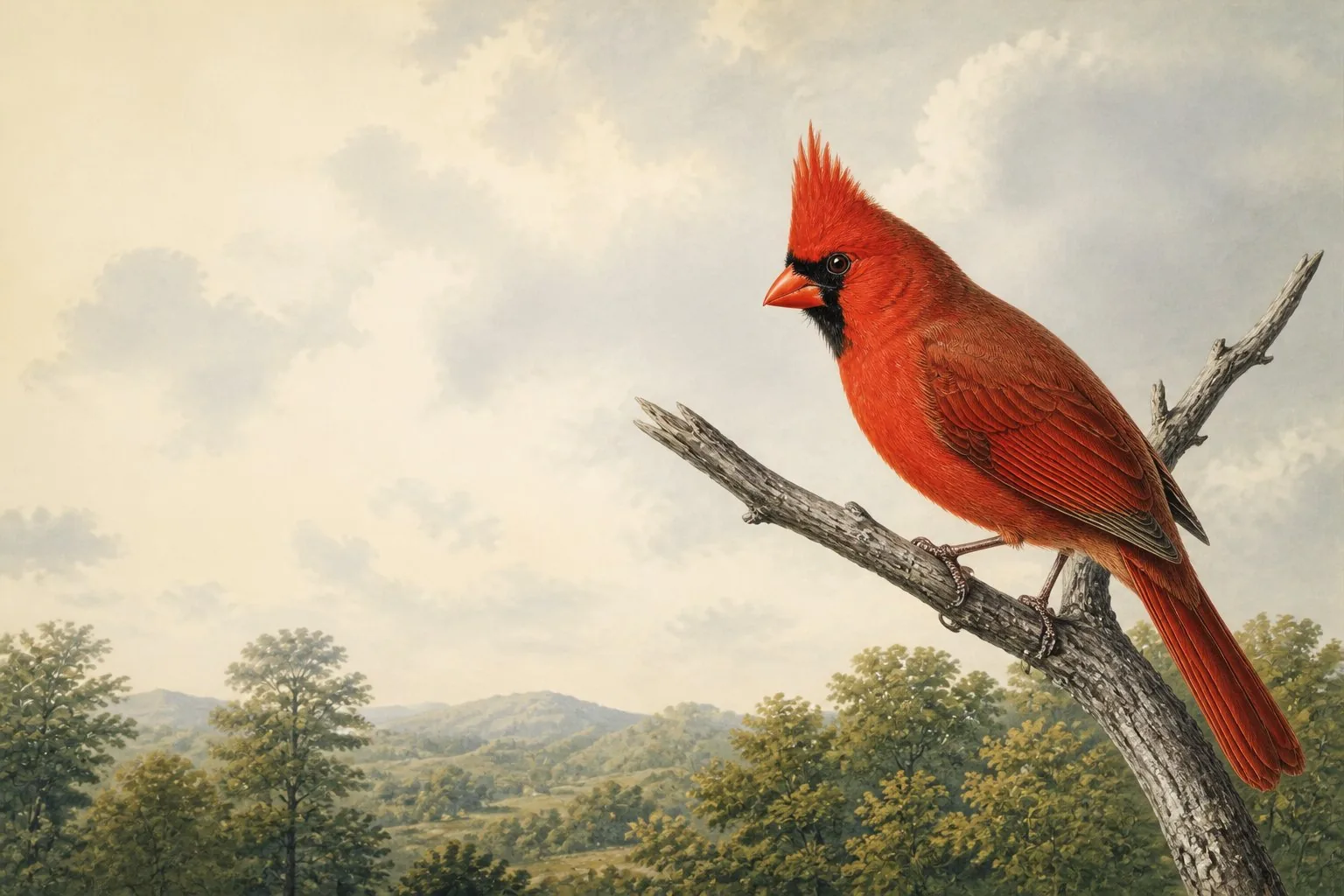
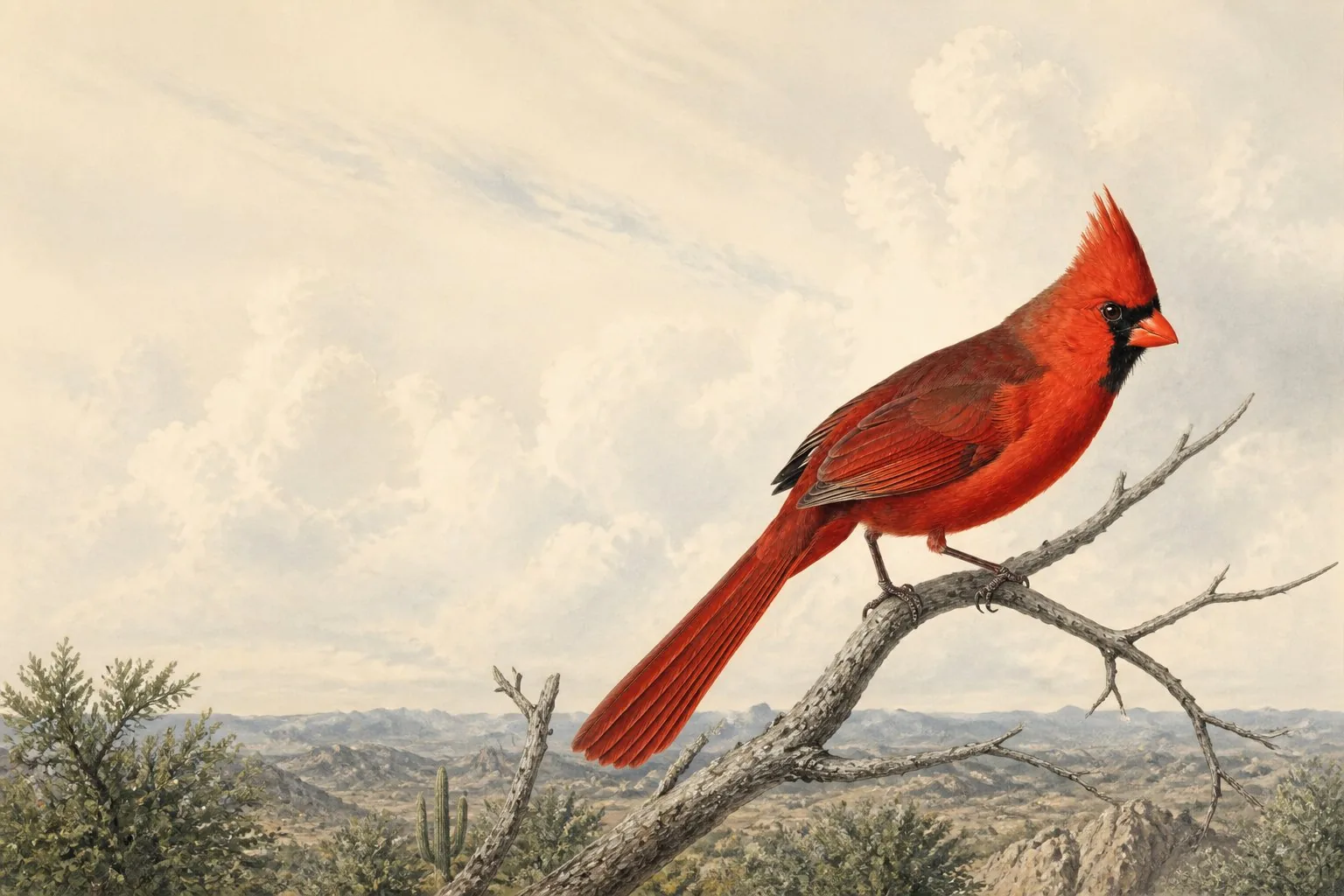
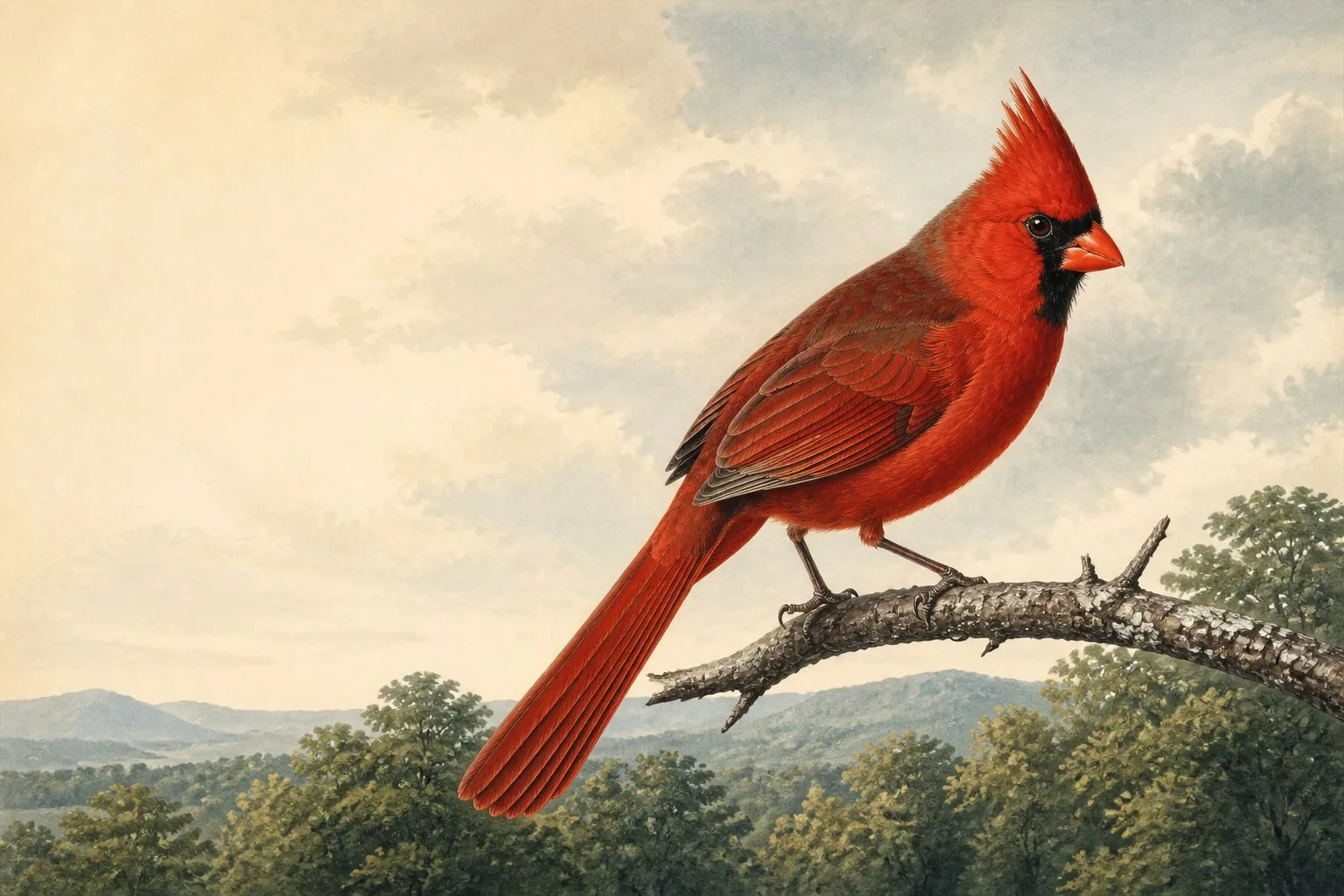
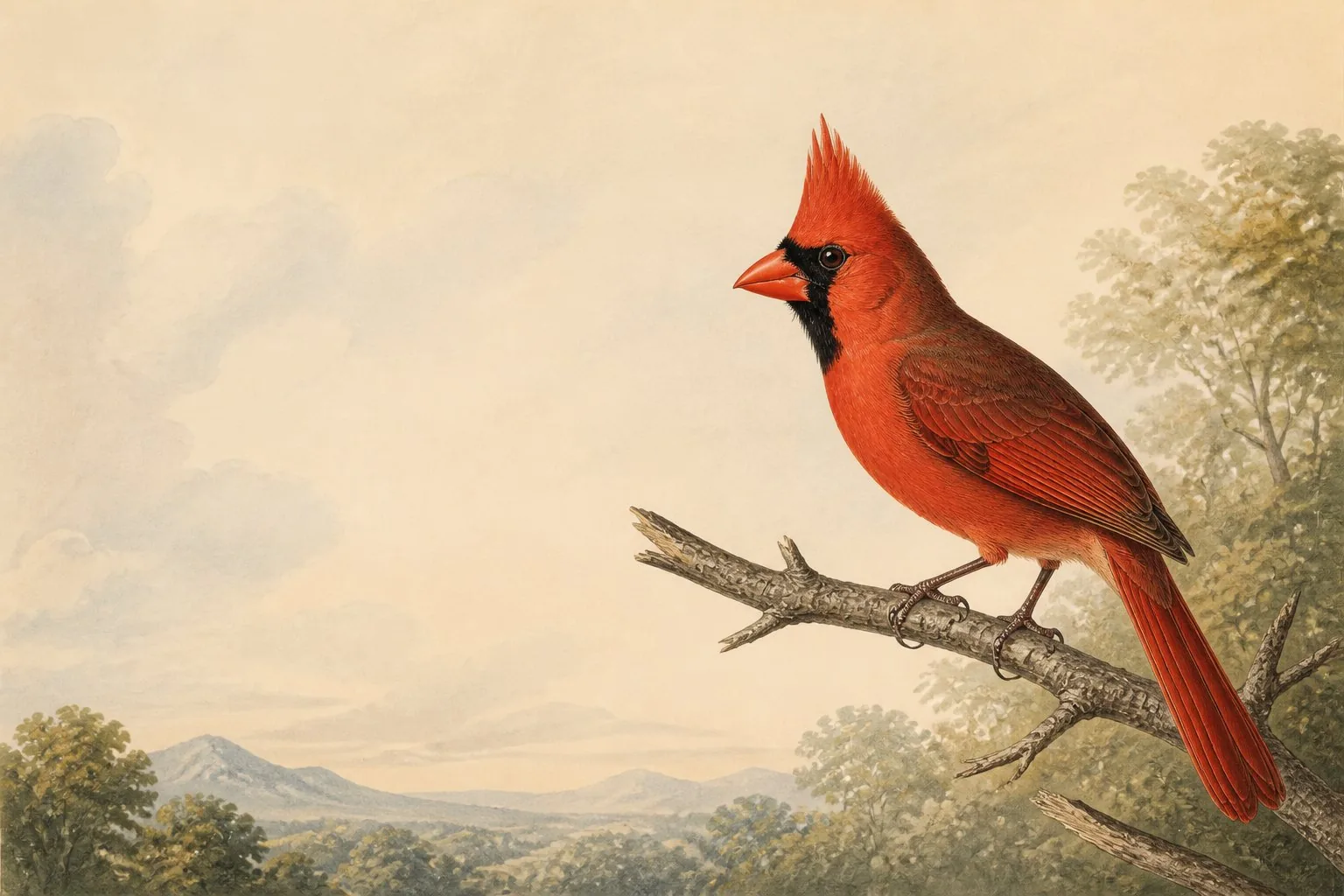
The Northern Cardinal (Cardinalis cardinalis) is the single exception: he occupies every zone, every county, year-round. Audubon’s field guide describes the species as “abundant in the Southeast” and resident throughout. Males are wholly red with a tall crest and heavy coral-pink bill; females wear buff-brown with red tinges on the crest, wings, and tail and share the same bill shape. Cornell’s All About Birds places the North American population at approximately 130 million, with numbers stable and still expanding northward.
Georgia is one of the few states where both North American tanager species breed in the same calendar season. They do not breed in the same forest.
The Summer Tanager (Piranga rubra) is the bird of Piedmont pine-oak woodland. Males are uniformly rosy red year-round, a softer tone than the cardinal’s brightness. Audubon’s field guide gives the species a length of 6.7 to 7.5 inches and a weight of 0.8 to 1.1 ounces. The female is rich yellow with plain wings and a noticeably large pale bill. What distinguishes the Summer Tanager from every other red bird in Georgia is his diet: he hunts bees and wasps in flight and will tear into active wasp nests to eat the larvae inside. Audubon records that he is “often observed feeding on bees and wasps,” and also takes beetles, cicadas, and caterpillars. He winters in Central and South America and is back in Georgia by April. His call - a rattling chick-tucky-tuck - carries through open pine-oak stands and is usually the first sign of his presence.
The Scarlet Tanager (Piranga olivacea) is a mountain bird in Georgia. The Animal Diversity Web places the southern limit of the breeding range through “western Carolinas, northern Georgia, Alabama, and Mississippi” along the Blue Ridge ridgeline. Breeding occurs May through August in mature deciduous forest at elevation. The breeding male is scarlet with jet-black wings and tail, and that contrast makes him instantly separable from the uniform-red Summer Tanager. The male arrives from South America before the female, establishing territory, and courts by extending wings and neck on a perch below her to expose the scarlet back. By autumn he moults into dull olive-green while the black wings remain - a transformation that wrong-foots birders every September. Audubon’s Georgia birding guide names Brasstown Bald specifically as the site for Scarlet Tanagers in late spring and summer.
Georgia gets Summer Tanagers in the Piedmont pine-oak belt and Scarlet Tanagers in the Blue Ridge hardwoods. The line between those two worlds follows the treeline, not a county boundary, and on a single day trip you can move between them.
The Painted Bunting (Passerina ciris) is not a red bird in the strict sense - the male carries a blue head, green back, and red breast and rump - but the red on his underparts is the most saturated colour at any Georgia coastal site in June. Audubon’s Georgia guide calls him “a bird whose gaudy colors make it a favorite even among non-birders” and names Harris Neck National Wildlife Refuge, Altamaha Wildlife Management Area, and Tybee Island as the main sites. The eastern breeding population runs along the Atlantic coast from North Carolina to northern Florida, with Georgia’s barrier islands and sea-island scrub at the centre. Audubon’s field guide lists the species as Near Threatened, with documented population declines in Florida and coastal Georgia attributed to habitat loss and illegal capture for the cage-bird trade in the tropics. He is sparrow-sized - 4.7 to 5.1 inches long, roughly half an ounce - and despite the colour, feeds in dense brush and keeps himself largely hidden.
Georgia’s year-round suburban feeders also attract two red-washed finches. The House Finch (Haemorhous mexicanus) is the reliable one: males show red on the eyebrow, forehead, throat, and breast against streaky brown, and they hold territory at feeders across the state. The Purple Finch (Haemorhous purpureus) appears in winter. Audubon describes Purple Finch males as “old-rose” rather than red - a rosy wash over the head and breast rather than the House Finch’s concentrated patches. The Purple Finch is chunkier and shorter-tailed than the House Finch and carries a stronger facial pattern on the female. Both species are covered in the orange-bird surveys of the Midwest, which describe how their ranges shift with the season across the Great Lakes states and south through the Mississippi corridor.
The zones map onto specific Georgia sites. Brasstown Bald in the north is the standard Scarlet Tanager destination. Kennesaw Mountain National Battlefield Park, noted by Audubon’s Georgia guide for its April-May warbler diversity, is also productive for both tanager species on passage - the migrant funnel there can put both birds in the same oak canopy in early May. For Painted Buntings, Harris Neck NWR is described in the Audubon guide as the refuge where the bunting is “the most famous breeding songbird.” Jekyll Island holds the highest county species total in the state at over 300 species.
The Northern Cardinal needs no guidance. He will find you. Understanding the molting cycle that makes him look rough each August is a better use of attention than looking for him on a map. The Northern Cardinal print exists because, after a winter in Georgia, he stops being background and starts being the only colour in the yard.
What Georgia offers, which most southeastern states do not, is the full range in sequence. Drive north to south across the state and you move through Scarlet Tanager country, Summer Tanager country, and Painted Bunting country in a single day. The birds make the geography legible.
As an Amazon Associate we earn from qualifying purchases. Linked products are ones we genuinely recommend.
 April 3, 2024
 5 min read