Free shipping to the US, Canada & Europe
State Guide
South Dakota's orange birds split along a geologic line. Western Tanagers own the Black Hills pines; Baltimore Orioles work the east.
January 27, 2024 5 min read
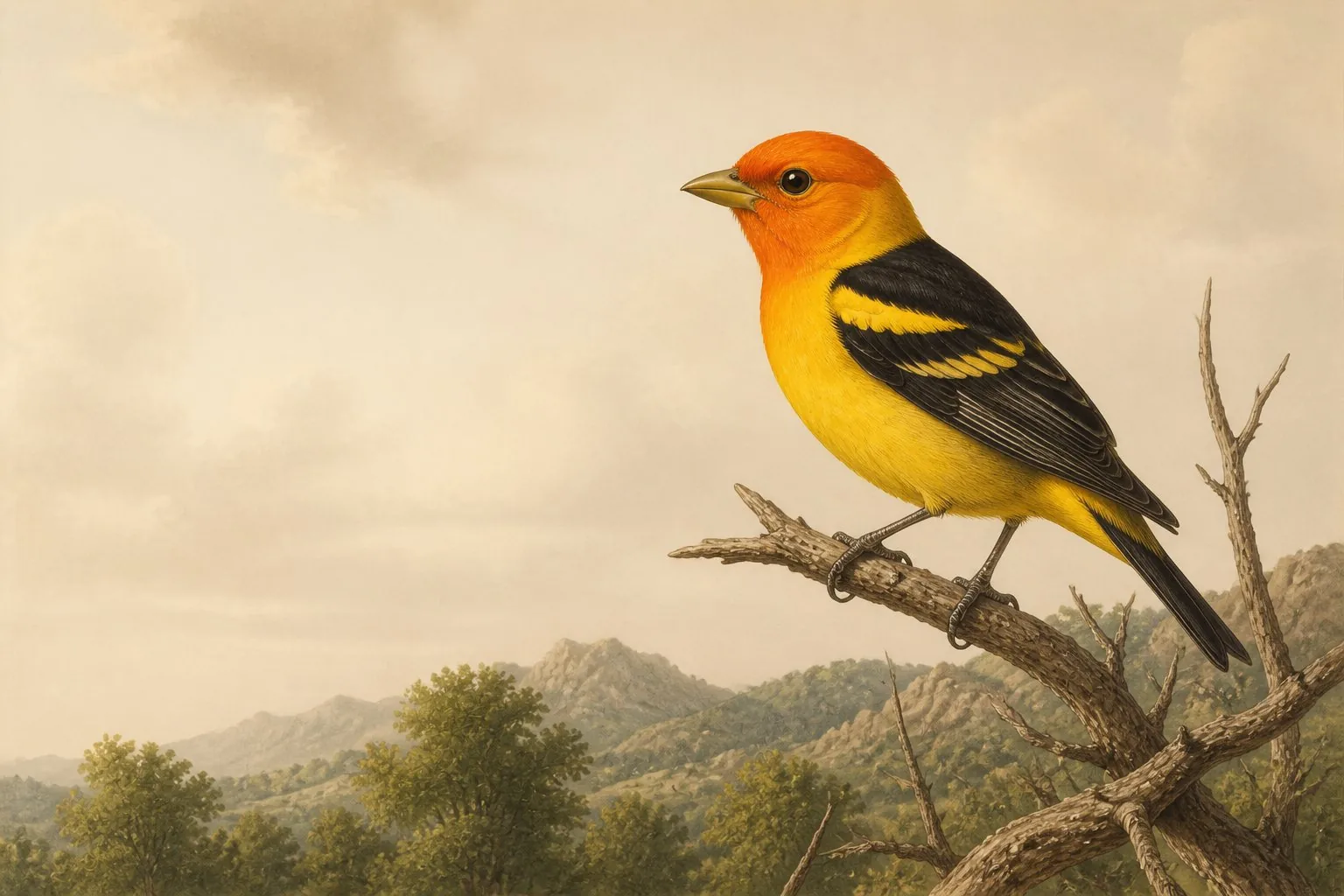
Stand at the edge of Custer State Park in late May and you will hear a Western Tanager before you see one - a hoarse, rising phrase from the ponderosa canopy that lands somewhere between a robin’s carol and something rawer. Then he moves into a gap in the branches and the orange-red head is almost unreasonable against that amount of green.
South Dakota does not look like tanager country from the outside. Most of the state is shortgrass prairie and the sky above it is too open for forest species. But the Black Hills rise out of the western plains as a genuine island of mountain habitat: ponderosa pine, spruce, aspen, and the species that follow those trees across the Rockies. The Hills are why South Dakota’s list of orange birds is longer than it has any right to be.
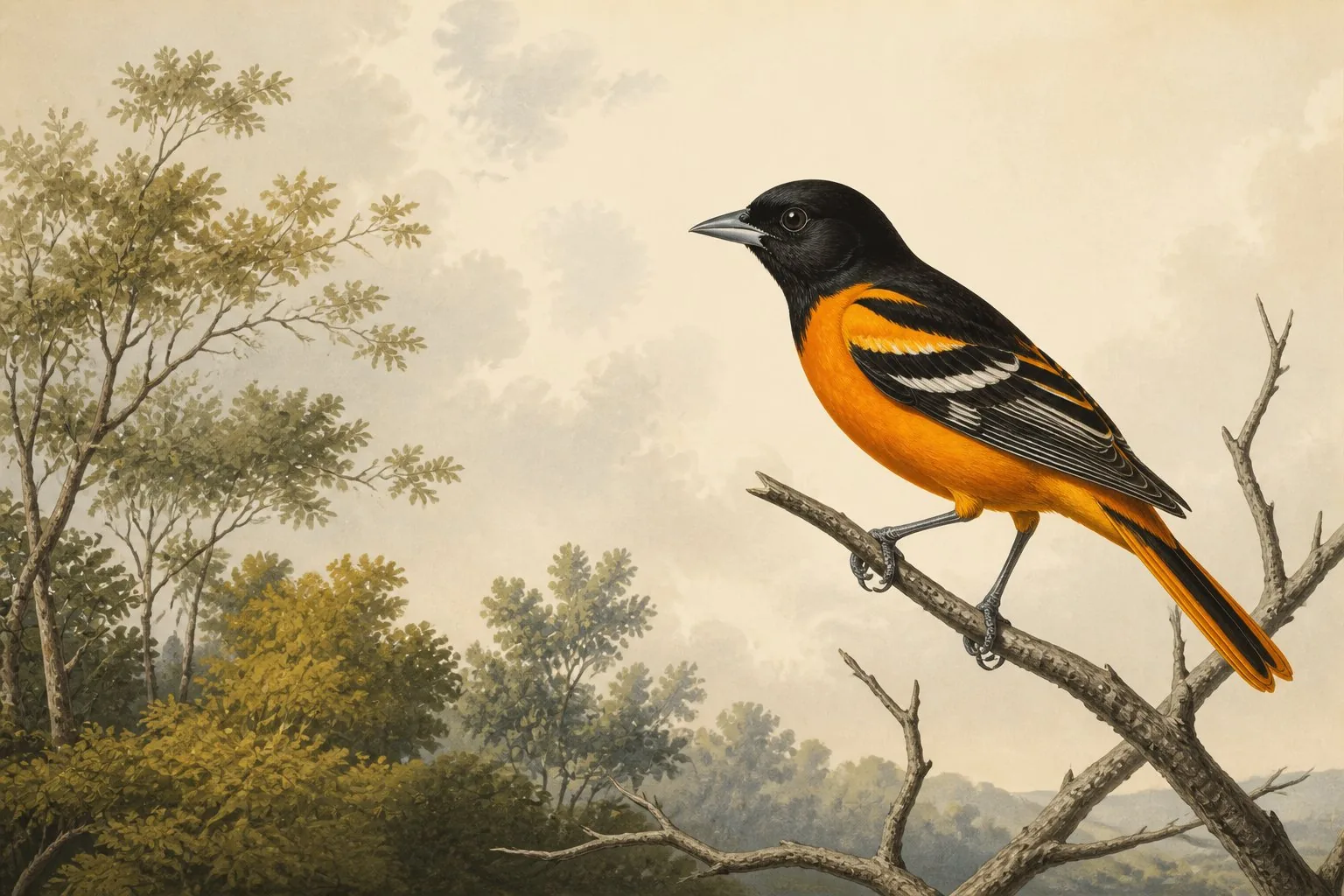
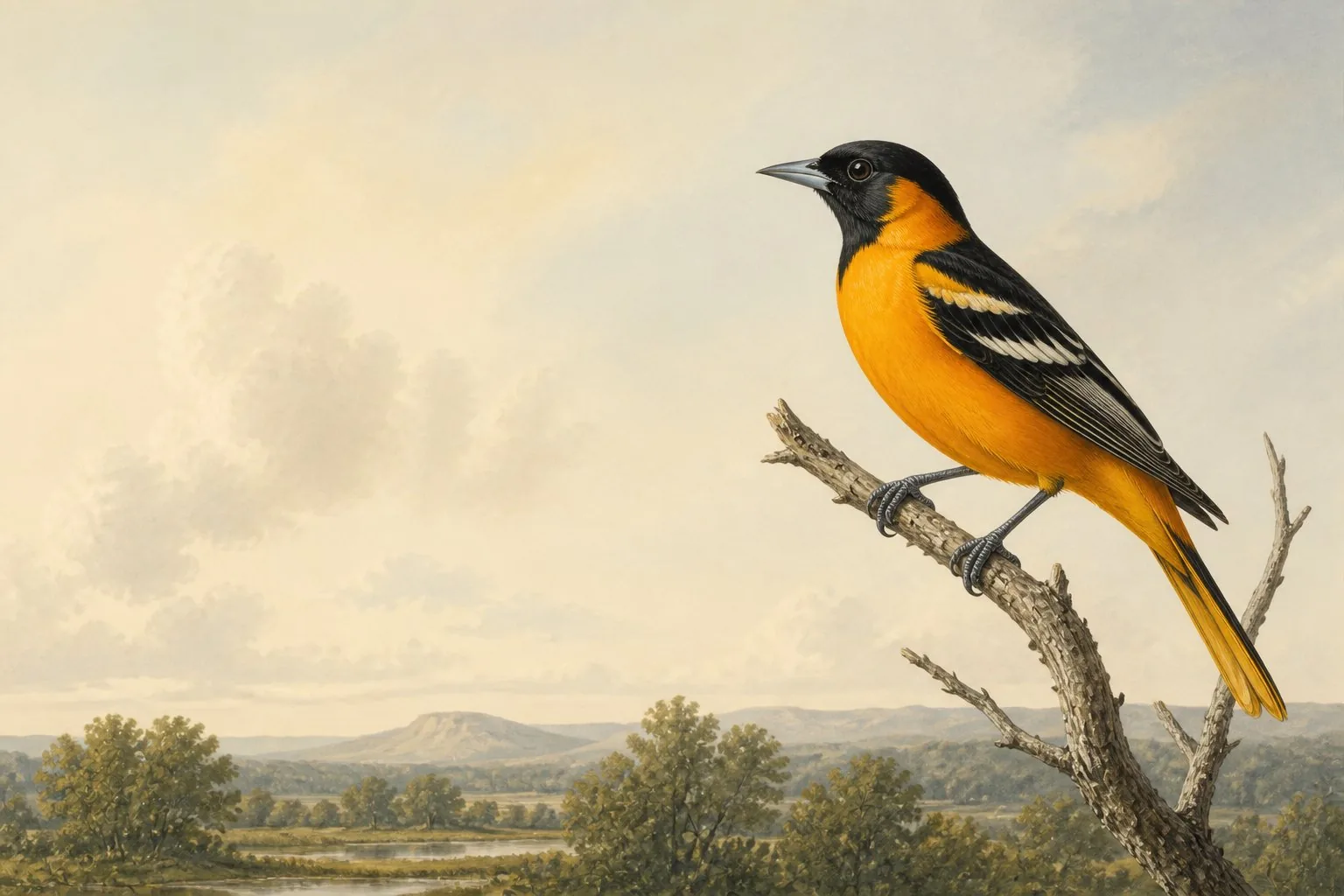
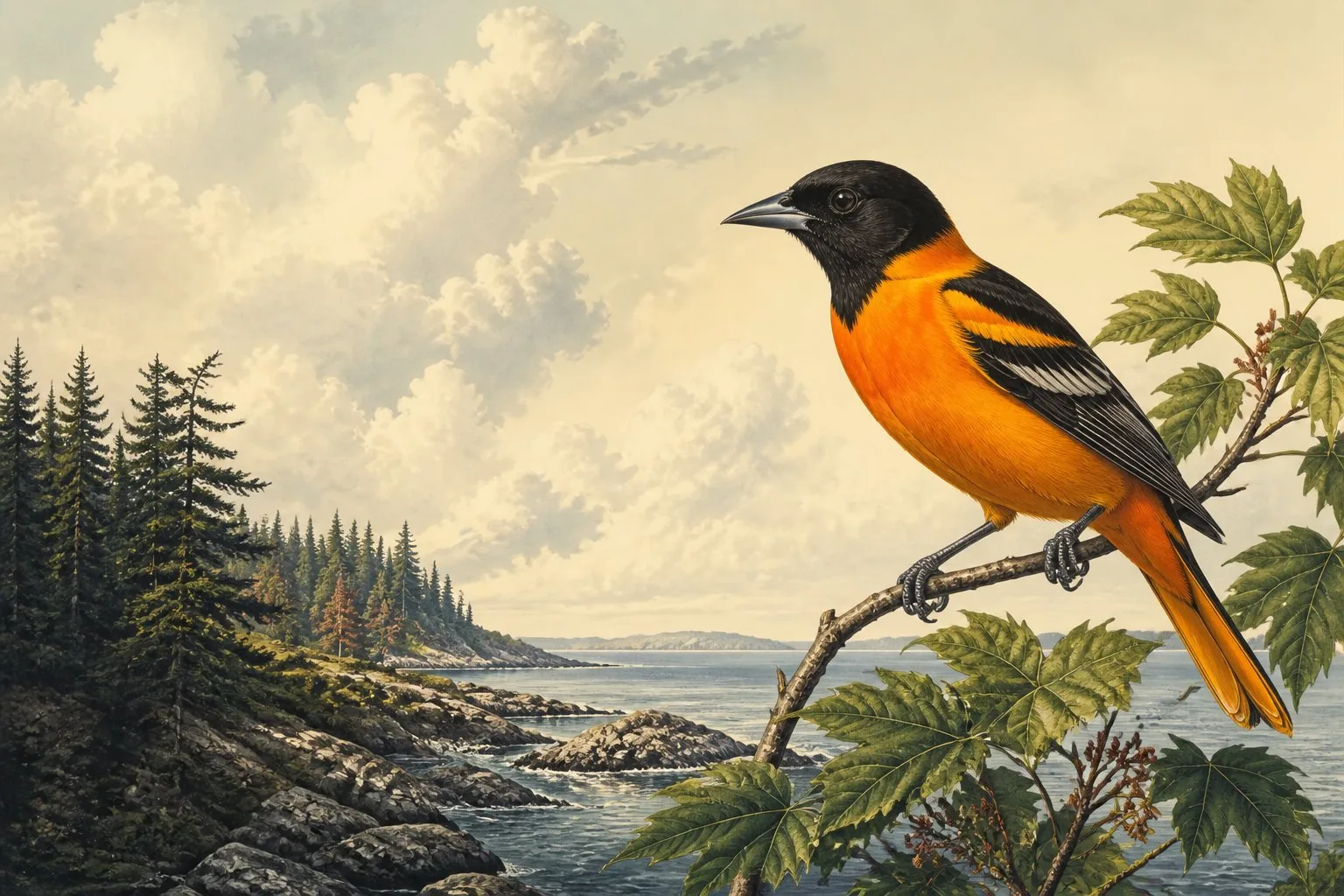
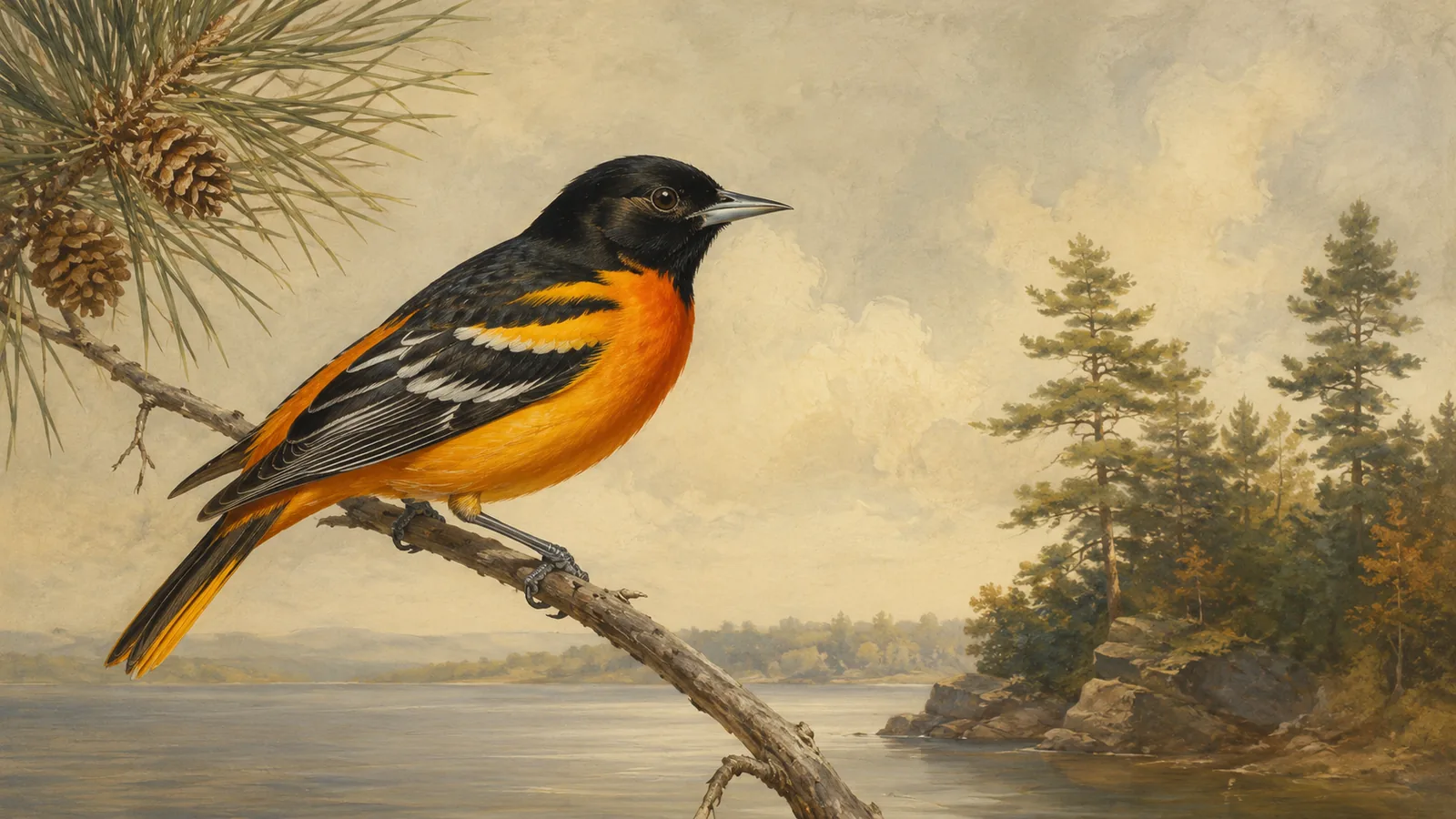
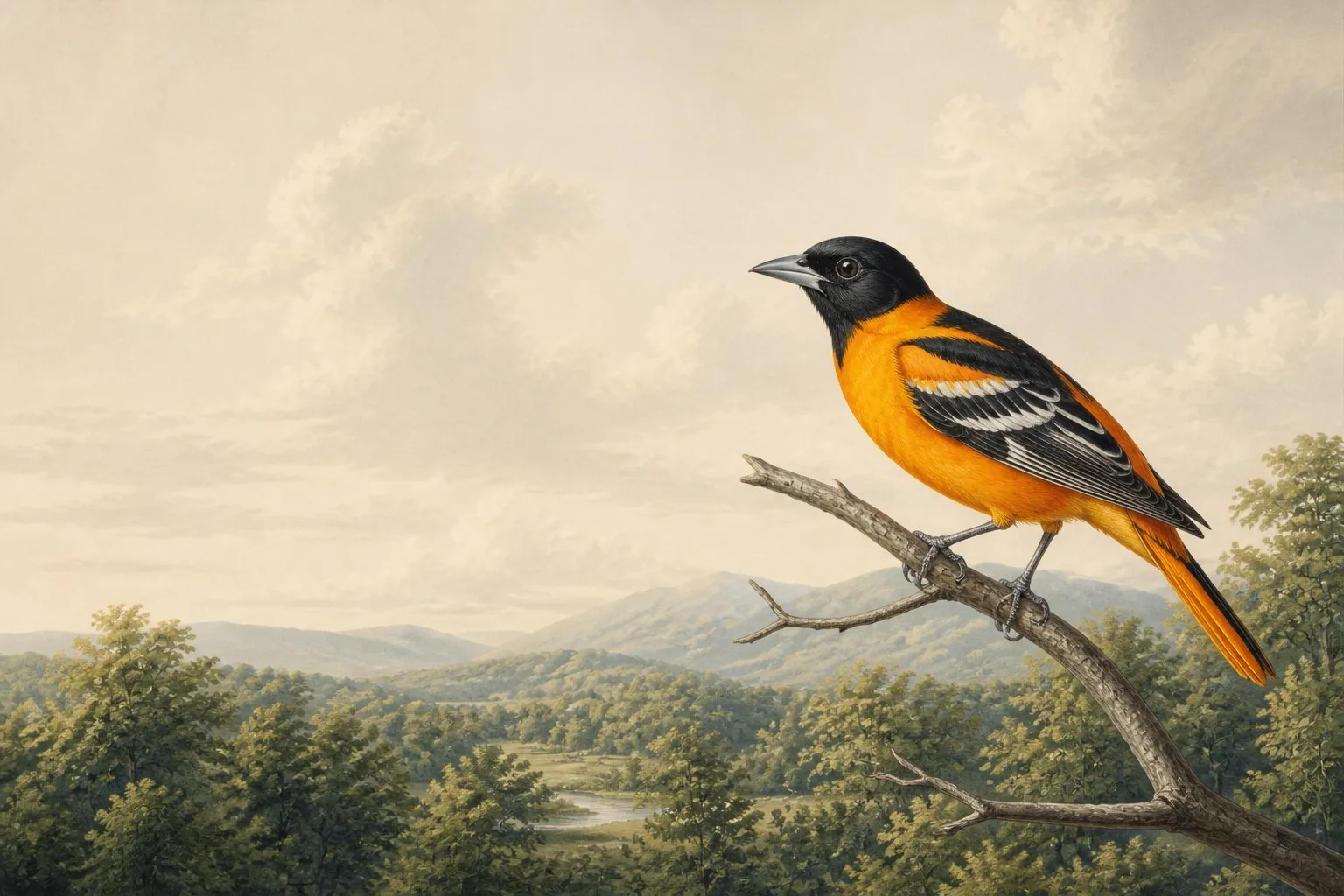
The Missouri River roughly splits South Dakota in half, and that line is a birding boundary. East of it the habitat is tallgrass and cropland, laced with river corridors of cottonwood and elm. This is Baltimore Oriole country. He arrives from Central America in early May, strings his hanging nest from an elm fork, and is gone by August.
West of the Missouri the shortgrass plains run to the Black Hills and the Pine Ridge country along the Nebraska border. Bullock’s Oriole - the western counterpart - works the cottonwood draws here. In the narrow zone where both orioles meet along the Missouri, hybrids turn up in small numbers. The Cornell Lab has documented this hybrid zone across the Great Plains for decades.
The Black Hills proper are a third zone entirely. Piranga ludoviciana, the Western Tanager, nests only in higher coniferous forests, and in South Dakota that means the Hills or nowhere.
The Black Hills are the reason South Dakota’s orange-bird list runs deeper than the rest of the Plains combined. Without them the state would be oriole country and nothing more.
| Species | Orange feature | Season | Where |
|---|---|---|---|
| Western Tanager | Orange-red head, yellow body | May - Aug | Black Hills conifers |
| Baltimore Oriole | Flame-orange breast and underparts | May - Aug | Eastern river corridors |
| Bullock’s Oriole | Orange face and underparts | May - Aug | Western cottonwood draws |
| Orchard Oriole | Deep rusty underparts | May - Aug | Open woodlands statewide |
| Black-headed Grosbeak | Rich orange breast | May - Aug | Black Hills forest edges |
| Say’s Phoebe | Tawny-orange belly | Mar - Sep | Badlands, ranch structures |
| American Robin | Orange-red breast | Year-round | Lawns, parks, woodland edge |
| Northern Flicker | Orange under wings and tail | Year-round | Open woodlands, suburbs |
| American Kestrel | Rusty-orange back and tail (male) | Year-round | Open grasslands |
South Dakota is one of the few states where you can plausibly compare all three of the region’s orioles in a single day. The Baltimore and Bullock’s are sometimes considered eastern and western bookends of the same species. The Orchard Oriole is smaller and darker - the male’s underparts are a deep brick-red rather than the clean flame of the other two. First-year Orchard males are yellow-green with a single black throat patch and are routinely misidentified. The drab bird working the branch tips in June is worth a second look.
The Baltimore Oriole responds to orange halves and grape jelly at feeders - a pattern documented across the eastern range. If you are in the James River valley in May, a simple platform feeder with orange halves will bring him in. The Bullock’s in the west is less feeder-drawn, preferring to work the cottonwood canopy at height.
For states where Baltimore Orioles dominate the orange-bird list, the guides for orange birds in Ohio and orange birds in Michigan give useful comparison points.
The Black-headed Grosbeak deserves more attention. Pheucticus melanocephalus is a large, confident bird - the male’s orange covers the entire breast of what is essentially a heavy-billed sparrow. He nests throughout the Hills and occupies the same forest-edge habitat as the Western Tanager, though the two feed differently enough that they rarely compete directly. In June you can sometimes find both species within 30 meters of each other on the same forested slope, which is not something you will see anywhere else in South Dakota.
Say’s Phoebe earns its place on this list through persistence and contrast. The belly is soft tawny-buff rather than flame orange, but in the Badlands it is often the only warm-colored bird on a rock face. It arrives earlier than the forest species - sometimes in late March - and nests on cliff ledges, bridge beams, and ranch buildings through September.
If you have one window for orange birds in South Dakota, the last two weeks of May cover more species than any other period. Orioles have arrived. Western Tanagers and Black-headed Grosbeaks are in the Hills and singing. Say’s Phoebes are already on nest. You will miss the later migrants by a week but hit the breeding birds at their most active.
The orange birds in Illinois guide shows how the same oriole species behave further east. For the southern transition into the Arkansas Ozarks, see orange birds in Arkansas.
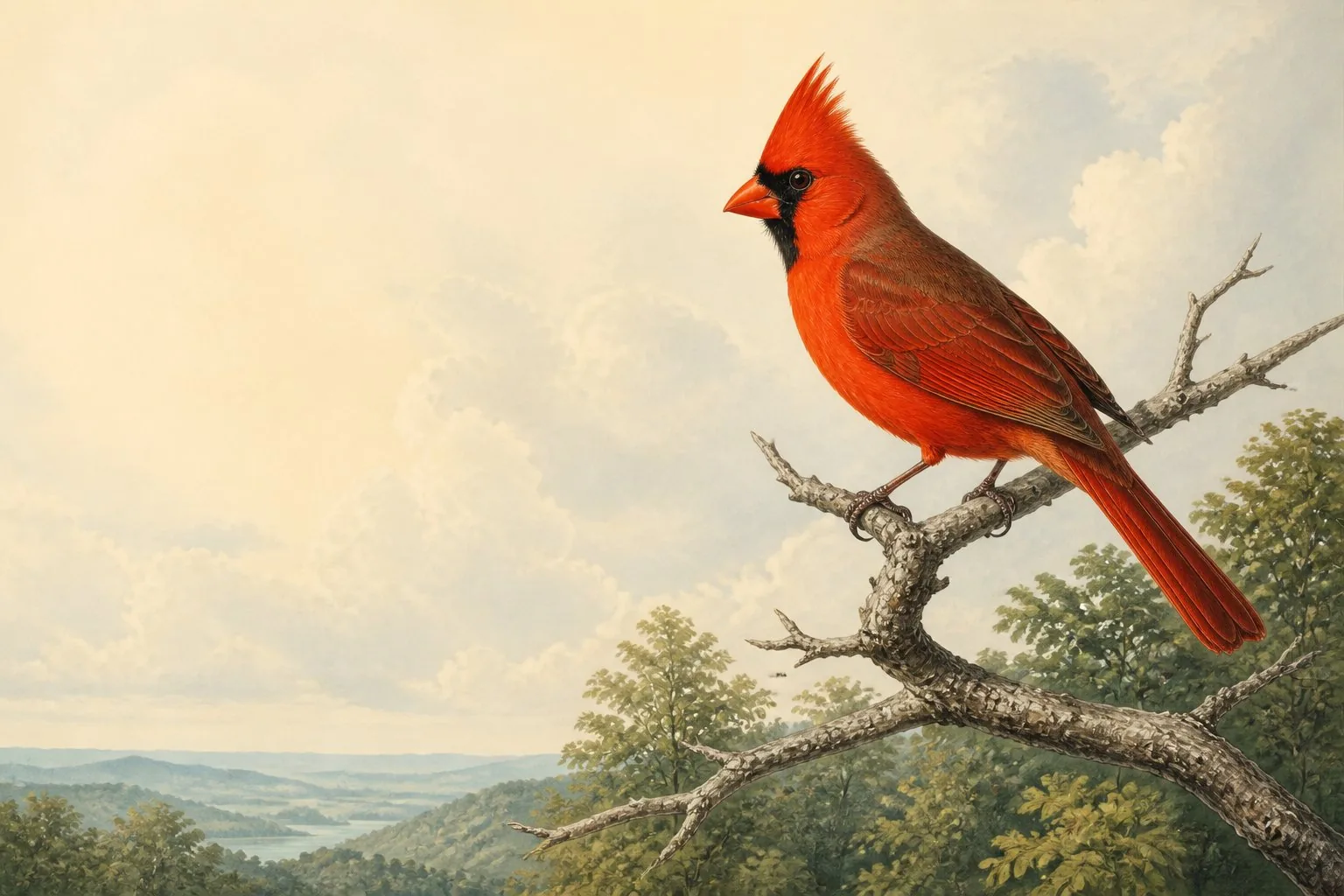
One notable absence: the Northern Cardinal is common east of the 100th meridian but has not established itself in South Dakota. If you are accustomed to the Northern Cardinal from a midwestern yard, the Bullock’s Oriole fills a similar visual role at the western feeder - an intensely orange male against bare winter branches - but the resemblance ends at color and the two birds are entirely unrelated.
As an Amazon Associate we earn from qualifying purchases. Linked products are ones we genuinely recommend.
 January 27, 2024
 5 min read