Free shipping to the US, Canada & Europe
State Guide
Nine orange-plumaged birds visit or breed in Rhode Island, from the Baltimore Oriole in May to the American Robin year-round. Here is what to look for and when.
January 22, 2024 4 min read
Some years in late April, Block Island fills in a single morning.
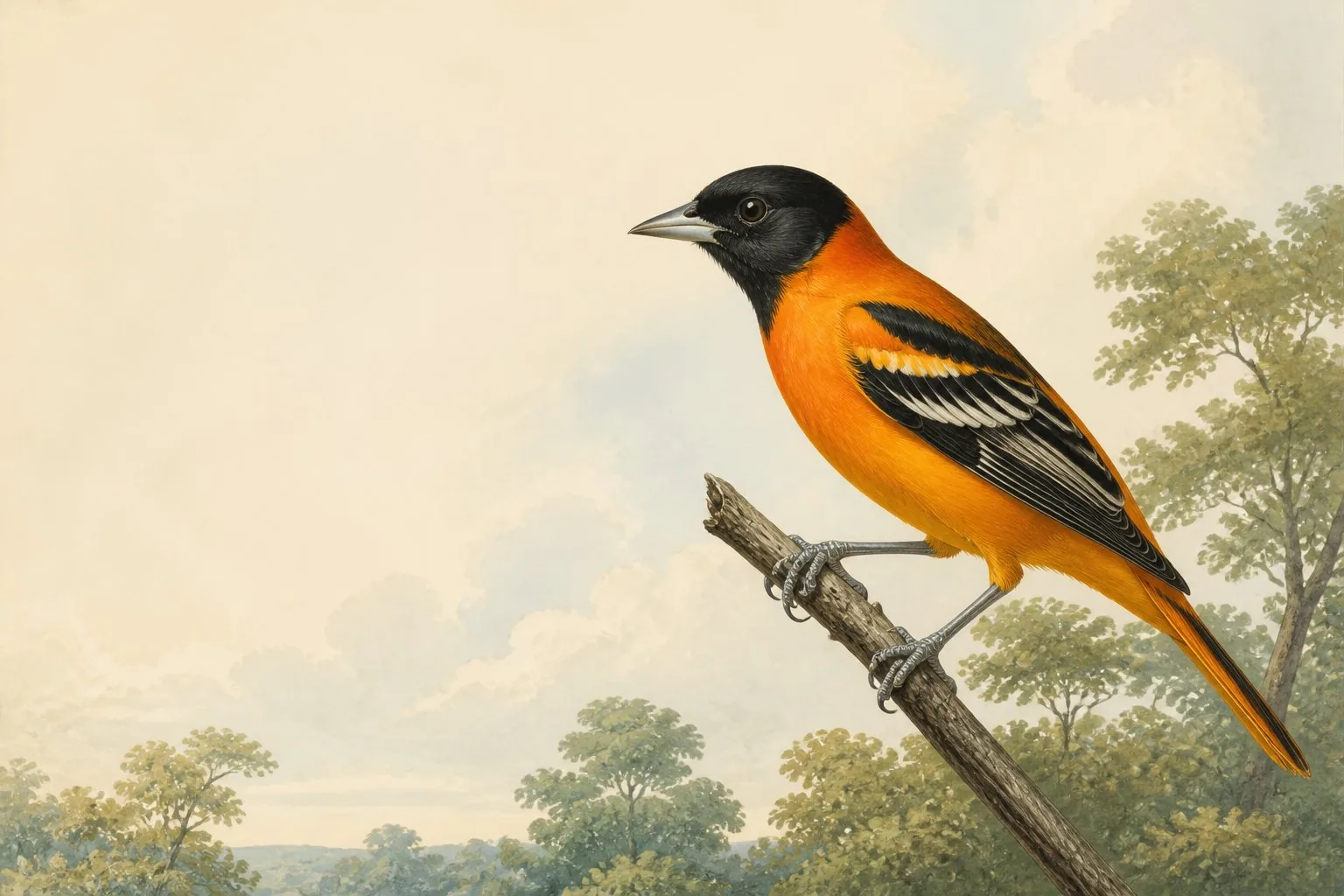
A southwest wind holds all night off the coast, songbirds pile up offshore, then the wind shifts. Baltimore Orioles, American Redstarts, and Eastern Towhees drop into the thickets together, a night or more of flight finished in ten minutes. The island sits roughly 12 miles off the Rhode Island mainland - the U.S. Fish and Wildlife Service puts the Block Island NWR at approximately that distance - a natural first landfall for migrants crossing open Atlantic water, and when conditions align it draws concentrations of species that rank it among the most important migratory stopover points on the Atlantic coast.
Rhode Island’s position on the Atlantic Flyway, combined with coastal scrub, inland deciduous forest, suburban parks, and farm edges, supports nine species with orange or rufous plumage. Six arrive for the breeding season. Three stay through winter. The state’s geography earns orange birds that other New England states see only in passing.
| Species | Orange feature | Season |
|---|---|---|
| Baltimore Oriole | Bright orange breast and shoulders | May - August |
| Orchard Oriole | Deep rusty-orange underparts (male) | May - August |
| American Redstart | Orange wing and tail patches (male) | May - August |
| Scarlet Tanager | Red-orange body (male, can appear orange) | May - August |
| Barn Swallow | Orange-buff underparts | April - September |
| American Robin | Orange-red breast | Year-round |
| Eastern Towhee | Rufous-orange flanks | Year-round |
| Northern Flicker | Orange under-wing flash | Year-round |
| American Kestrel | Rusty-orange back and tail (male) | Year-round |
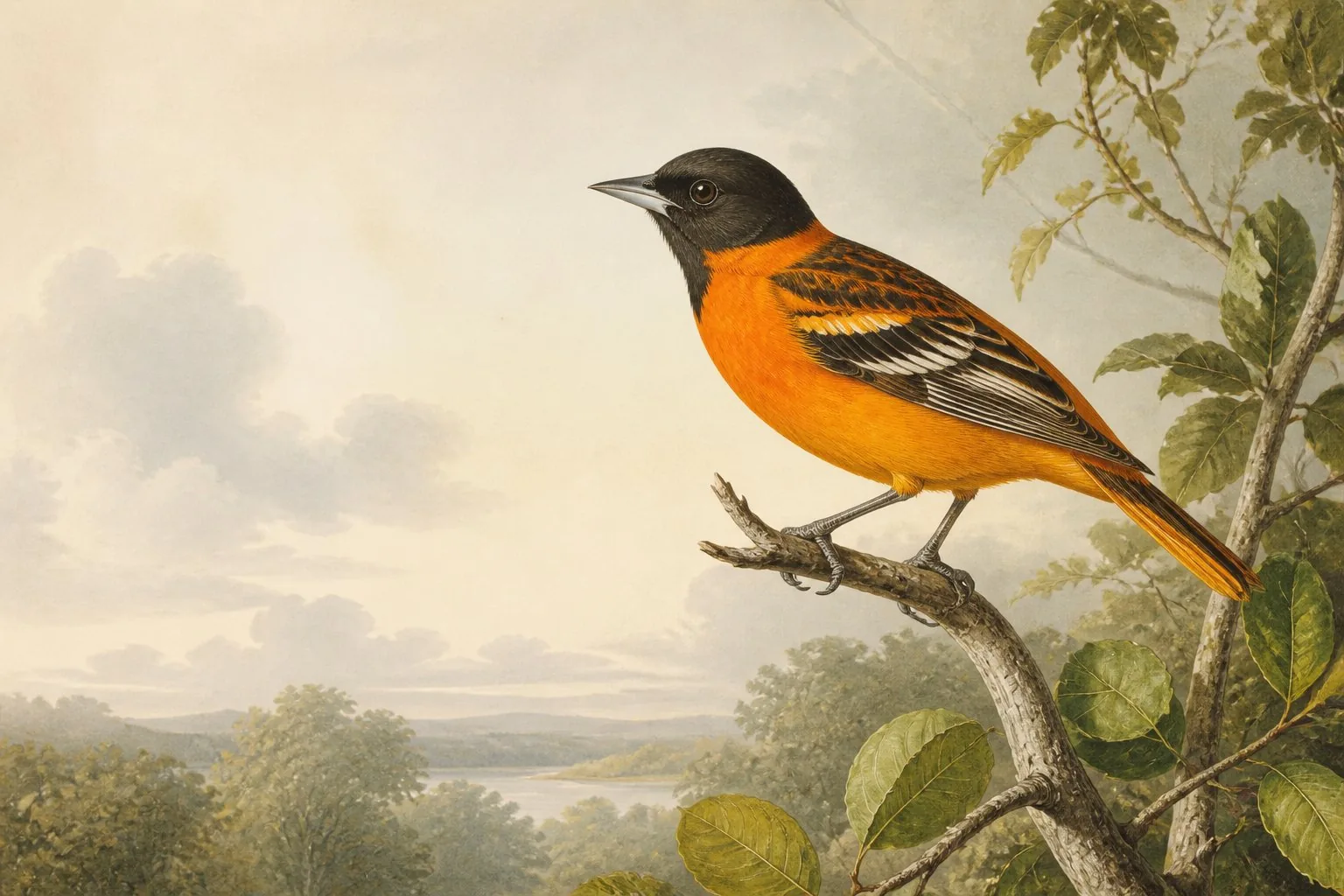
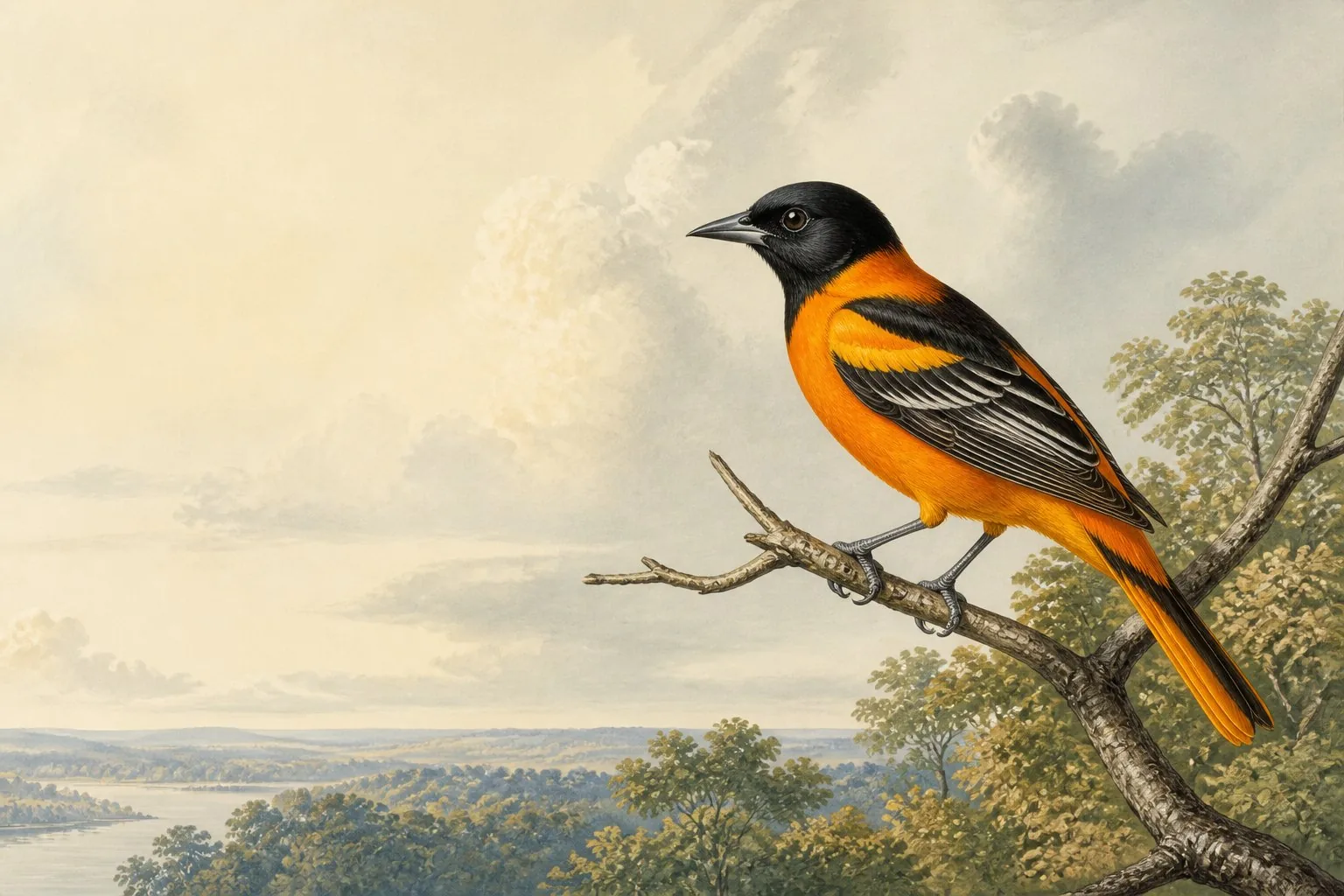
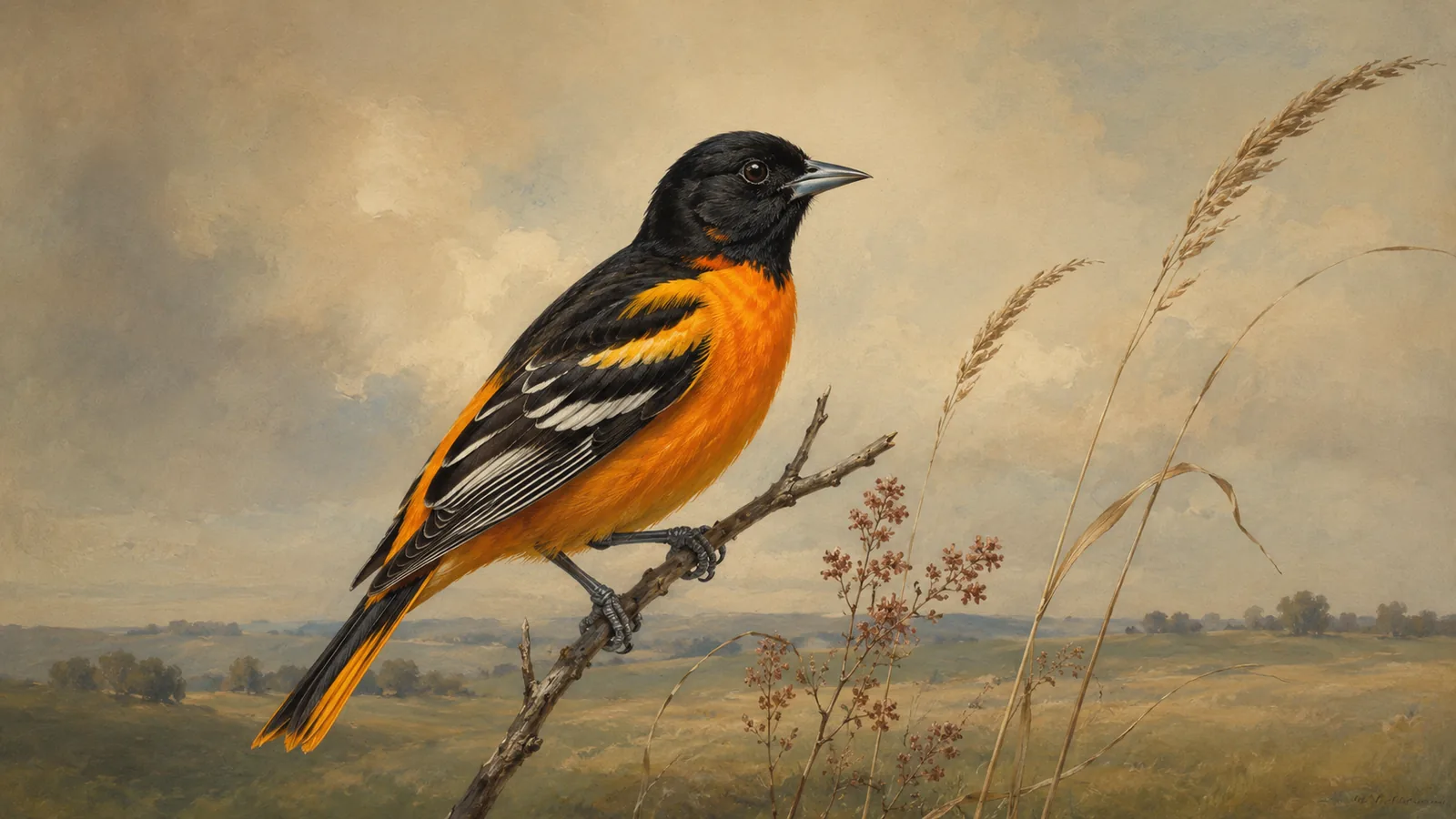
Icterus galbula arrives in Rhode Island in the first week of May. The male’s orange reads from 30 metres against leaf-out canopy, and his fluting whistle carries further than his colour. He prefers tall elms and oaks at forest edge, and Rhode Island’s older suburbs with big street trees hold good populations. He will work a sugar-water feeder and will take orange halves. He is gone by late August. By September, Rhode Island orioles are in Central America.
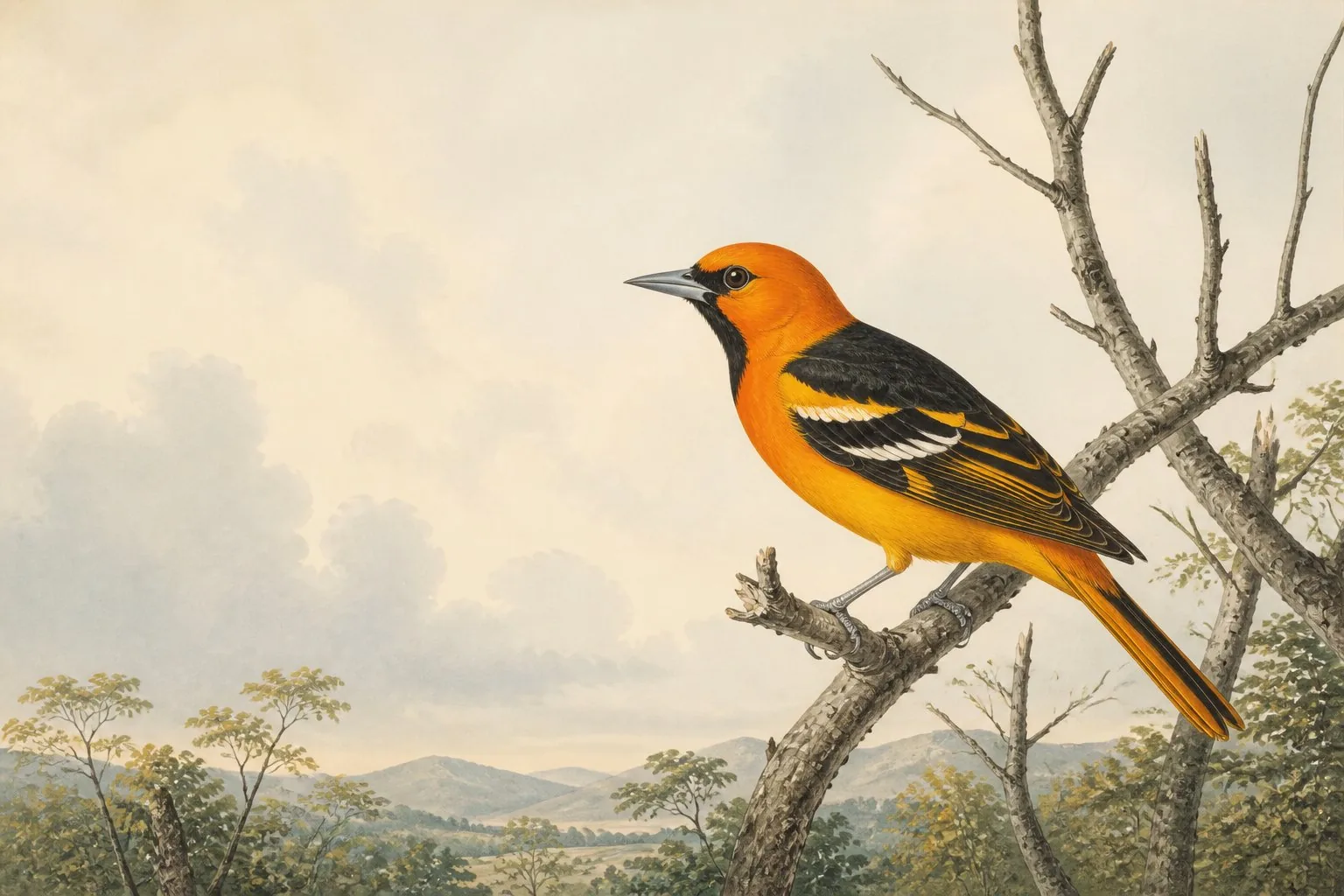
The Orchard Oriole, Icterus spurius, is smaller than its Baltimore cousin and its orange is darker - a deep chestnut-rust rather than the clean orange of the Baltimore. First-year males are yellow-green with a black throat, which confuses people expecting the adult pattern. He favours more open country: orchards, hedgerows, shrubby fields. Ninigret NWR in Charlestown is a reliable spot for both oriole species in May.
Block Island is the single best place in Rhode Island for orange migrants. When the wind cooperates in late April and early May, exhausted Baltimore Orioles, American Redstarts, and Orchard Orioles land in numbers that make the island worth a ferry ride from Point Judith.
Setophaga ruticilla is a warbler, not an oriole, but the male’s orange patches on wings and tail are strong enough that new birders often reach for an oriole field guide first. He is small and hyperactive, constantly fanning his tail to flush insects from bark. Rhode Island’s moist deciduous woodlands, particularly second-growth stands with dense understorey, suit him well. Like the orioles, he winters in Central America and the Caribbean.
Three species carry orange through Rhode Island winters.
The American Robin, Turdus migratorius, never fully leaves. Large winter flocks persist wherever fruiting trees are available - holly, crabapple, and hawthorn hold them through February. She and he both carry that orange-red breast, though the female’s is paler.
The Northern Flicker, Colaptes auratus, reveals its orange only in flight. Perched on a lawn probing for ants, it looks brown and spotted. When it launches, the under-wing flashes a bright orange-yellow. Rhode Island birds belong to the yellow-shafted subspecies and are year-round residents statewide.
The American Kestrel, Falco sparverius, carries a rusty-orange back and tail - the male also has blue-grey wings. Kestrels favour open country with hunting perches: utility lines, fence posts, the edge of a mowed field. Rhode Island’s farm country in the west, around the Arcadia Management Area, holds them through winter.
The last week of April and first two weeks of May is the peak window. All six breeding birds arrive then, and Block Island offers the best concentration. The ferry runs from Point Judith and takes about an hour. Autumn fallout events on the island - late August into October - reward experienced birders willing to wait for the right wind shift.
For year-round orange, woodland edges statewide hold robins and flickers through winter. Kestrels are most visible in the open fields of Washington County.
One final species deserves a note. The Scarlet Tanager, Piranga olivacea, is classified as red, but on overcast May mornings in woodland shade the male reads as warm orange-red - easy to mistake for an oriole. No wing bars. No black hood. If the ID does not add up, look for the tanager. He breeds in mature deciduous forest and is common in Rhode Island’s larger inland woodlands through summer.
Rhode Island is small enough that coastal marsh, inland forest, and Block Island fit in a long weekend. For orange birds, that weekend belongs in the first half of May.
As an Amazon Associate we earn from qualifying purchases. Linked products are ones we genuinely recommend.
 January 22, 2024
 4 min read