State Guide
Orange Birds in Nevada
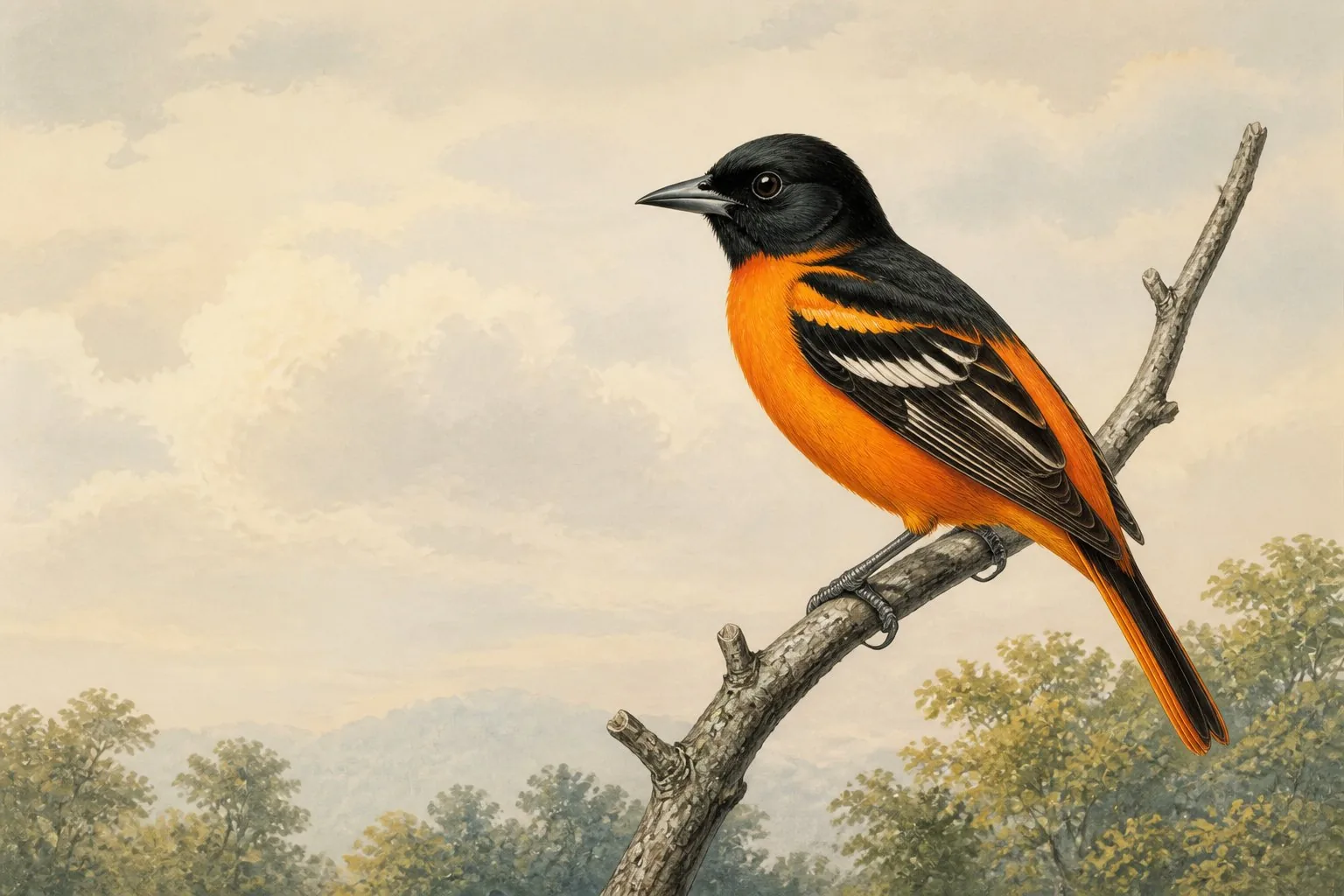
Pull into Ash Meadows National Wildlife Refuge on a May morning and the cottonwoods along Crystal Spring are already loud. Then one of the sounds detaches itself and flies - a male Icterus bullockii, Bullock’s Oriole, orange face catching the low light. Most people expect Nevada to be empty of color. The birds have other ideas.
The basin-and-range geography that shapes this state is also what concentrates its birds. Broad dry valleys separate mountain ranges that rise to 13,000 feet. For a migratory bird traveling north toward Oregon or Idaho, those valleys are barriers crossed fast, and the springs, rivers, and refuge wetlands at their edges become mandatory stops. Nevada’s orange birds are not distributed evenly across the landscape. They pile up at the oases.
The key species
The two birds most people come for are Bullock’s Oriole and Western Tanager (Piranga ludoviciana). Both arrive in May and breed in the mountain foothills and cottonwood-lined streams before heading south again in August.
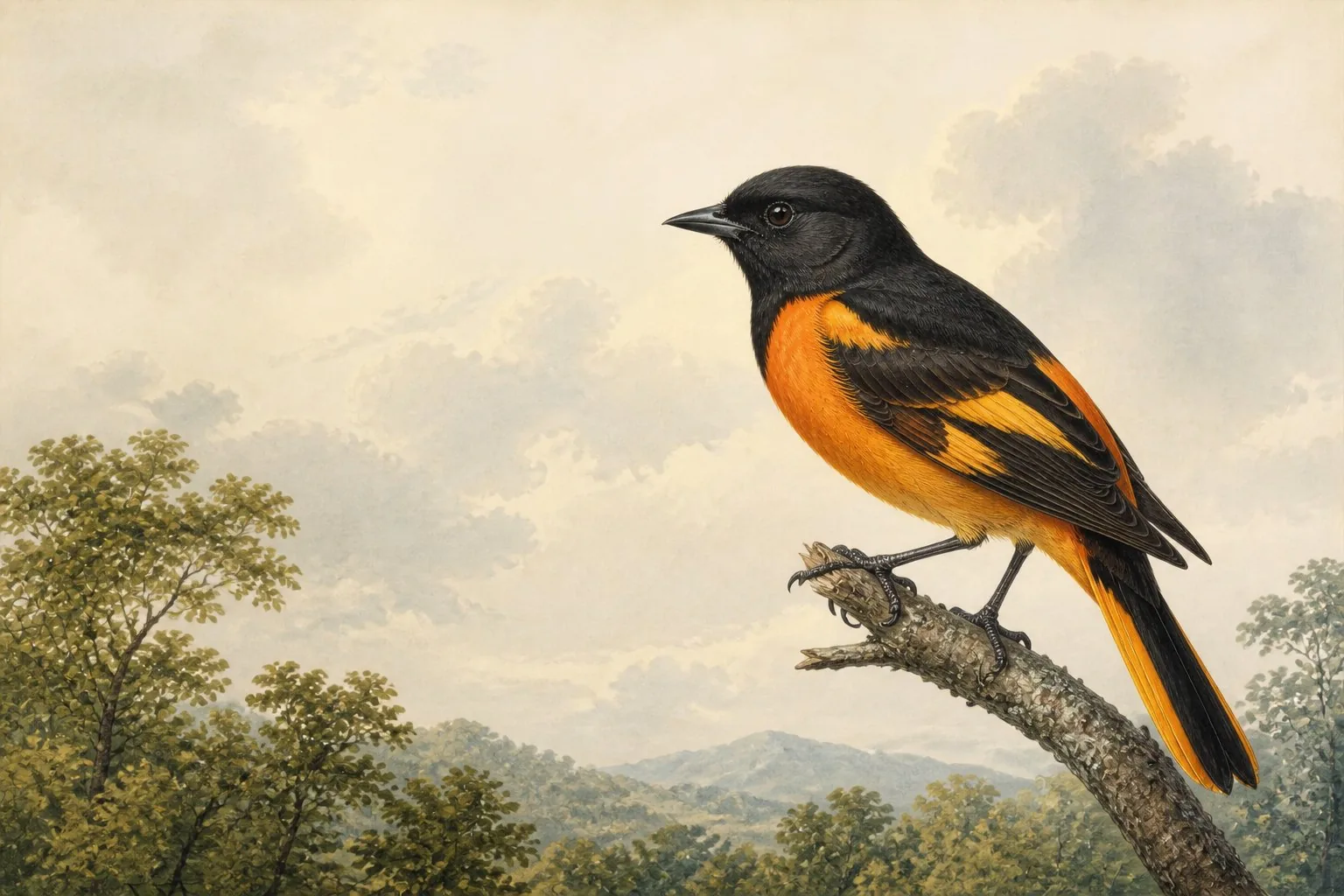
Bullock’s Oriole is the dominant oriole in the Great Basin. He is hard to misidentify: the face and underparts are a deep burnt orange, the wings carry a wide white patch, and he favors the tallest cottonwoods in any stand. She is a study in restraint by comparison - yellowish below with faint orange-buff tones, drab where he is emphatic. Nests are the tightly woven pendant type, recognizable even after the birds have gone.
The Western Tanager splits the difference in an unusual way. His head is red-orange, flushing into yellow at the breast and back. It is not the same orange as the oriole - it reads more as a separate color applied to a different canvas. Western Tanagers pass through Nevada in numbers during spring migration, and a proportion breed in the coniferous forests of the Ruby and Snake ranges in the north.
Nevada’s desert oases do not just host orange birds - they focus them. The same geography that looks inhospitable from the highway is the reason a birder at Stillwater or Ash Meadows in May sees species that would be scattered across hundreds of miles anywhere else.
Two other species round out the picture. Scott’s Oriole (Icterus parisorum) works Mojave country in the south - Joshua tree woodland, yucca flats - his yellow-orange paler than Bullock’s, singing from exposed perches in a way that makes the desert feel briefly less silent. The Black-headed Grosbeak (Pheucticus melanocephalus) arrives at forest edges with orange breast and belly that take a moment to process. He is common enough along the mountain foothills that you will hear his liquid song before you find him.
| Species | When to expect them | Where to look |
|---|---|---|
| Bullock’s Oriole | May through August | Cottonwood riparian areas, Ash Meadows, Stillwater |
| Western Tanager | May migration, summer in ranges | Coniferous forests, Ruby Mountains |
| Scott’s Oriole | May through August | Joshua tree and yucca woodland, southern Nevada |
| Black-headed Grosbeak | May through August | Forest edges, foothills streams |
Year-round orange
Four species carry orange into the Nevada winter. American Robin (Turdus migratorius) stays on in numbers that most visitors underestimate. Northern Flicker (Colaptes auratus) in its red-shafted form flashes orange-red under the wings on every banking flight - a field mark that registers as a surprise even when you know to expect it. Spotted Towhee (Pipilo maculatus) holds rufous flanks visible in dense brush along the foothills, and American Kestrel (Falco sparverius) shows rusty-orange on back and tail above open ground in the kind of patient hover that makes the desert feel as if it is waiting with you.
Where to go
Ash Meadows National Wildlife Refuge near Amargosa Valley is the most important single stop. The spring-fed pools and cottonwood groves concentrate migrants, and in May the riparian corridors run with Bullock’s Orioles. Stillwater NWR east of Fallon sits on the Pacific Flyway and handles the north-south flow in good years. Ruby Lake NWR in the east gives access to the northern ranges, where Western Tanager and Black-headed Grosbeak breed.
The orioles and tanagers share Nevada only from May to August. An October visit to the southern desert still returns Scott’s Oriole before the southbound push, while a January drive through the open country around Fallon will likely produce all four resident orange species in a single morning. Bullock’s Oriole and Western Tanager turn up in the same seasonal window across much of the west - compare orange birds in Arkansas, orange birds in Illinois, orange birds in Michigan, and orange birds in Ohio for how the picture shifts by longitude.
The Rufous Hummingbird passes through Nevada twice a year, southbound in July and August. That copper-orange blur at a sage flower is easy to miss if you are not looking for a hummingbird outside of spring. Most of what Nevada offers in orange plumage rewards exactly that kind of sideways attention - the bird that arrives not when the field guide says spring but when the desert decides the conditions are right.