Crows are a common sight in many parts of the world, with their distinctive black feathers and raucous calls, the American crow is prevalent in North and South America. However, there are a number of other bird species that resemble crows in appearance, making it difficult for even experienced birdwatchers to tell them apart.
These birds, known as American crow look-alikes, have similar features such as dark blue black feathers, sharp beaks, and intelligent behavior. We explore some of the most common birds that look like crows, from the sleek and shiny Common Raven to the small and nimble Chihuahuan Raven.
List of Birds that look like crows
Corvidae Family (Crows, Jays, and Magpies) - Common Raven, Western Jackdaw, Western Rook, Black-billed Magpie, Alpine Chough, Chihuahuan Raven (same family as American crows)
Icteridae Family (New World Blackbirds and Orioles) - Red-Winged Blackbird, Common Grackle, Brown-Headed Cowbird (common in Southern united states)
Artamidae Family (Woodswallows, Butcherbirds, and Allies) - Pied Currawong (with dark charcoal bodies)
**Sturnidae Family (Starlings) **- European Starling
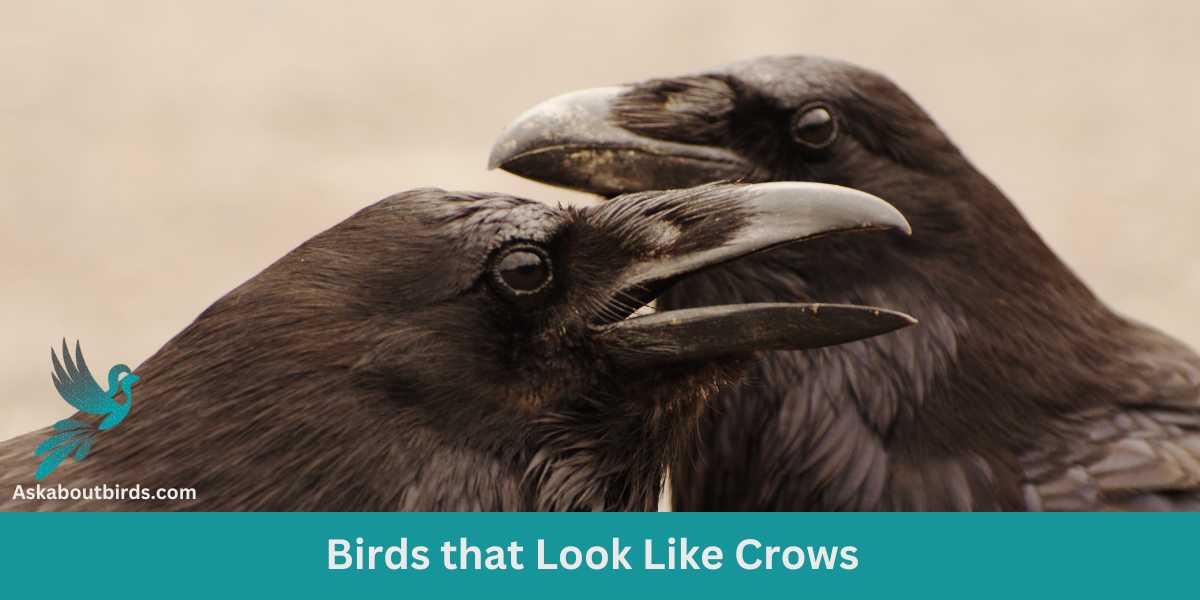
Common Raven vs Crow
Similarities
-
Color: Common Ravens and Crows are entirely black, including their beaks and legs.
-
Diet: Both species are omnivorous, eating a wide range of food from insects, grains, berries, to small animals, and even carrion.
-
Habitat: Both can adapt to a variety of environments and are widespread, being found in forests, deserts, mountains, and human settlements.
Differences
-
Size: The Common Raven is significantly larger than most Crow species, with a heavier bill and a broader wingspan.
-
Voice: The call of a Raven is typically a deep, throaty croaking, while Crows often caw loudly.
-
Tail Shape: In flight, the tail of a Raven is wedge-shaped, while a Crow’s tail is more squared or slightly rounded.
Chihuahuan Raven vs Crow
Similarities
-
Color: Both Chihuahuan Ravens and Crows are entirely black, giving them a similar appearance at first glance.
-
Diet: Both species are omnivorous, feeding on a variety of foods like insects, grains, small animals, and carrion.
-
Habitat: Both species can adapt to a wide variety of environments, including desert scrub, prairies, and agricultural areas.
Differences
-
Size: The Chihuahuan Raven is generally larger than many species of Crows, though it is smaller than the Common Raven.
-
Voice: The Chihuahuan Raven’s call is typically a nasal “pruk-pruk” or a throaty “r-r-r-r-ruck”, differing from the common caw of Crows.
-
Range: The Chihuahuan Raven is primarily found in the Southwestern United States and Mexico, a distribution that may help distinguish it from various Crow species that have wider or different ranges.
Red-Winged Blackbird vs Crow
Similarities
-
Color: Both Red-Winged Blackbirds (males) and Crows have predominantly black plumage.
-
Diet: Both species are omnivorous, consuming a wide variety of foods including seeds, grains, insects, and small invertebrates.
-
Habitat: Both birds can be found in a wide variety of environments, including marshes, pastures, and even urban parks or gardens.
Differences
-
Size: Red-Winged Blackbirds are smaller than most Crow species.
-
Color Patterns: While both are predominantly black, male Red-Winged Blackbirds have distinctive red and yellow shoulder patches, a feature absent in Crows.
-
Voice: Red-Winged Blackbirds have a distinctive, musical call that is very different from the familiar cawing of Crows.
Common Grackle vs Crow
Similarities
-
Color: Both the Common Grackle and Crows are predominantly black, though lighting conditions can reveal more color in Grackles.
-
Diet: Both species are omnivorous, feeding on a wide array of foods including insects, grains, fruits, small animals, and even human food waste.
-
Habitat: Both birds can adapt to a variety of environments, including forests, farmlands, suburban, and urban areas.
Differences
-
Size: The Common Grackle is generally smaller than most Crow species.
-
Color Variance: While both birds are predominantly black, the Common Grackle often displays an iridescent sheen with tones of blue, purple, or bronze, particularly on its body and head. Crows, on the other hand, are usually just black.
-
Tail Shape: The Grackle’s tail is significantly longer proportionally, and it often appears V-shaped or keel-shaped, especially in flight. A Crow’s tail is more squared or slightly rounded.
Brown-Headed Cowbird vs Crow
Similarities
-
Diet: Both the Brown-Headed Cowbird and Crows are omnivorous, consuming a wide variety of foods, from insects and seeds to fruits and small invertebrates.
-
Habitat: Both species are highly adaptable and can thrive in a variety of environments, including farmlands, forests, and suburban areas.
-
Breeding Behavior: Both species lay their eggs in the nests of other birds, a behavior known as brood parasitism, although this is far more common in Brown-Headed Cowbirds.
Differences
-
Size: The Brown-Headed Cowbird is considerably smaller than most Crow species.
-
Coloration: Male Brown-Headed Cowbirds have a distinctive brown head, contrasting with their black body. Crows, on the other hand, are entirely black.
-
Song: The song of a Brown-Headed Cowbird is a series of gurgling notes followed by a squeaky sound, which is quite different from the cawing sounds made by Crows.
Western Jackdaw vs Crow
Similarities
-
Color: Both Western Jackdaws and Crows have predominantly black plumage, contributing to their similar appearance.
-
Diet: Both species are omnivorous, consuming a wide range of food items like insects, seeds, fruits, and even carrion.
-
Habitat: Both birds can adapt to a variety of environments, including forests, farmlands, and urban areas.
Differences
-
Size: The Western Jackdaw is smaller than most Crow species, being one of the smallest species in the crow family.
-
Eye Color: Western Jackdaws have light-colored eyes, usually pale blue or grey, while Crows have dark eyes.
-
Voice: The call of a Western Jackdaw is a distinctive “jack-jack”, which is quite different from the cawing sounds made by Crows.
Pied Currawong vs Crow
Similarities
-
Color: Both Pied Currawongs and Crows are predominantly black, adding to their similar appearance.
-
Diet: Both species are omnivorous, consuming a broad range of foods, from insects and small animals to fruits and seeds.
-
Habitat: Both birds can adapt to various environments, including forests, woodlands, and suburban areas.
Differences
-
Size: The Pied Currawong is typically smaller than most Crow species.
-
Color Variation: The Pied Currawong has white patches on the wings and the base of the tail, distinguishing them from the typically all-black Crows.
-
Voice: The call of a Pied Currawong is a loud “curra-wong”, which is distinct from the cawing sounds made by Crows.
Western Rook vs Crow
Similarities
-
Color: Both Western Rooks and Crows have predominantly black plumage, contributing to their similar appearance from a distance.
-
Diet: Both species are omnivorous, feeding on a variety of food items, including insects, seeds, grains, fruits, and small animals.
-
Habitat: Both birds can be found in diverse habitats, including farmlands, woodlands, and urban areas.
Differences
-
Size: The Western Rook is typically similar in size to the Carrion Crow, but size variations can occur among individuals and populations.
-
Bill Shape: The Western Rook has a slightly more slender and curved bill compared to the straighter bill of a typical Crow.
-
Behavior: Western Rooks are often more social, forming large flocks and roosting together, while Crows are typically seen in smaller groups or pairs.
Black-billed Magpie vs Crow
Similarities
-
Color: Both the Black-Billed Magpie and Crows have predominantly black plumage, although the Magpie often has additional white markings on its wings, tail, and belly.
-
Diet: Both species are omnivorous, feeding on a variety of foods, including insects, small animals, fruits, seeds, and carrion.
-
Habitat: Both birds can adapt to various habitats, including forests, woodlands, open fields, and urban areas.
Differences
-
Size: The Black-Billed Magpie is generally slightly smaller than most Crow species.
-
Distinctive Markings: The Black-Billed Magpie has white markings on its wings, tail, and belly, whereas Crows are typically all black.
-
Behavior and Calls: Black-Billed Magpies are known for their vocal nature and complex vocalizations, including a range of chattering and melodic calls, which differ from the cawing sounds made by Crows.
Alpine Chough vs Crow
Similarities
-
Color: Both Alpine Choughs and Crows have predominantly black plumage, giving them a similar appearance from a distance.
-
Diet: Both species are omnivorous, feeding on a range of food items including insects, seeds, fruits, and small animals.
-
Habitat: Both birds can adapt to various environments, including alpine regions, mountains, and rocky areas.
Differences
-
Size: Alpine Choughs are generally smaller than most Crow species.
-
Beak and Legs: Alpine Choughs have distinctive bright red beaks and legs, whereas Crows typically have black beaks and legs.
-
Behavior and Habitat: Alpine Choughs are well-adapted to high-altitude environments and are known for their acrobatic flight and group formations, while Crows tend to have more varied habitats and flight patterns.
European Starling vs Crow
Similarities
-
Color: Both European Starlings and Crows have predominantly dark-colored plumage, with the Starling displaying iridescent black feathers that can appear glossy.
-
Diet: Both species are omnivorous, feeding on a wide range of foods, including insects, fruits, seeds, and even scavenging for carrion.
-
Habitat: Both birds are adaptable and can be found in various habitats, including urban areas, farmlands, and open woodlands.
Differences
-
Size: European Starlings are typically smaller than most Crow species.
-
Flight Patterns: Starlings are known for their agile and acrobatic flight, often flying in large flocks that perform synchronized aerial displays called murmurations. Crows have a more direct and less synchronized flight pattern.
-
Vocalizations: European Starlings are highly vocal birds, capable of mimicking a wide range of sounds including other bird songs, human speech, and environmental noises. Crows have a distinct cawing call that is different from the varied vocal repertoire of Starlings.