Identification
Birds That Look Like Blue Jays
A bird lands in your yard on the Pacific coast and you call it a blue jay. It is almost certainly not. Several blue-tinted North American birds get misidentified as Cyanocitta cristata every season, and the confusion is understandable - blue is rare enough in birds that we tend to lump the ones we see.
The Blue Jay is one very specific bird with a very specific range. Every species that resembles it is separated by at least one field mark visible from a kitchen window.
The Blue Jay itself
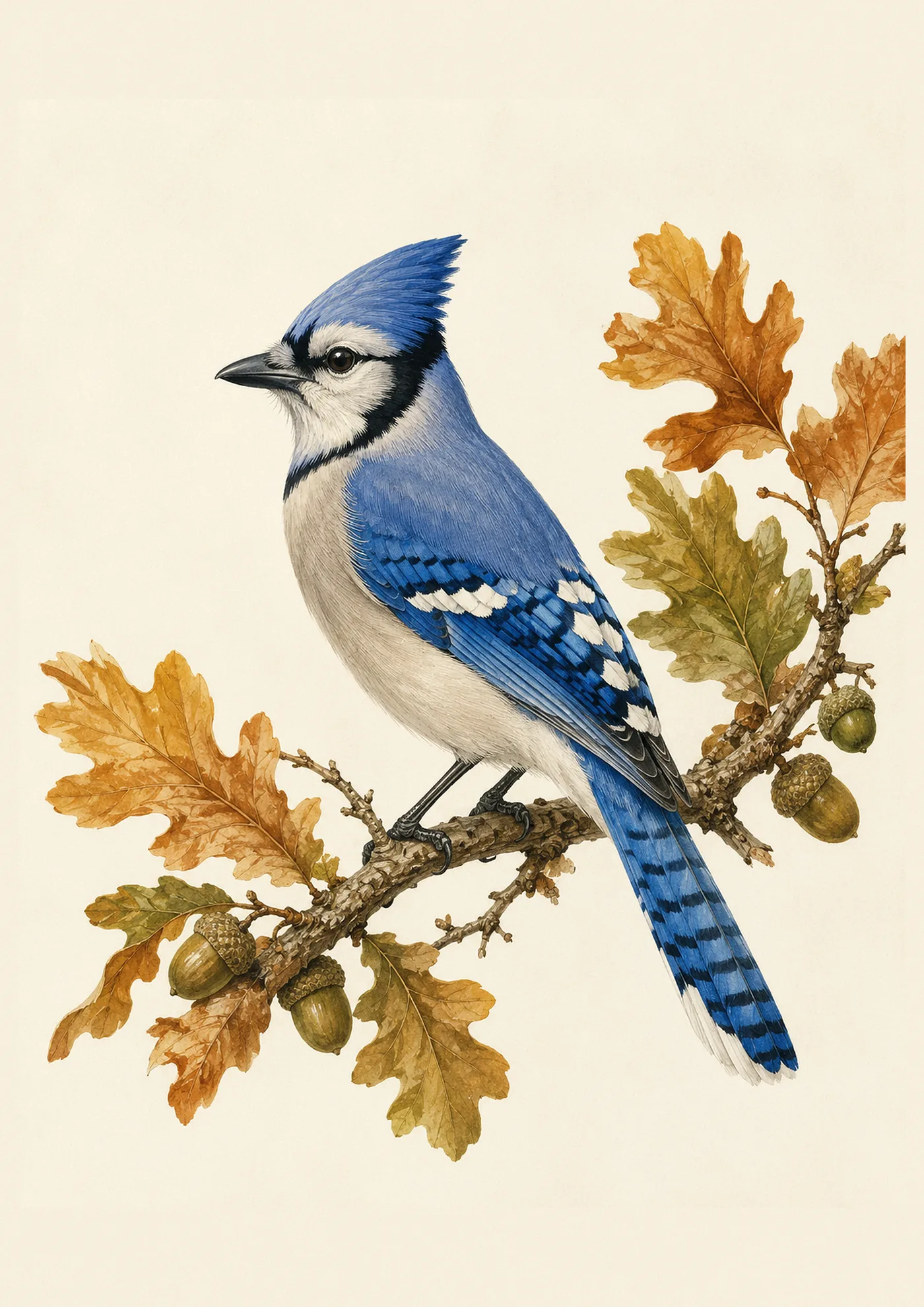
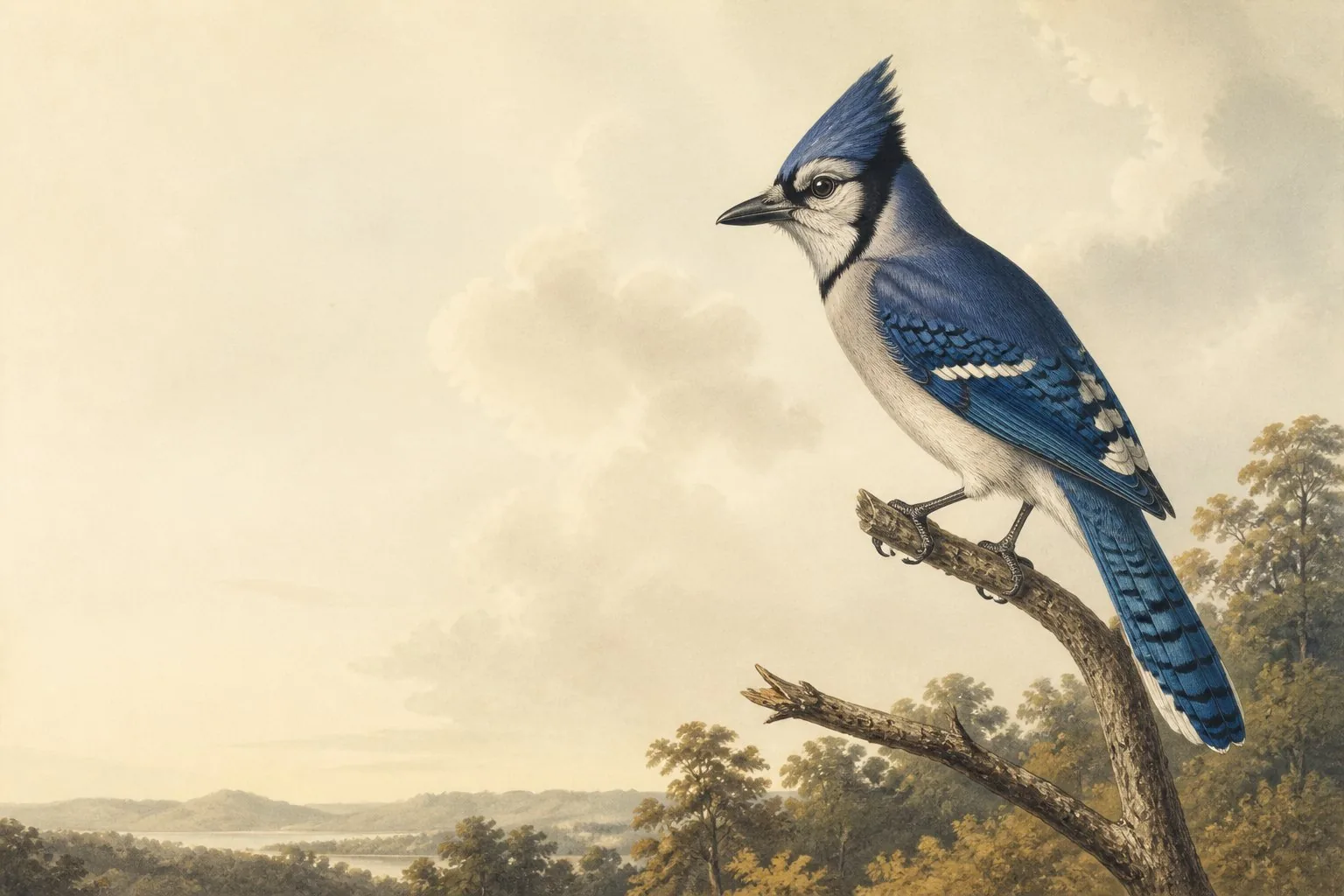
The Blue Jay measures 9.8 to 11.8 inches, roughly robin-sized but heavier-looking, with a prominent blue crest and a bold black collar that loops around the throat like a necklace. Blue above, white below, with black barring across the wings and tail and clear white spots on the wingtips. The crest rises when the bird is alert and flattens when it relaxes. Its range is eastern and central North America. If you are west of the Rockies and see something jay-shaped and crested, it is almost certainly not a Blue Jay.
Steller’s Jay - the western counterpart
Steller’s Jay (Cyanocitta stelleri) is the bird most commonly called a blue jay on the West Coast, and the confusion is reasonable: it is the only other crested jay in North America and shares a genus with the Blue Jay. It also runs slightly larger, at 11.8 to 13.4 inches. But where the Blue Jay is blue and white with clear black barring, Steller’s is charcoal-black on the head and upper body, deepening to cobalt blue on the wings and tail. No white underparts. No white wingbars. Audubon’s field guide describes it as “the only all-dark jay with a crest,” and that phrase contains the whole identification.
Steller’s Jay lives in coniferous and mixed mountain forests from Alaska to Central America, typically at 3,000 to 10,000 feet of elevation (lower along the Pacific coast). Coastal birds show blue flecks near the eye; inland birds carry white streaks on the forehead. Where the two species briefly overlap in the eastern Rockies, Audubon notes they occasionally interbreed and produce visible hybrids.
If you see a crested jay west of the Rockies, it is a Steller’s Jay. The Blue Jay’s crest is blue. Steller’s is black.
California Scrub-Jay - crestless, same size
The California Scrub-Jay (Aphelocoma californica) occupies Pacific coast backyards, oak woodlands, and chaparral from Washington south into Baja California. It measures 11 to 13 inches, within Blue Jay range, and carries the same combination of blue head, wings, and tail. The flat, rounded, crestless head sets it apart immediately. Cornell’s All About Birds describes it as combining “deep azure blue, clean white underparts, and soft gray-brown” with a head that clearly distinguishes it from both crested jays.
The Woodhouse’s Scrub-Jay, split from the California bird as a separate species in 2016, is the pale counterpart of dry lowland desert from Nevada south into Mexico. Both birds share the crestless silhouette and lack the Blue Jay’s black necklace.
Florida Scrub-Jay - one place only
The Florida Scrub-Jay (Aphelocoma coerulescens) resembles the California bird in build - flat-headed, dull blue, no necklace - but its range is the most restricted of any bird discussed here. It lives nowhere in the world except Florida, confined to patches of low oak scrub growing on sandy soil. Audubon’s field guide notes it is “highly sedentary, rarely moving even short distances” from those patches.
Its conservation status matters. The Audubon guide records early 1990s estimates of roughly 4,000 pairs remaining - more than 90% below original numbers. The species is federally listed as Threatened and classified as Vulnerable by the IUCN. Fire suppression and urban development in Florida have steadily reduced the scrub habitat the bird requires. If you see a flat-headed blue-gray jay in central Florida scrubland, you are looking at a species that has lost nine-tenths of its range within living memory.
Indigo Bunting and Blue Grosbeak - size tells the story
Two smaller birds cause surprise because the males are saturated blue with no other colors to anchor identification.
The Indigo Bunting (Passerina cyanea) is sparrow-sized - 4.7 to 5.5 inches - with a breeding male that Cornell’s All About Birds notes “can look black at a distance until the light hits.” An Indigo Bunting is roughly half the length of a Blue Jay, with a small conical bill and no crest. It breeds across eastern North America and winters in Mexico, Central America, and the Caribbean.
The Blue Grosbeak (Passerina caerulea) runs 5.9 to 7.5 inches, with a very thick bill and two chestnut wingbars. Audubon’s field guide lists those wingbars as the key mark: the Blue Jay carries no wingbars of that color anywhere on its body.
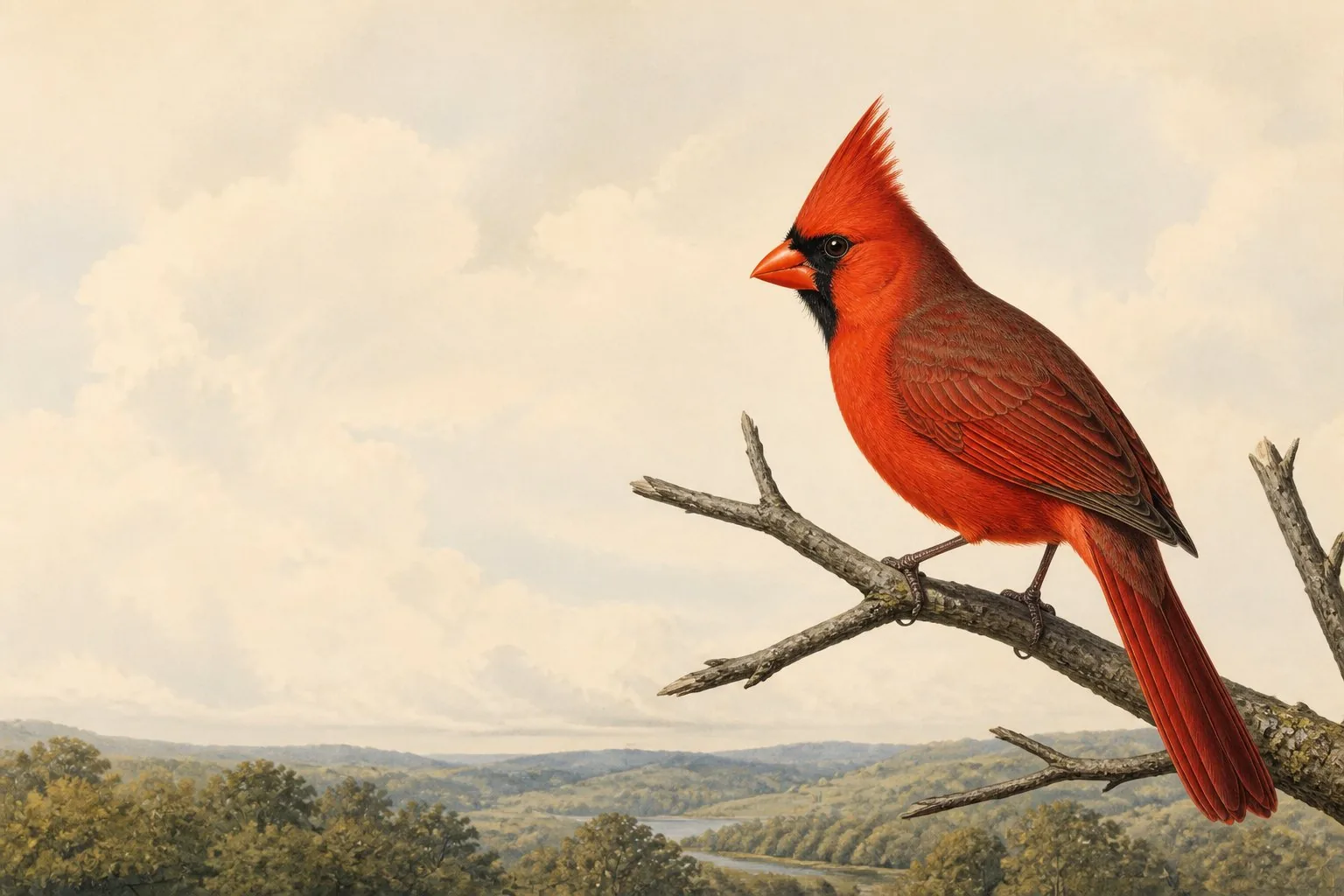
Both species are related to cardinals, not corvids.
Eastern Bluebird - different family, different body
The Eastern Bluebird (Sialia sialis) causes confusion mainly in flight, when the blue back catches the eye before the orange-rufous breast becomes visible. Males measure 6 to 8 inches, with a rounded head and an upright posture on open perches - nothing like a jay’s confident strut. No crest, no black necklace, no white wingbar spots. The Bluebird is a thrush. For more on species in that color range, see birds that look like bluebirds.
The field mark that settles most identifications
Crest or no crest, size, and geography will separate every one of these birds from a true Blue Jay. East of the Rockies, a crested blue bird with a white face and a black collar is a Blue Jay. West of the Rockies, a crested blue bird with a dark head is a Steller’s Jay. Any crestless blue bird in the same size range is one of the scrub-jays. Any crestless blue bird smaller than a robin is either a bunting, a grosbeak, or a bluebird, and size and bill shape will separate those three within seconds.
The Blue Jay’s black necklace is not decoration. It is the clearest mark on a bird that has evolved to be unmistakable - which is exactly why so many other birds get called by its name.